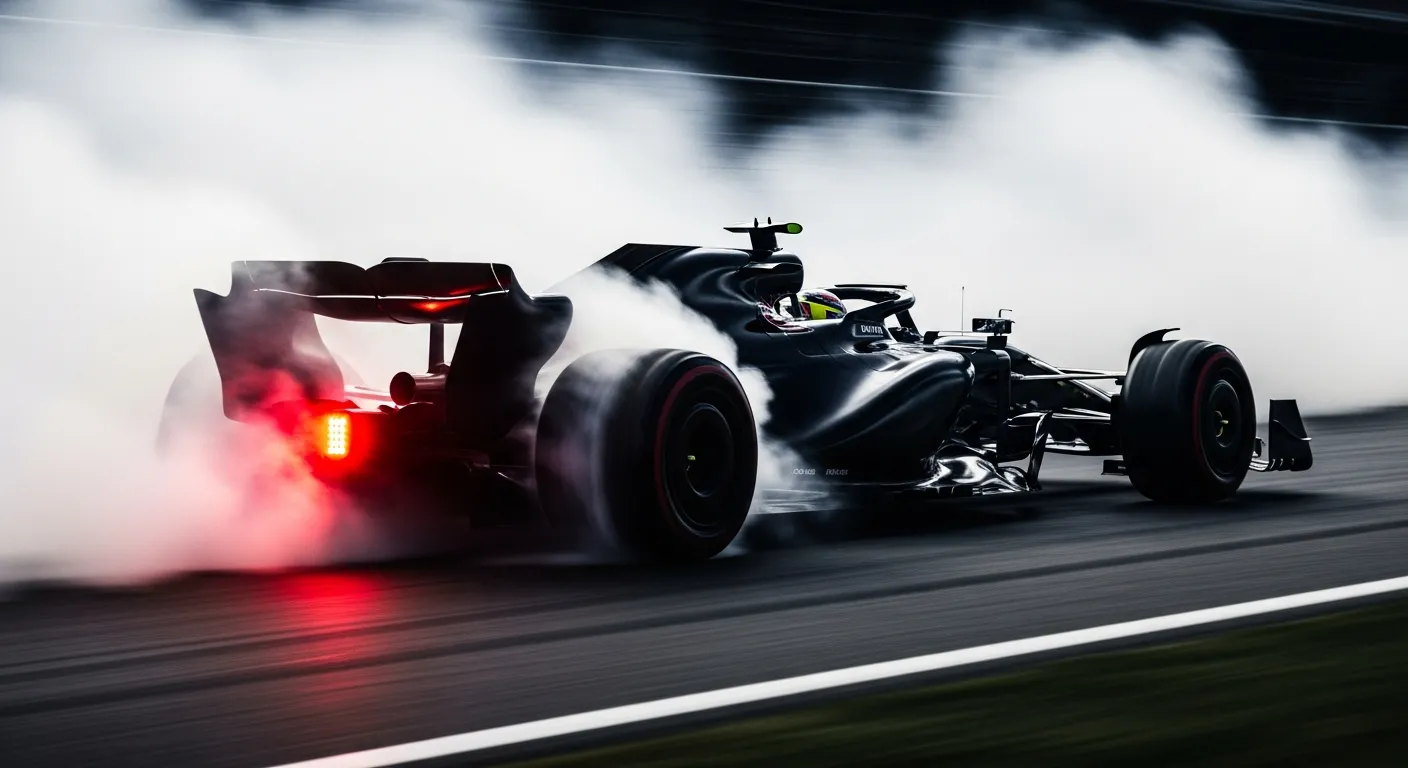
George Russell's outing at the 2020 Spanish Grand Prix saw him navigate the Circuit de Barcelona-Catalunya from an 18th-place grid start, ultimately concluding the race in 17th position for Williams Grand Prix Engineering, one lap down. This result, achieved on August 16, 2020, reflected the persistent challenges Williams faced during that particular Formula 1 season. Russell, driving the FW43, managed to improve his standing by one position over the course of the 66-lap race, completing 65 laps in total.
His performance included a fastest lap time of 1:22.503 on Lap 37, which placed him 15th in the overall fastest lap rankings for the event. While not a points-scoring finish, this lap time demonstrated Russell's ability to extract pace from the machinery available to him, often pushing the car to its limits. For context, the race was dominated by Lewis Hamilton, who secured victory from pole, with [Max Verstappen at the 2023 Dutch Grand Prix](/results/2023-zandvoort-max-verstappen) taking second, and Valtteri Bottas completing the podium. The gap in performance to the front-running teams, particularly Mercedes AMG F1, was substantial, a common theme for Williams in 2020. Russell's teammate, Nicholas Latifi, finished 18th, two laps down, with a fastest lap of 1:22.030 on Lap 60, ranking 9th overall. While Latifi's single fastest lap was quicker, Russell's consistent pace saw him finish ahead and concede fewer laps to the leader, a subtle but important distinction in midfield battles.
The 2020 season was a difficult one for Williams, as outlined by the comprehensive statistics available on the [Formula 1 — official site](https://www.formula1.com/en). Despite the car's limitations, Russell consistently showcased his talent, often outperforming the machinery. Events like the Spanish Grand Prix provided crucial data for the team's ongoing development efforts, which are meticulously tracked by organizations like the [FIA — F1 World Championship](https://www.fia.com/events/fia-formula-one-world-championship). The Circuit de Barcelona-Catalunya is a demanding track, known for its technical sections and high-speed corners, making it a true test of car and driver. Understanding the intricacies of such circuits is fundamental to success in [Wikipedia: Formula One](https://en.wikipedia.org/wiki/Formula_One). The race itself saw various strategic plays unfold, with drivers like [Lewis Hamilton at the 2023 Dutch Grand Prix](/results/2023-zandvoort-lewis-hamilton) making critical tire management decisions. Data analysis, often exemplified by resources like [Jolpica/Ergast — 2026 season data](https://api.jolpi.ca/ergast/f1/2026.json), helps teams understand these nuances. Russell's ability to maintain a relatively competitive pace against other midfield runners, such as [Lando Norris at the 2023 Dutch Grand Prix](/results/2023-zandvoort-lando-norris) who finished 10th in this race, was a testament to his driving skill, even if the overall result didn't yield points. His consistent outperformance of his teammate, a hallmark of his time at Williams, further solidified his reputation. The team's focus remained on extracting maximum performance, a continuous process in the highly competitive world of F1, as detailed on the [official Formula 1 website](https://www.formula1.com/en/latest/article.what-is-formula-1-and-how-does-it-work.2r1g4RjP28f8n012C1z02b.html). Each race, regardless of the final position, contributes to the extensive dataset used for future car design and strategy, a core element of modern [F1 engineering principles](https://www.formula1.com/en/latest/article.f1-tech-explained-how-does-a-formula-1-car-work.46c24RjP28f8n012C1z02b.html).