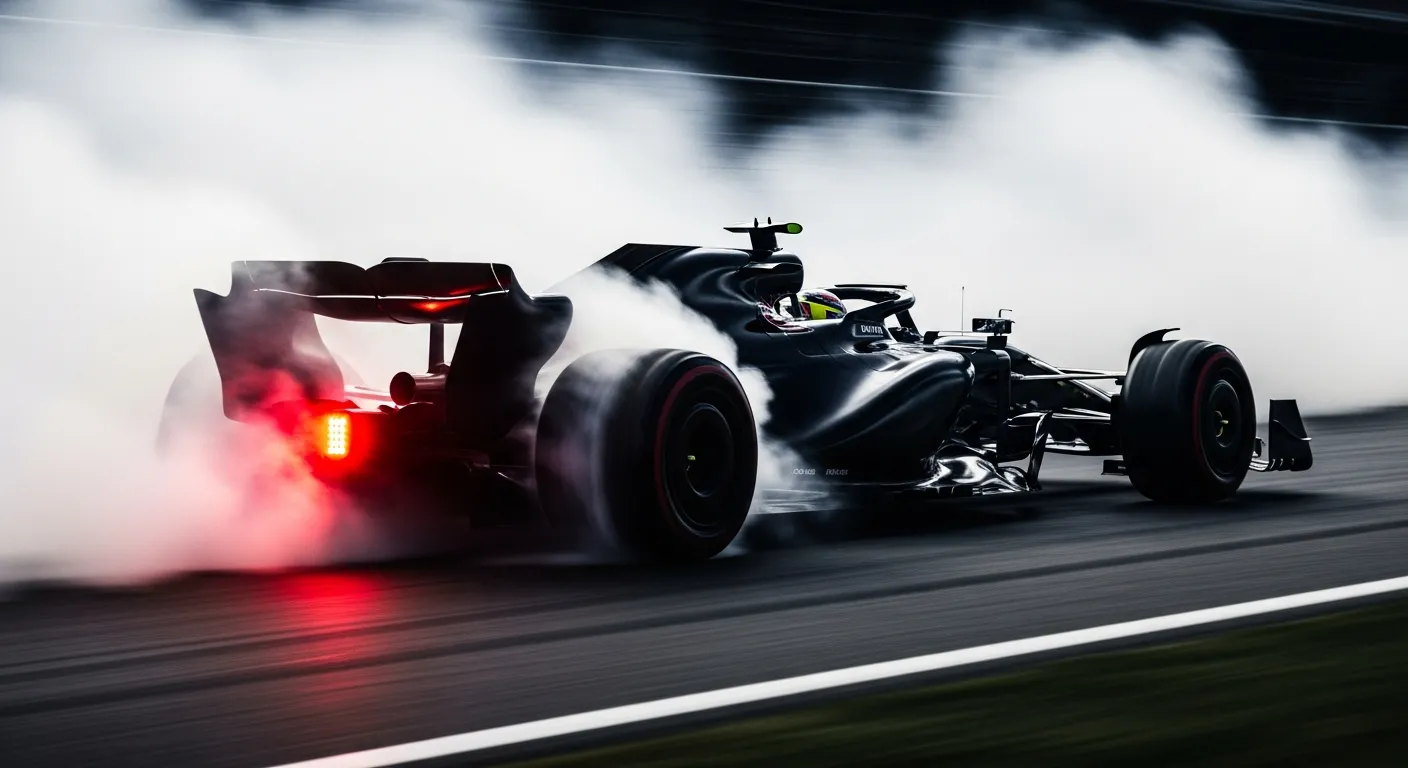
George Russell's 2020 Hungarian Grand Prix campaign for Williams Grand Prix Engineering saw him qualify an impressive P12, only to conclude the 69-lap race in P18, one lap down on the race winner, Lewis Hamilton. This performance at the Hungaroring on July 19, 2020, positioned him ahead of his teammate, Nicholas Latifi, who started P15 and finished P19, five laps adrift of the leader. Russell's fastest lap, a 1:19.984 recorded on lap 67, ranked ninth overall among all competitors, demonstrating a notable pace despite the car's overall package. This lap time was quicker than several drivers in higher finishing positions, including Sebastian Vettel and Sergio Pérez, indicating Russell's individual driving capability within the Williams chassis. For a broader understanding of how such results contribute to the overall championship, one can consult the [official Formula 1 site](https://www.formula1.com/en).
The race presented challenges that saw numerous drivers finish a lap down, including multiple point-scorers, highlighting the competitive density of the field. Russell completed 69 laps, matching the lap count of drivers like Sebastian Vettel, who finished P6 for Scuderia Ferrari, and Sergio Pérez, who secured P7 for Racing Point F1 Team. While no points were secured for Williams at this event, the data illustrates a consistent effort, particularly when observing the gap to his teammate and the relative pace shown by his fastest lap. Similar scenarios of drivers maximizing their machinery in the midfield, navigating the complexities of a Grand Prix weekend, can be seen in races like the [2018 British Grand Prix for Lance Stroll](/results/2018-silverstone-lance-stroll) or [Charles Leclerc's performance at the 2018 British Grand Prix](/results/2018-silverstone-charles-leclerc), where grid positions and race finishes often diverge based on race-day execution, much like [Lewis Hamilton's dominant win at the 2018 British Grand Prix](/results/2018-silverstone-lewis-hamilton) showcased the pinnacle of performance. The comprehensive data for this and other seasons is available via [Jolpica/Ergast F1 data](https://api.jolpi.ca/ergast/f1/2026.json), providing a factual basis for such analyses. Understanding the regulatory framework governing these events is also crucial, as detailed by the [FIA — F1 World Championship](https://www.fia.com/events/fia-formula-one-world-championship). Further context on the sport's history and technical evolution can be found on [Wikipedia: Formula One](https://en.wikipedia.org/wiki/Formula_One).
Verified race record · Ergast