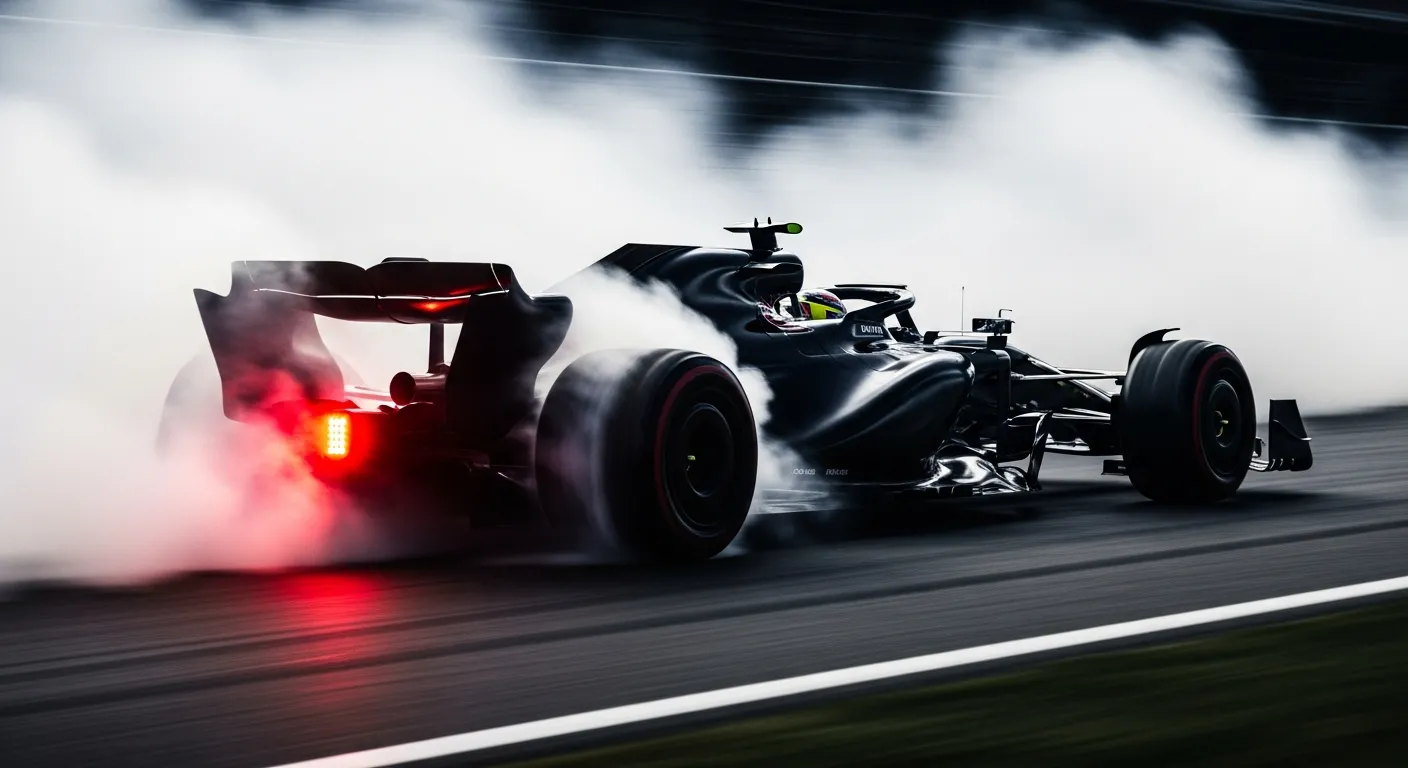
Pierre Gasly's promising start at the 2020 Emilia Romagna Grand Prix was cut short by a critical mechanical failure, denying Scuderia AlphaTauri a potential double-points finish at their home circuit, the [Autodromo Internazionale Enzo e Dino Ferrari](https://www.formula1.com/en/circuits/italy/imola.html). Gasly, starting from an impressive fourth position on the grid, had demonstrated strong pace during qualifying, placing his AlphaTauri AT01 ahead of several established front-runners. The initial laps of the race on November 1, 2020, saw him holding his own in the top tier, a testament to both his driving and the team's performance that weekend. However, the early promise quickly dissolved. By lap 8, a "Coolant leak" was identified, an issue severe enough to necessitate his retirement from the race. This mechanical failure meant Gasly completed only a fraction of the 63 scheduled laps, registering zero points for his efforts. The car's fastest lap of "1:20.403" on lap 5, ranked 20th overall, offered a glimpse of its potential before the issue became terminal. Such technical reliability issues can be a significant hurdle for any team, as detailed in the [FIA technical regulations](https://www.fia.com/fia-formula-1-world-championship) governing car components and their operational limits.
While Gasly's race ended in disappointment, his teammate Daniil Kvyat, starting from eighth, managed to convert AlphaTauri's strong weekend into a fourth-place finish, securing 12 points for the Italian constructor. This stark contrast highlights the fine margins in Formula 1, where one car can thrive while another is sidelined by unforeseen circumstances. The 2020 season, heavily impacted by global events, saw a condensed calendar and the reintroduction of classic circuits like Imola, adding an element of unpredictability for teams navigating new challenges. For a deeper understanding of historical race results and driver data, resources like [Jolpica/Ergast's F1 data archive](https://api.jolpi.ca/ergast/f1/2026.json) provide comprehensive records of such events. Drivers like [Carlos Sainz at the 2026 Canadian Grand Prix](/results/2026-montreal-carlos-sainz) have also faced the frustrations of mechanical woes, underscoring the persistent challenge of reliability in the sport. The complexities of managing car systems, from power units to cooling, are a constant battle for engineers throughout a [Formula One](https://en.wikipedia.org/wiki/Formula_One) season. Even experienced drivers can be caught out by such issues, as seen with [Alexander Albon at the 2026 Canadian Grand Prix](/results/2026-montreal-alex-albon), who has experienced his share of technical setbacks, or even [Yuki Tsunoda at the 2026 Canadian Grand Prix](/results/2026-montreal-yuki-tsunoda) in more recent times, who, despite their best efforts, are at the mercy of their machinery. This incident at Imola was a clear reminder that raw performance alone is not enough; durability is equally crucial for consistent championship contention. The AlphaTauri team would have undoubtedly conducted a thorough post-race analysis to understand the root cause of the coolant leak, a common practice across all F1 teams to prevent recurrence and optimize future performance, a process often documented by [Formula 1 engineering insights](https://www.formula1.com/en/latest/all.html). The competitive nature of the midfield in 2020 meant every point was vital, and this DNF was a significant missed opportunity for Gasly to further solidify his season standings. The race itself was a dynamic affair, with Lewis Hamilton ultimately taking the victory for Mercedes, further illustrating the high stakes and relentless pressure across the entire grid for every position, as seen in the broader [Formula 1 championship standings](https://www.formula1.com/en/results.html).