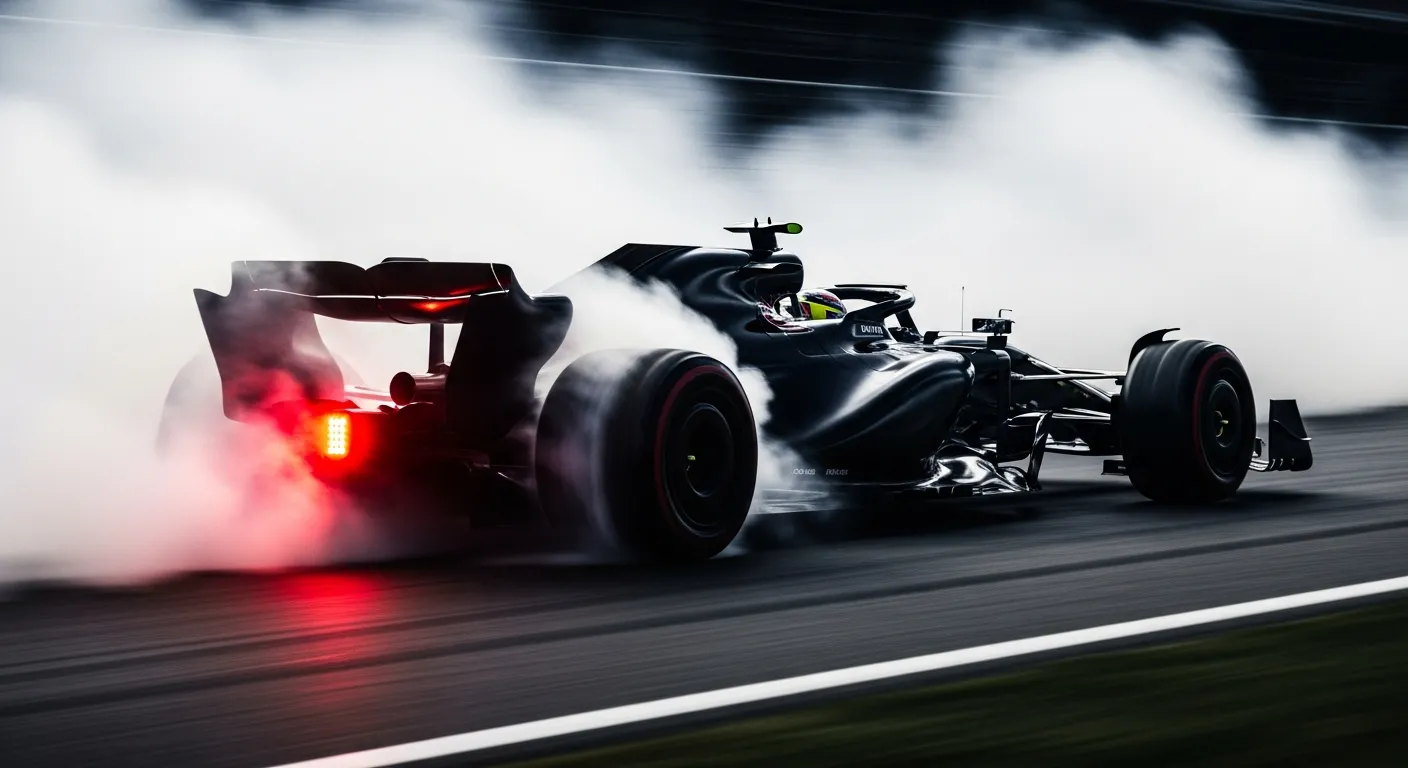
George Russell's campaign at the 2020 Austrian Grand Prix, the inaugural race of a delayed season, was cut short by a critical fuel pressure issue on lap 49, preventing him from seeing the chequered flag for Williams. Starting from 17th on the grid, Russell had been navigating the challenging Red Bull Ring circuit, a venue known for its elevation changes and high-speed sections. His DNF was one of nine retirements in a tumultuous race that saw numerous safety car periods and mechanical failures plague the field, underscoring the demanding nature of the season opener. This early mechanical retirement set a challenging tone for Williams, a team striving for recovery in a competitive environment.
The Williams FW43, while not a front-running contender, was being driven with characteristic determination by Russell. His fastest lap of 1:09.317, recorded on the very lap he retired, placed him 14th overall in the fastest lap standings for the race, a performance metric that subtly indicated the potential he was extracting from the car even amidst its limitations. This raw pace, often seen in his qualifying efforts throughout the season, demonstrated Russell's ability to push the boundaries of the machinery available. In contrast, his teammate, Nicholas Latifi, who started from 20th, managed to complete all 71 laps, finishing 11th with a fastest lap of 1:09.662. This difference in fortunes highlighted the fine margins and inherent unreliability that can define a race weekend, particularly for teams operating with tighter resources. The broader context of Formula 1, as documented on resources like [Wikipedia: Formula One](https://en.wikipedia.org/wiki/Formula_One), often sees such mechanical issues impact various teams, not just those at the back of the grid.
The retirement due to "Fuel pressure" was a stark reminder of the technical challenges Williams faced in the 2020 season. For a team aiming to regain its footing, losing a car mid-race meant not only a missed opportunity for a potential finish but also a loss of crucial data for development. This particular race also saw other notable retirements, including Max Verstappen's Red Bull on lap 11 due to electronics, and Alexander Albon, also from Red Bull, who retired on lap 67. The high attrition rate underscored the unique pressures of starting the season after an extended break, and the reliability demands placed on all constructors. For drivers like [Carlos Sainz at the 2026 Australian Grand Prix](/results/2026-albert-park-carlos-sainz), who navigate similar pressures in different eras, reliability remains a constant factor in their championship aspirations. Russell's consistent ability to push the car, even when it was clear points were out of reach, became a hallmark of his time at Williams. His efforts to extract performance were often visible in qualifying, where he frequently brought the car into Q2, a feat that often surprised observers given the car's overall pace. The continuous pursuit of performance and reliability is a core aspect of the sport, as detailed on the [Formula 1 — official site](https://www.formula1.com/en). Analyzing historical race data, such as that found on [Jolpica/Ergast — 2026 season data](https://api.jolpi.ca/ergast/f1/2026.json), often reveals patterns in mechanical failures across different seasons and constructors, offering insights into the sport's technical evolution. This DNF, while disappointing, was a chapter in Russell's developing narrative, one that would see him continue to demonstrate his driving prowess. Drivers like [Alexander Albon at the 2026 Australian Grand Prix](/results/2026-albert-park-alex-albon) and [Nico Hülkenberg at the 2026 Australian Grand Prix](/results/2026-albert-park-nico-hulkenberg) also face their own battles with car performance and reliability, illustrating the enduring challenges inherent in Formula 1. This incident at the Red Bull Ring was a clear demonstration of the fine line between pushing for performance and succumbing to mechanical limits, a balance every F1 team constantly navigates.