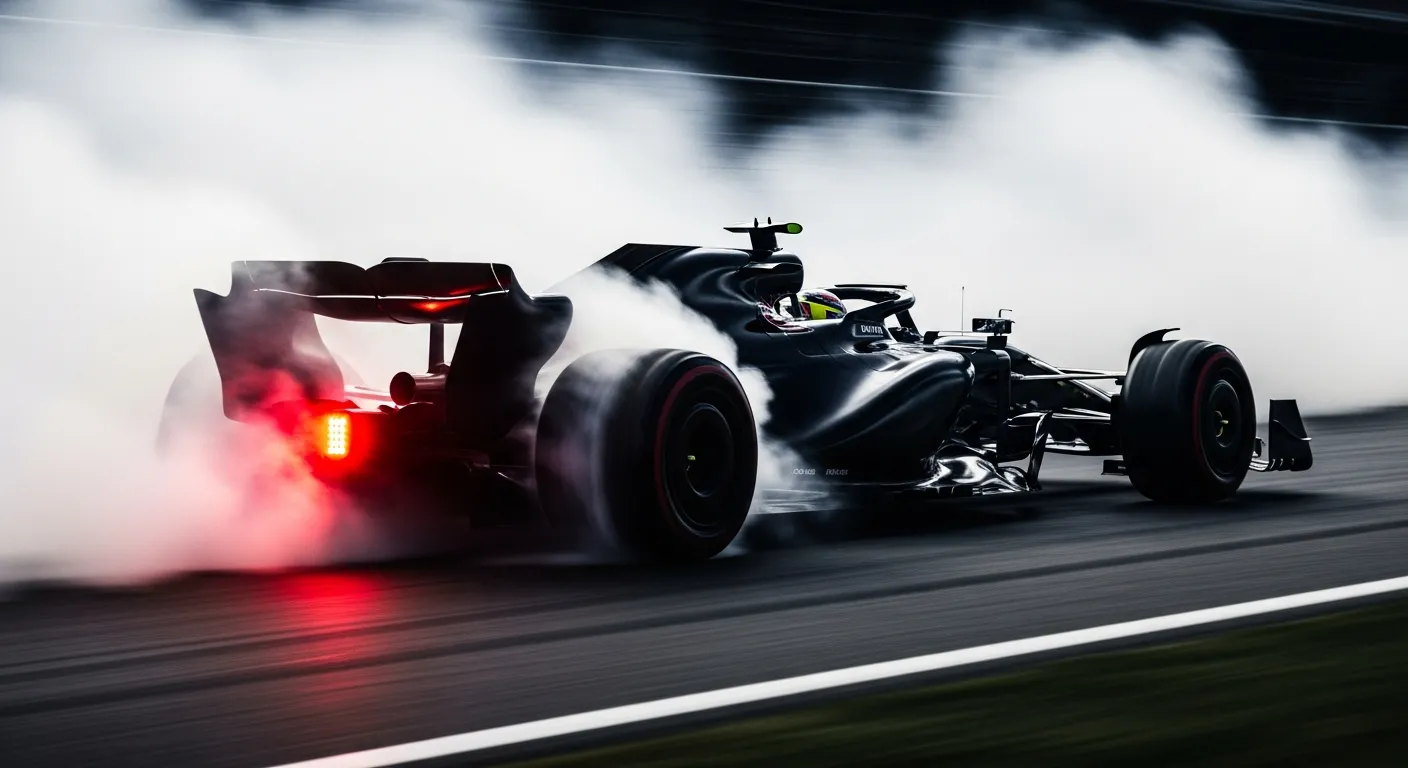
The 2020 Austrian Grand Prix marked a pivotal moment for Lando Norris, as he secured his first career Formula 1 podium, converting a strong third-place grid start into a third-place finish for McLaren Racing. The season opener at the [Red Bull Ring](https://en.wikipedia.org/wiki/Red_Bull_Ring) proved to be a race of attrition and strategic complexity, punctuated by three safety car periods. Norris maintained a consistent pace throughout the 71 laps, navigating the challenges presented by the circuit and the unfolding race incidents. His final race time of 1:31:01.230 placed him on the podium, a mere 0.198 seconds ahead of Lewis Hamilton, who had started fifth but incurred a five-second time penalty. This tight margin underscored the critical importance of every tenth of a second in the closing stages. The early stages saw significant drama, with Max Verstappen, who started alongside Norris on the front row in second, retiring after just 11 laps due to electronics issues, demonstrating the fragility even of top-tier machinery at the [Formula 1 — official site](https://www.formula1.com/en) level.
Norris's performance culminated in a dramatic final lap where he pushed the McLaren MCL35 to its absolute limit, recording the fastest lap of the race with a 1:07.475 on lap 71. This exceptional display of late-race pace not only earned him an additional championship point but also solidified his podium position. The strategic calls from the McLaren pit wall, combined with Norris's execution, allowed him to capitalize on the unfolding events, including the retirement of Alexander Albon on lap 67 due to electronics, which further reshaped the top order. His teammate, [Carlos Sainz at the 2022 Miami Grand Prix](/results/2022-miami-carlos-sainz), also delivered a strong result for the British constructor, finishing fifth and securing 10 points, contributing to a significant points haul for McLaren. This collective effort at the [Austrian Grand Prix](https://en.wikipedia.org/wiki/2020_Austrian_Grand_Prix) highlighted the team's competitive package at the start of the season. The detailed race results, including lap times and positions, are meticulously recorded in [F1 World Championship data](https://api.jolpi.ca/ergast/f1/2026.json), offering insight into such performances. The regulatory framework governing these events is overseen by the [FIA — F1 World Championship](https://www.fia.com/events/fia-formula-one-world_championship), ensuring fair competition. Such a performance illustrates how a driver can leverage opportunities, a trait also observed in drivers like [Charles Leclerc at the 2022 Emilia Romagna Grand Prix](/results/2022-imola-charles-leclerc) in different contexts. The ability to maintain focus and extract performance under pressure, even when rivals like [Max Verstappen at the 2022 Emilia Romagna Grand Prix](/results/2022-imola-max-verstappen) face challenges, is crucial in [Wikipedia: Formula One](https://en.wikipedia.org/wiki/Formula_One).