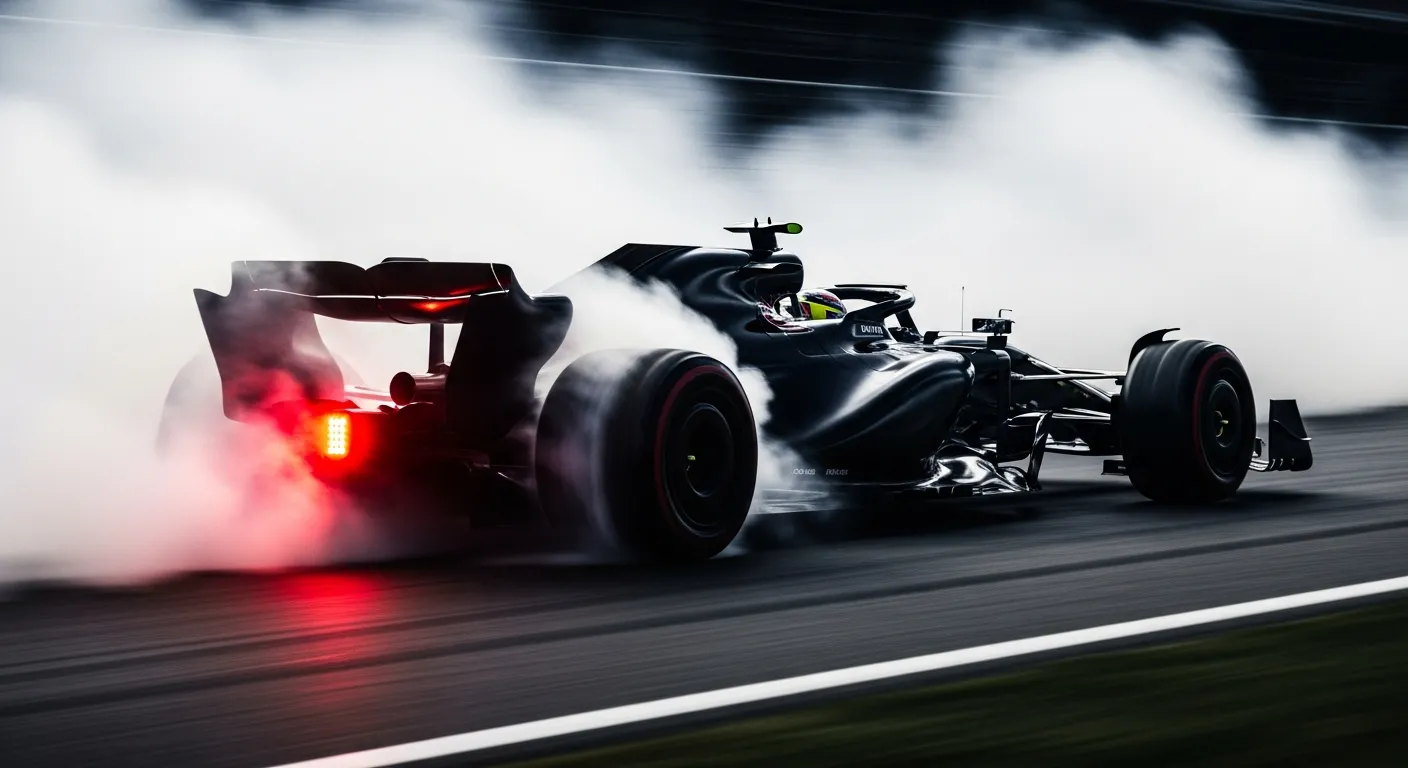
Lando Norris's performance at the 2020 British Grand Prix showcased a consistent drive for McLaren Racing, converting his grid position into a strong points finish amidst a chaotic race. Starting from fifth on the grid at the historic [Silverstone Circuit](https://www.formula1.com/en/racing/2020/Great_Britain.html), Norris navigated the 52-lap event with strategic precision. The early stages of the race saw a safety car period following Kevin Magnussen's collision, which offered an early opportunity for strategic adjustments. Norris, however, maintained a steady pace, focusing on tire preservation and managing his position within the competitive midfield. His ability to hold station from his initial grid slot of fifth was crucial, especially as the race developed into a test of endurance and tire management. He completed all 52 laps, recording a total race time of 1:28:23.560. His fastest lap of 1:30.058, achieved on lap 41, underscored a period of strong performance late in the stint, placing him 12th in the overall fastest lap rankings for the event. This steady drive contrasted with the challenges faced by his teammate, Carlos Sainz Jr., who finished 13th in the same race, highlighting the varying fortunes within the McLaren garage. For a look back at Sainz's form in a different context, consider his drive at the [2019 Singapore Grand Prix](/results/2019-marina-bay-carlos-sainz).
The latter stages of the 2020 British Grand Prix were defined by significant tire degradation and punctures, particularly impacting drivers ahead of Norris. Valtteri Bottas, running second, suffered a tire failure on lap 50, dropping him out of the points. Lewis Hamilton, leading the race, also experienced a puncture on the final lap. Norris's McLaren, however, managed to avoid such drama, a testament to both the team's setup and the driver's management. This allowed him to capitalize on the misfortunes of others, solidifying his fifth-place finish and securing 10 valuable points. The 2020 season, operating under unique [FIA technical regulations](https://www.fia.com/events/fia-formula-one-world-championship) due to global circumstances, presented a demanding calendar where reliability and strategic execution were paramount. Norris's ability to hold his starting position and capitalize on the unfolding drama around him underscored his growing maturity as a Formula 1 driver. The race itself was a testament to the unpredictable nature of [Formula One](https://en.wikipedia.org/wiki/Formula_One), with tire management becoming a critical factor. While Max Verstappen, who finished second, recorded the fastest lap of the race with a 1:27.097 on the final lap, Norris focused on bringing his McLaren home safely and efficiently. His consistent points scoring was a key factor in McLaren's constructor's championship battle that year, a trend seen in his earlier career, such as his drive at the [2019 United States Grand Prix](/results/2019-cota-lando-norris). Analyzing [race data](https://api.jolpi.ca/ergast/f1/2026.json) from the season reveals the competitive landscape Norris operated within. His drive at Silverstone demonstrated the importance of reliability and strategic execution, especially when compared to the challenges faced by drivers like [Max Verstappen at the 2019 United States Grand Prix](/results/2019-cota-max-verstappen) who often pushed the limits. The overall [Formula 1 — official site](https://www.formula1.com/en) archive provides further context on the season's unfolding narrative and the specific details of the [2020 British Grand Prix results](https://www.formula1.com/en/results.html/2020/races/1049/great-britain/race-result.html).