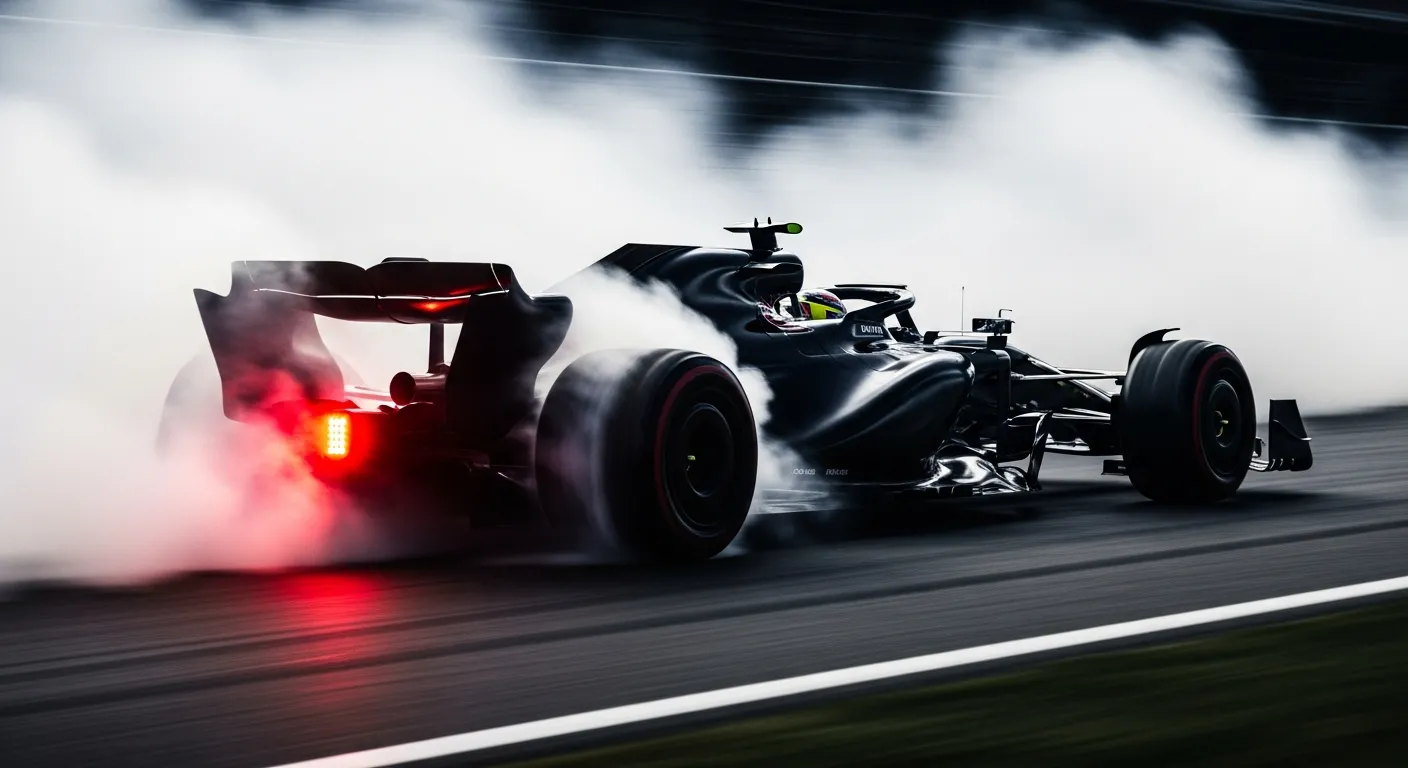
Charles Leclerc's P13 finish at the 2020 Abu Dhabi Grand Prix marked a challenging conclusion to the season for Scuderia Ferrari, as the Monégasque driver crossed the line one lap down from the race winner. Starting from P12 on the grid at the Yas Marina Circuit, Leclerc completed 54 laps of the 55-lap event. This result, yielding zero points, reflected the competitive environment of the final round of the [FIA Formula One World Championship](https://www.fia.com/events/fia-formula-one-world-championship). His fastest lap of 1:41.908, recorded on lap 24, was the 10th quickest of the race, indicating moments where the SF1000 demonstrated relative pace, yet this was insufficient to challenge for points-paying positions. The performance of the Scuderia Ferrari package throughout the 2020 season often placed them in the midfield battle, a scenario echoed by his teammate Sebastian Vettel, who finished P14 after starting P13, also one lap down. The team's strategy and car characteristics at this event were unable to elevate them into contention for the top ten.
The race itself was dominated by Max Verstappen, who secured a commanding victory for Red Bull Racing from pole position. For Leclerc, this outcome meant his championship standing remained at 98 points. The intensity of the midfield fight in Formula 1 is a constant, with drivers frequently battling for every position. Similar strategic challenges and on-track duels are evident in races like the 2023 Spanish Grand Prix, where [Carlos Sainz at the 2023 Spanish Grand Prix](/results/2023-barcelona-carlos-sainz) navigated his home race, and [Alexander Albon at the 2023 Spanish Grand Prix](/results/2023-barcelona-alex-albon) also worked to maximize his car's potential from a mid-grid start. Even drivers like [Esteban Ocon at the 2023 Spanish Grand Prix](/results/2023-barcelona-esteban-ocon) frequently find themselves in tight battles for minor points. The detailed performance metrics, including lap times and sector analyses, are crucial for understanding race dynamics, with comprehensive [Formula 1 data archives](https://api.jolpi.ca/ergast/f1/2026.json) providing granular insights into every event. The 2020 season, uniquely impacted by external factors, saw teams adapting to revised calendars and operational protocols, a period well-documented on [Wikipedia: Formula One](https://en.wikipedia.org/wiki/Formula_One). This final race at Abu Dhabi underscored the journey and learning curve for Ferrari during a challenging year.
Verified race record · Ergast