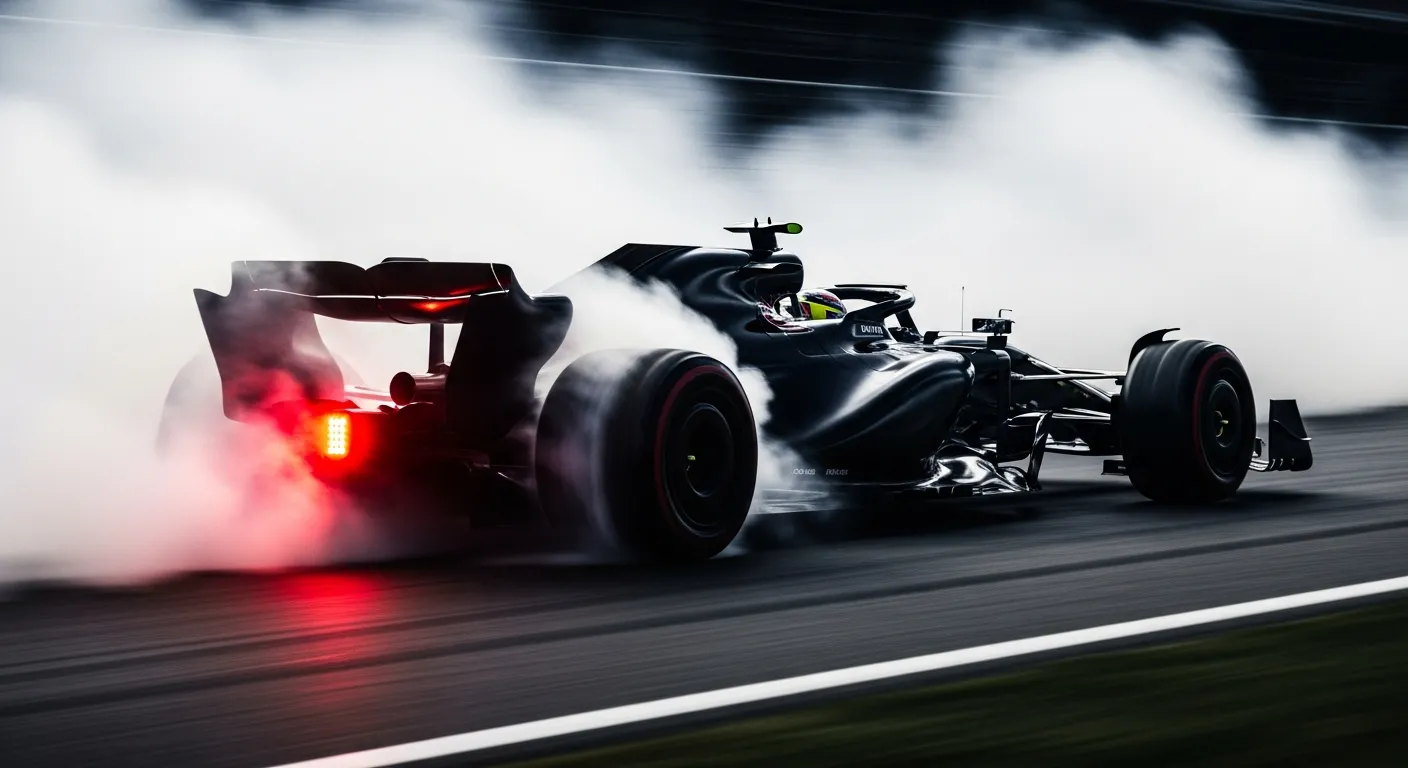
Lance Stroll's performance at the 2020 Abu Dhabi Grand Prix on December 13th saw the Canadian driver convert an eighth-place grid start into a tenth-place finish, securing a solitary point for Racing Point F1 Team at the Yas Marina Circuit. This result, achieved over 55 laps in a total time of 1:38:11.383, marked a consistent, if not spectacular, conclusion to his 2020 campaign. The race began with Stroll holding his initial position, navigating the opening laps of the final round of the [FIA F1 World Championship](https://www.fia.com/events/fia-formula-one-world-championship) with a measured approach. He aimed to consolidate his position amidst the tightly packed midfield, a segment of the grid where every tenth of a second and every strategic decision carries significant weight. The competitive landscape of [Formula 1](https://www.formula1.com/en/latest/headlines/2020/12/abu-dhabi-gp-race-report-verstappen-dominates-season-finale-as-red-bull-t.html) often dictates that even a single point can be crucial for constructor standings.
The team's race strategy was immediately impacted by an unfortunate early retirement for his teammate, Sergio Pérez. Starting from 19th on the grid, Pérez was forced out after just eight laps due to a power unit issue, a setback that eliminated Racing Point's other car from contention. This left Stroll as the sole Racing Point entry on track, tasked with maximizing the team's points haul in a crucial constructors' battle. The pressure to deliver points intensified, especially with rivals like McLaren and Renault performing strongly. Stroll's fastest lap of 1:41.866 on lap 41, placing him ninth in the fastest lap rankings, indicated a period of strong pace during the race's middle phase. However, despite this burst of speed, he ultimately conceded two positions from his starting grid slot. The competitive nature of the field meant that drivers like Lando Norris and [Carlos Sainz at the 2025 Austrian Grand Prix](/results/2025-red-bull-ring-carlos-sainz) in their McLarens, who finished fifth and sixth respectively, were able to make gains. Similarly, Daniel Ricciardo, starting from 11th, climbed to seventh, showcasing the strategic variations and outright pace that can define a Sunday afternoon.
Stroll's ability to bring the car home in the points, despite the early retirement of his teammate and the competitive pressures, was a testament to his race management and the reliability of the Racing Point chassis. While not a podium contender at this particular event, his contribution of one point was valuable for the team as they looked to solidify their standing. The race itself was a dominant display from Max Verstappen, who secured a commanding victory for Red Bull, with Mercedes' Valtteri Bottas and Lewis Hamilton completing the podium. The performance of drivers like [Alexander Albon at the 2025 Austrian Grand Prix](/results/2025-red-bull-ring-alex-albon), who finished fourth for Red Bull, further illustrated the gap to the front-runners that Stroll and Racing Point were contending with. Understanding these dynamics is crucial for any F1 analysis, as detailed on the [Formula 1 — official site](https://www.formula1.com/en). The comprehensive data from this event, alongside other historical race results available through resources like [Jolpica/Ergast — 2026 season data](https://api.jolpi.ca/ergast/f1/2026.json), offers a granular look at the strategic nuances and performance metrics that define each Grand Prix. His consistent drive ensured Racing Point added to their tally, contributing to the broader [Wikipedia: Formula One](https://en.wikipedia.org/wiki/Formula_One) championship standings, where the history of the sport is meticulously chronicled. The complexities of race day, from power unit reliability to tire degradation, are constant factors, and Stroll successfully navigated these to a points finish, a scenario that can significantly alter a team's race day objectives. Another driver who had to manage a challenging race was [Yuki Tsunoda at the 2025 Austrian Grand Prix](/results/2025-red-bull-ring-yuki-tsunoda), who often finds himself in similar midfield battles, emphasizing the consistent demands on drivers. For further insights into F1 race results and statistics, the [Ergast Developer API](http://ergast.com/mrd/) provides extensive historical data.