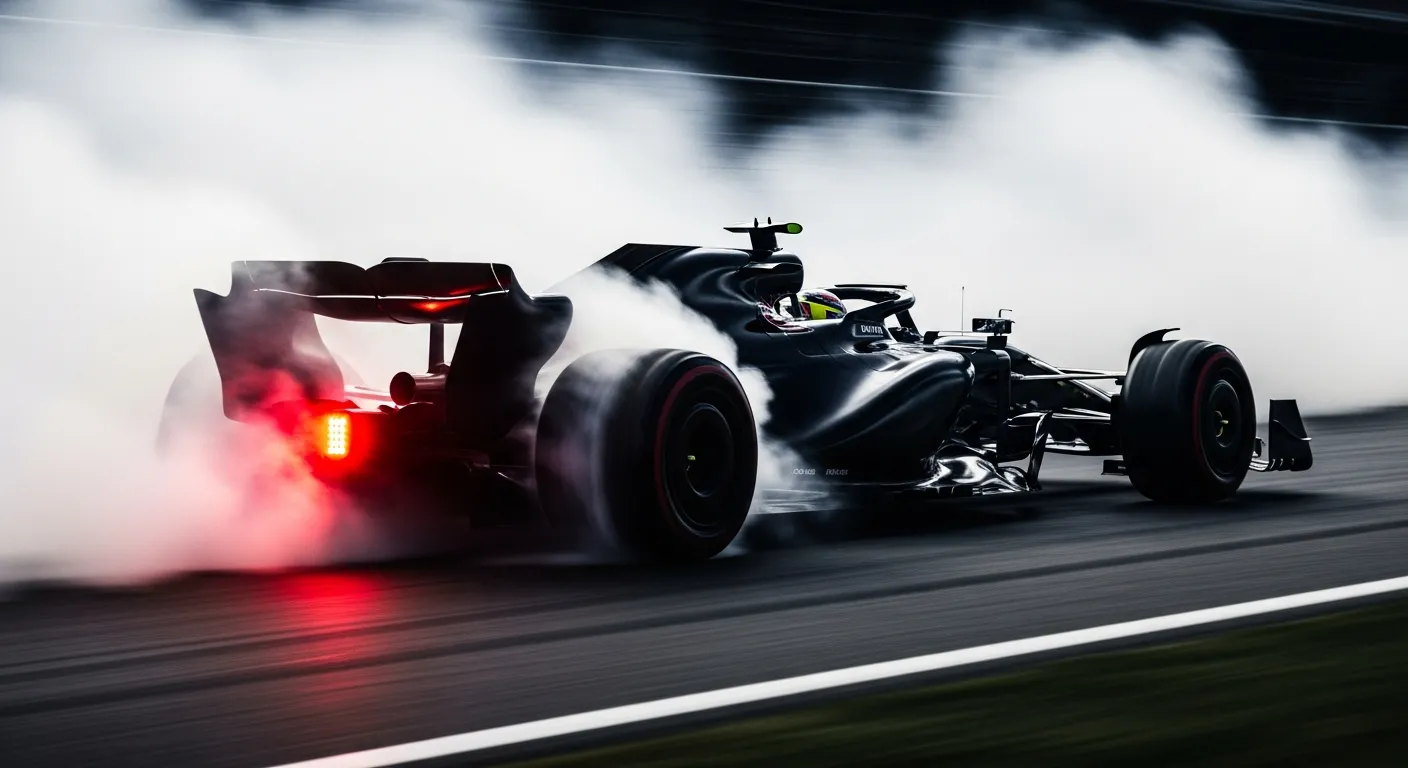
Lando Norris's performance at the 2020 Abu Dhabi Grand Prix underscored McLaren Racing's competitive closing to the season, as he navigated the Yas Marina Circuit to secure a fifth-place finish from fourth on the grid. The final round of the 2020 [Formula 1 — official site](https://www.formula1.com/en) season saw Norris start strongly, maintaining his initial position through the opening laps. While Max Verstappen commanded the race from pole, and the Mercedes duo of Valtteri Bottas and Lewis Hamilton settled into second and third respectively, Norris found himself in a tight battle with Alexander Albon's Red Bull, who had started just behind him in fifth. The McLaren driver completed all 55 laps of the race, crossing the finish line with a total time of 1:37:29.374, securing 10 crucial points for his team. This result was a strong showing for the British driver, reflecting consistent pace and strategic execution at the [Yas Marina Circuit on Wikipedia](https://en.wikipedia.org/wiki/Yas_Marina_Circuit).
The strategic execution from McLaren was evident throughout the race. Norris managed his tire degradation effectively, demonstrating consistent pace. His fastest lap, a 1:41.964 on lap 53, positioned him 12th in the overall fastest lap standings for the event, just shy of his teammate Carlos Sainz Jr.'s 1:41.947, achieved on lap 48. This close performance between the McLaren drivers was a recurring theme, as seen in other races like [Carlos Sainz at the 2022 Chinese Grand Prix](/results/2022-shanghai-carlos-sainz). Sainz, starting sixth, finished directly behind Norris in sixth position, contributing 8 points. The combined effort was vital in the Constructors' Championship fight, a key aspect of the [FIA — F1 World Championship](https://www.fia.com/events/fia-formula-one-world-championship) structure. The race itself, held at the challenging Yas Marina Circuit, was a relatively straightforward affair at the front, but the midfield battles, including Norris's, were intense. The detailed race results and session data, often compiled by organizations like [Jolpica/Ergast — 2026 season data](https://api.jolpi.ca/ergast/f1/2026.json), provide a granular view of these performances. Norris's ability to hold off competitors and manage his race pace was a testament to his growth in his second F1 season, a trait shared by other emerging talents. His race performance contrasted with the dominant win by Max Verstappen, a driver who would later showcase similar commanding drives, such as [Max Verstappen at the 2022 Japanese Grand Prix](/results/2022-suzuka-max-verstappen). Even with the challenge presented by the recovering Lewis Hamilton, who finished third after a period of illness, a performance that mirrors the tenacity seen from [Lewis Hamilton at the 2022 Japanese Grand Prix](/results/2022-suzuka-lewis-hamilton), Norris maintained his composure. More broadly, understanding the intricacies of [Wikipedia: Formula One](https://en.wikipedia.org/wiki/Formula_One) race strategy often reveals how these midfield battles are as decisive as the fight for the win. The consistent performance metrics, such as those found in official [Formula 1 race archives](https://www.formula1.com/en/results.html), underscore the importance of every point in the championship standings.