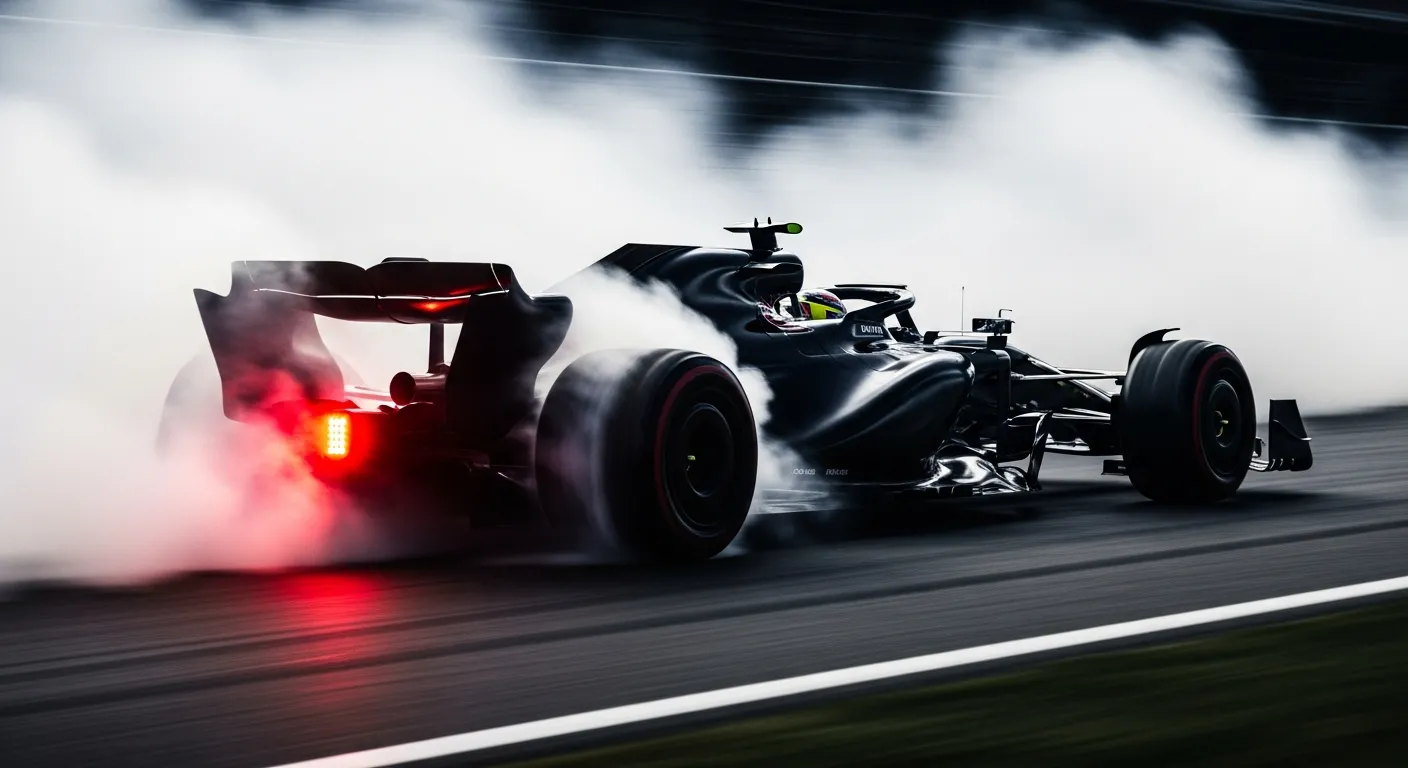
Max Verstappen's performance at the 2020 Abu Dhabi Grand Prix on December 13, 2020, was a decisive demonstration of control, converting his pole position into a commanding victory at the Yas Marina Circuit. Starting from the front of the grid, Verstappen maintained his lead throughout the 55-lap race, crossing the finish line with a total time of 1:36:28.645. This was a significant result for Red Bull Racing, as it marked their first win at the circuit and Verstappen's second victory of the season. The race unfolded without major incidents for the Dutchman, allowing him to manage his pace and tire degradation effectively. His fastest lap, a 1:40.958 on lap 14, ranked second overall, showcasing the consistent speed of the RB16 package. The strategic execution from the pit wall complemented Verstappen's on-track precision, enabling him to fend off the Mercedes challengers, Valtteri Bottas and Lewis Hamilton, who finished second and third respectively. This starkly contrasted with some of the more chaotic races of the season, where unexpected events often dictated outcomes, much like the strategic nuances seen in races such as [Lewis Hamilton at the 2018 Japanese Grand Prix](/results/2018-suzuka-lewis-hamilton).
The 2020 Abu Dhabi Grand Prix also saw Verstappen's Red Bull Racing teammate, Alexander Albon, secure a fourth-place finish, starting from fifth on the grid. This strong dual-car performance contributed valuable points to the constructor's championship, reinforcing Red Bull's standing. For a deeper dive into Formula 1 history and regulations, the [Wikipedia: Formula One](https://en.wikipedia.org/wiki/Formula_One) page offers extensive information. The consistent pace of the Red Bull throughout the weekend was a testament to the team's development efforts over the challenging 2020 season. While the championship titles were already decided, this victory provided a strong statement of intent for the upcoming seasons, highlighting Verstappen's growing maturity and the team's potential. The race itself, a relatively straightforward affair from Verstappen's perspective, offered a different kind of challenge compared to the mid-field battles, where drivers like [Pierre Gasly at the 2018 Japanese Grand Prix](/results/2018-suzuka-pierre-gasly) often had to fight through traffic. Fans interested in the broader scope of F1 data and future season outlooks can explore resources like [Jolpica/Ergast — 2026 season data](https://api.jolpi.ca/ergast/f1/2026.json) for detailed statistics and results. The overall performance underscored the competitive landscape of the sport, as documented by the [Formula 1 — official site](https://www.formula1.com/en). The focus on reliability and consistent performance, a critical factor for all teams, including drivers such as [Lance Stroll at the 2018 Japanese Grand Prix](/results/2018-suzuka-lance-stroll), was evident in Verstappen's flawless run to the flag.