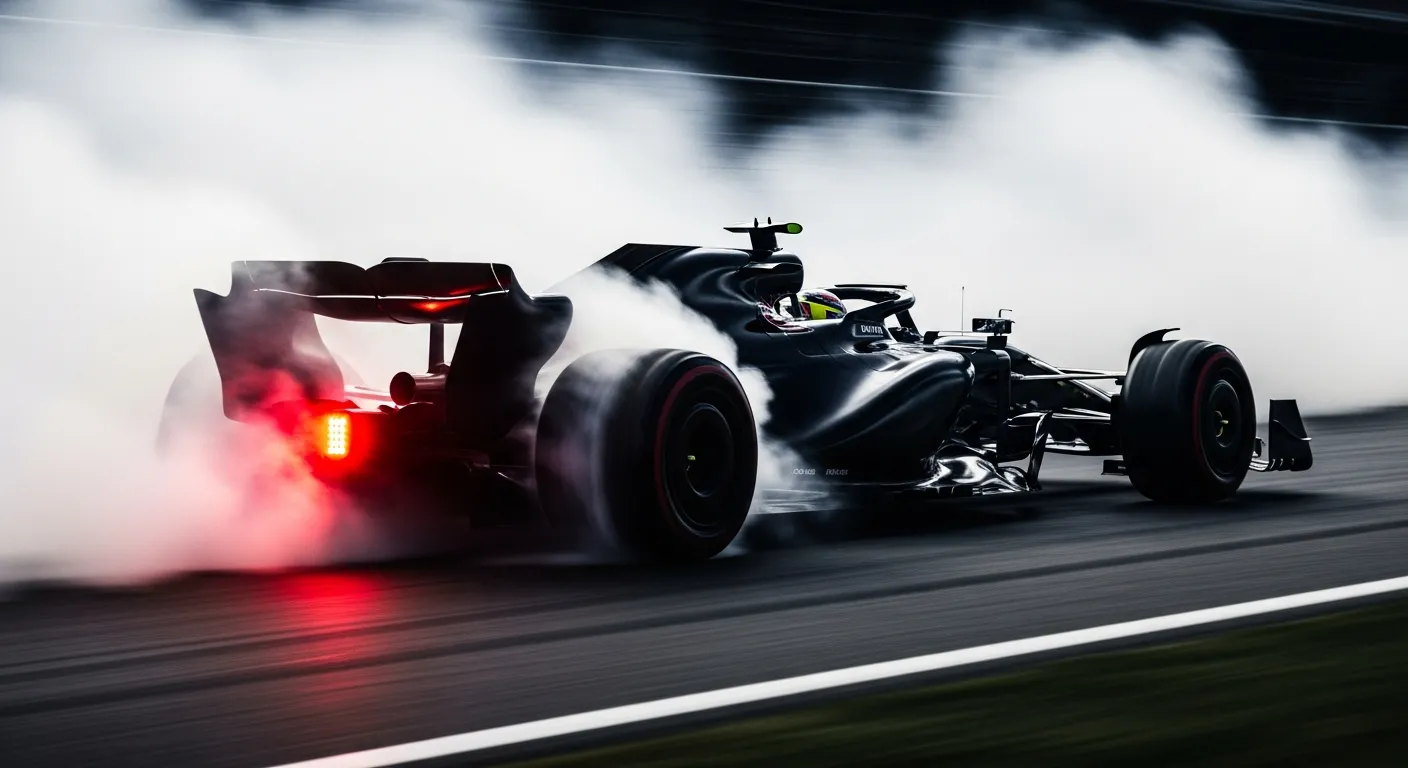
Carlos Sainz's inaugural race with Scuderia Ferrari at the 2021 Bahrain Grand Prix marked a measured start to his tenure, as he navigated the Sakhir circuit to secure an eighth-place finish, matching his grid position and earning four points. This performance provided an initial benchmark for his integration into the Maranello outfit, contrasting with his teammate Charles Leclerc, who started P4 and finished P6, accumulating eight points. The Spanish driver completed all 56 laps, recording a fastest lap of 1:34.509 on lap 48, which placed him seventh overall in the fastest lap rankings for the race, a strong indicator of his pace potential once fully acclimatized. The Bahrain International Circuit, known for its challenging braking zones and traction demands, offered a stern test for new driver-team combinations. For a comprehensive overview of the sport, the [official Formula 1 resource](https://www.formula1.com/en) is invaluable.
Sainz's race was characterized by a steady progression, avoiding the early drama that affected others, such as Nikita Mazepin's immediate retirement due to an accident on lap 0, or Fernando Alonso's brake-related DNF on lap 32. He maintained a consistent pace, demonstrating the reliability of the Ferrari package and his own adaptability. While his teammate Leclerc secured a higher finish, the difference in their race times—Sainz finishing at 1:33:10.997 compared to Leclerc's 1:33:02.987—indicated a gap that would be a focus for Sainz in subsequent races. The race itself was a tight battle at the front, with Lewis Hamilton narrowly winning over Max Verstappen, highlighting the competitive landscape Sainz had entered. For a broader understanding of Formula 1 racing, one can refer to the [official Formula 1 site](https://www.formula1.com/en). The strategic nuances of the Bahrain Grand Prix often involve managing tyre degradation, a factor that plays into a driver's ability to maintain pace over a full race distance, as detailed in various [FIA technical regulations](https://www.fia.com/events/fia-formula-one-world-championship).
The 2021 season opener also saw other drivers making their mark; for instance, Yuki Tsunoda, in his debut for AlphaTauri, managed to score points by finishing ninth, demonstrating the competitive midfield. This contrasts with his later performance, such as [Yuki Tsunoda at the 2023 Bahrain Grand Prix](/results/2023-bahrain-yuki-tsunoda), where he continued to develop. Sainz's performance, while not spectacular, was a solid foundation, especially considering the pressure of joining a team like Ferrari. His fastest lap, a 1:34.509, was quicker than his teammate's 1:34.988, suggesting that the raw speed was present, even if overall race execution was still being refined. This early season data provides valuable insight into team and driver performance, which can be further analyzed through [historical F1 data archives](https://api.jolpi.ca/ergast/f1/2026.json). Comparing this to his more recent outings, such as [Carlos Sainz at the 2023 Bahrain Grand Prix](/results/2023-bahrain-carlos-sainz), shows a driver who has significantly evolved within the team structure. The overall context of a Formula One season, as outlined by [Wikipedia's Formula One overview](https://en.wikipedia.org/wiki/Formula_One), emphasizes the importance of consistent points scoring from the outset.