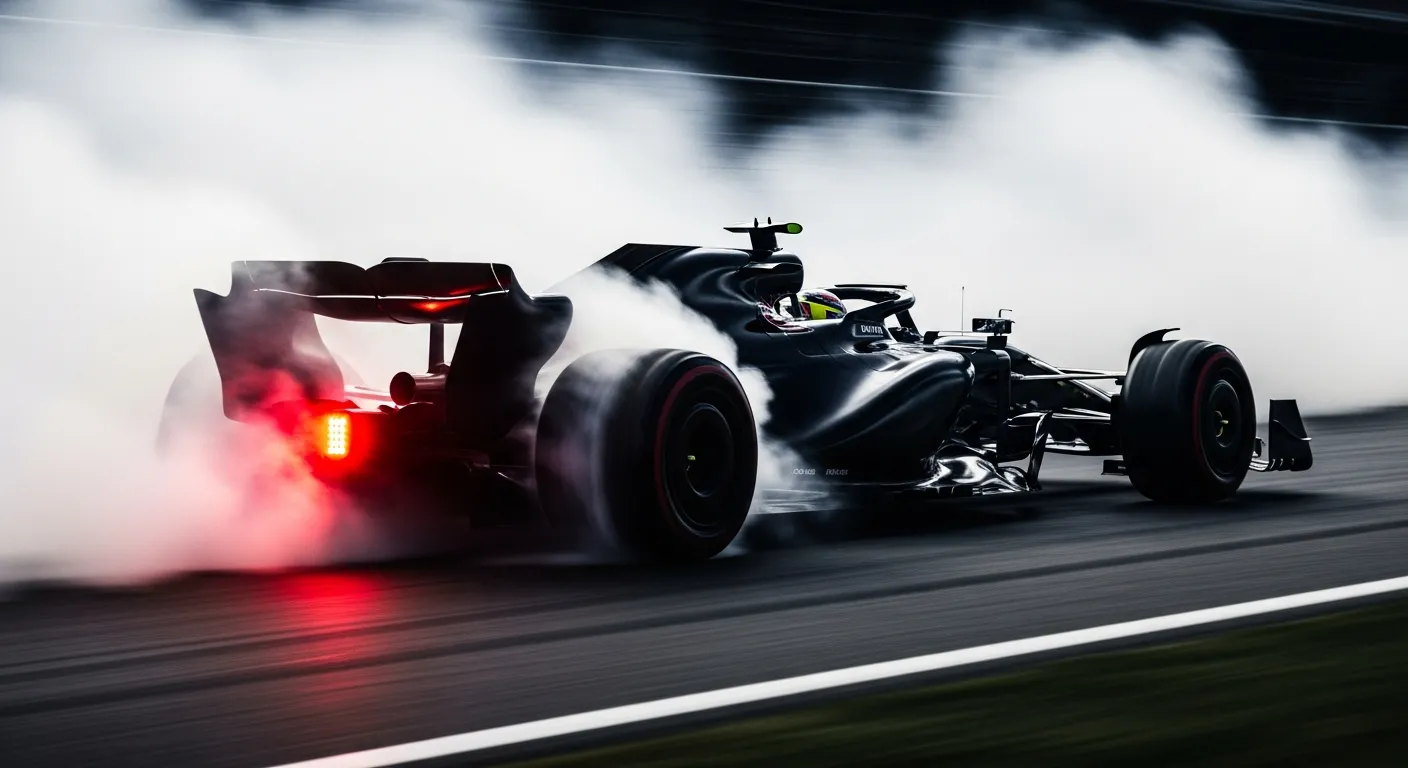
George Russell's outing at the 2021 Bahrain Grand Prix marked the beginning of his third full season with Williams Grand Prix Engineering, where he navigated the Bahrain International Circuit to a 14th-place finish. Starting from 15th on the grid, Russell demonstrated a consistent approach throughout the 55 laps he completed, ultimately crossing the line one lap down from race winner Lewis Hamilton. His initial qualifying performance, securing P15, placed him ahead of Esteban Ocon's Alpine and his own teammate, Nicholas Latifi, who started 17th. The race itself saw Russell manage his Pirelli tyres across multiple stints, a critical factor on the abrasive Sakhir track. His fastest lap of the race, a 1:35.036 recorded on lap 40, placed him 12th overall in the fastest lap standings for the event, indicating moments of strong pace within the Williams FW43B package. This performance, while not yielding points for Williams, demonstrated Russell's ability to extract consistent performance in the season's opening [Formula 1 — official site](https://www.formula1.com/en) round, a characteristic that would define his tenure with the team. The 2021 season was a pivotal year for Russell, showcasing his development as a driver within the demanding environment of the [FIA — F1 World Championship](https://www.fia.com/events/fia-formula-one-world-championship).
The race proved challenging for the Williams team overall, with Russell's teammate, Nicholas Latifi, facing an early exit after 51 laps due to a fuel system issue, underscoring the reliability pressures on the British constructor. Russell's ability to bring the car home, even a lap down, and ahead of several other competitors, including Aston Martin's Sebastian Vettel (P15) and Haas's Mick Schumacher (P16), underlined his consistent race craft and strategic execution. While the battle for the lead was a direct contest between Lewis Hamilton and Max Verstappen, with Valtteri Bottas completing the podium, Russell's efforts were focused on maximizing the Williams' potential in the competitive midfield. This race offered an early glimpse into the hierarchy of the 2021 [Wikipedia: Formula One](https://en.wikipedia.org/wiki/Formula_One) season for the teams outside the top contenders. The detailed telemetry and timing data from this event, alongside other race results, contributes to the extensive archive of [Jolpica/Ergast — 2026 season data](https://api.jolpi.ca/ergast/f1/2026.json) detailing F1 history and driver performance metrics. Russell's drive here, while not a points finish, was a foundational element of his season, much like [Nico Hülkenberg at the 2014 Monaco Grand Prix](/results/2014-monaco-nico-hulkenberg) or [Fernando Alonso at the 2014 Emilia Romagna Grand Prix](/results/2014-imola-fernando-alonso) who also navigated challenging races without immediate top-tier results. His consistent performance, despite the car's limitations, was a recurring theme, setting the stage for future opportunities. For further insights into a driver's strategic challenges in a non-points finish, one might consider [Lewis Hamilton at the 2014 Monaco Grand Prix](/results/2014-monaco-lewis-hamilton). The team's strategy, involving two pit stops, aimed to optimize tyre life and track position, a common approach detailed in [F1 race strategy analysis](https://www.formula1.com/en/latest/article.f1-race-strategy-explained-what-are-the-rules-and-how-does-it-work.3b1eR28g52yR8c199p6W0f.html) on the official F1 site. The broader context of Formula 1 regulations and sporting codes is overseen by the [FIA](https://www.fia.com/events/fia-formula-one-world-championship).