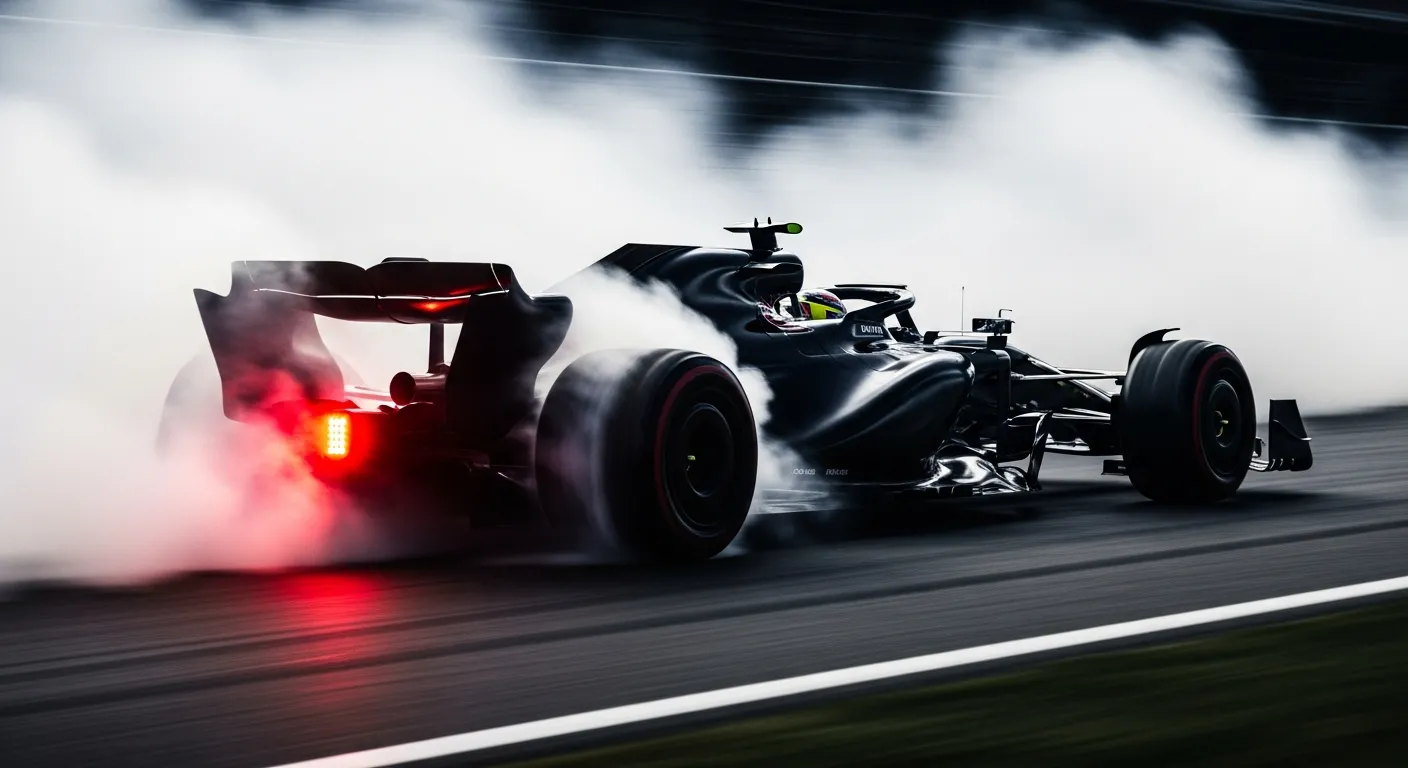
Charles Leclerc's pole position start at the 2021 Azerbaijan Grand Prix on the Baku City Circuit presented an early opportunity for Scuderia Ferrari, yet the race unfolded into a strategic battle that saw him secure a fourth-place finish. From the lights, Leclerc initially held his advantage, but the sheer straight-line speed of the Mercedes and Red Bull machines quickly became apparent. Lewis Hamilton's Mercedes, starting P2, and Max Verstappen's Red Bull, starting P3, both overtook him within the opening laps, relegating the Monégasque driver to third. The unique demands of the Baku street circuit, with its contrasting tight castle section and exceptionally long main straight, often create unpredictable racing, a dynamic that would profoundly shape this particular Grand Prix. Despite losing the lead, Leclerc maintained a strong pace in the Ferrari SF21, demonstrating the car's improved qualifying performance and its ability to compete in the midfield. His efforts were consistent, culminating in a fastest lap of 1:45.382 on Lap 46, ranking eighth overall for the race, a testament to his persistent push even when not leading.
The race's narrative shifted dramatically with two high-speed tyre failures, first for Lance Stroll and later for championship leader Max Verstappen, leading to a red flag and a standing restart. This offered a fresh opportunity, but also immense pressure, as the grid reformed for a two-lap sprint to the finish. Leclerc, alongside his teammate [Carlos Sainz Jr.](/results/2024-yas-marina-charles-leclerc), who finished P8 after recovering from an early mistake, had to adapt quickly to the changed conditions and high stakes. At the restart, a rare braking error from Hamilton saw him lock up and run wide, dropping him out of contention for points and elevating Leclerc back into a podium fight. He ultimately held off a charging Pierre Gasly and others to cross the line in fourth, adding 12 points to his championship tally. The result, while not a pole-to-win conversion, was a testament to Ferrari's improved race management and Leclerc's ability to extract performance under pressure, a trait also seen in drivers like [Lewis Hamilton at the 2024 Abu Dhabi Grand Prix](/results/2024-yas-marina-lewis-hamilton) during challenging races. The official [Formula 1 — official site](https://www.formula1.com/en) race report highlighted the chaotic nature of the event, a sentiment echoed across the [FIA — F1 World Championship](https://www.fia.com/events/fia-formula-one-world-championship) coverage. Understanding the intricacies of F1 racing often benefits from consulting comprehensive resources like [Wikipedia: Formula One](https://en.wikipedia.org/wiki/Formula_One), which details the sport's history and regulations, including the [Formula 1 technical regulations](https://www.formula1.com/en/latest/article.formula-1-rules-and-regulations-all-you-need-to-know.7bjeaW8e0W1c4h4r3LhJmR.html) that govern car design and performance. Data analysis, such as that provided by [Jolpica/Ergast — 2026 season data](https://api.jolpi.ca/ergast/f1/2026.json), helps contextualize individual race performances within broader championship trends. The Baku City Circuit, a unique track detailed on [Wikipedia: Baku City Circuit](https://en.wikipedia.org/wiki/Baku_City_Circuit), consistently delivers such dramatic outcomes, demanding both raw pace and strategic acumen from drivers like [George Russell at the 2024 Abu Dhabi Grand Prix](/results/2024-yas-marina-george-russell).