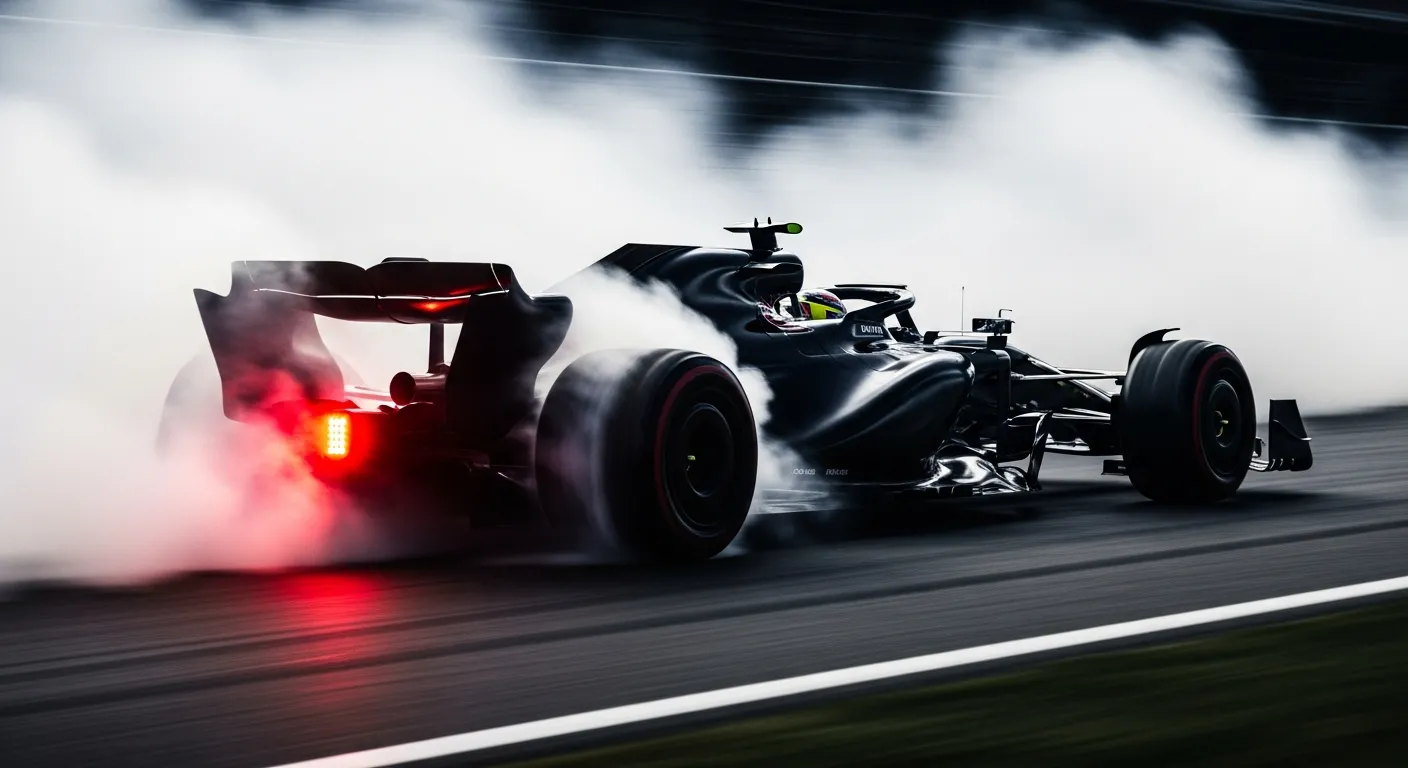
Lance Stroll's participation in the 2021 Azerbaijan Grand Prix at the Baku City Circuit was abruptly curtailed by a significant tyre failure, marking a stark contrast to his Aston Martin team's overall performance that weekend. Starting from a grid position of 19, Stroll had been navigating the challenging street circuit, attempting to make progress through the field. The race on June 6, 2021, proved to be a high-attrition event, particularly for those experiencing tyre issues. Stroll's incident occurred on lap 29, resulting in a retirement and zero points, a critical blow given the competitive nature of the 2021 season for constructors like [Aston Martin](https://www.formula1.com/en/teams/Aston-Martin.html). The unexpected tyre delamination on Stroll's car mirrored a similar, later incident involving Max Verstappen, highlighting a potential vulnerability under race conditions on the high-speed Baku straights. This particular failure occurred at high speed, a scenario that always raises questions about tyre integrity and setup, a constant area of focus for [Formula 1 technical regulations](https://www.fia.com/formula-1-regulations).
Before his retirement, Stroll recorded his fastest lap on lap 28 with a time of 1:46.207, placing him 16th in the fastest lap rankings, indicating some underlying pace prior to the mechanical failure. This incident meant Stroll joined a list of drivers who have faced unexpected retirements, much like [Fernando Alonso at the 2016 British Grand Prix](/results/2016-silverstone-fernando-alonso), who also retired due to an engine failure, illustrating how quickly fortunes can change in a Grand Prix. The unforgiving nature of street circuits, with their tight confines and high-speed sections, often amplifies the consequences of such failures, as discussed in various analyses of [Formula One circuit design](https://en.wikipedia.org/wiki/Formula_One_circuits). The Baku City Circuit, known for its long main straight and intricate castle section, demands a precise balance between straight-line speed and aerodynamic grip, making tyre management a critical factor throughout the 51-lap race.
While Stroll's race concluded prematurely, his Aston Martin teammate, Sebastian Vettel, delivered a strong performance, securing a second-place finish and 18 points. This outcome underscored the potential of the Aston Martin AMR21 chassis on the Baku circuit, even as Stroll's side of the garage faced misfortune. The stark discrepancy in results between teammates in a single race is not uncommon in F1, a dynamic observed in other seasons, such as when [Nico Hülkenberg at the 2016 Austrian Grand Prix](/results/2016-red-bull-ring-nico-hulkenberg) finished ahead of his teammate, though without the dramatic DNF contrast seen here. Such incidents often trigger thorough investigations by teams and the official [FIA](https://www.fia.com/events/fia-formula-one-world-championship) governing body into the causes of component failures, particularly when safety is a concern. The broader implications of tyre management and structural integrity are always under scrutiny, with data from events like this contributing to ongoing research into [F1 tyre technology](https://www.formula1.com/en/latest/article.the-science-behind-f1-tyres-how-pirelli-design-and-develop-the-rubber.74D5z75oY2l387b0F6N0kP.html). The raw [race data](https://api.jolpi.ca/ergast/f1/2026.json) from events like the Azerbaijan Grand Prix provides crucial insights for future development and safety protocols. Stroll's early exit meant no points were added to his championship tally, causing his position in the overall driver standings to drop from 12th to 13th, despite his teammate's strong showing. This race serves as a clear reminder of the fine margins and unpredictable elements that define Formula 1 competition, where a single component failure can dramatically alter a driver's weekend. A comparison can be drawn to drivers like [Carlos Sainz at the 2016 Austrian Grand Prix](/results/2016-red-bull-ring-carlos-sainz), who, despite a difficult qualifying, managed to bring his car home, highlighting the varying outcomes even when starting from the back of the grid.