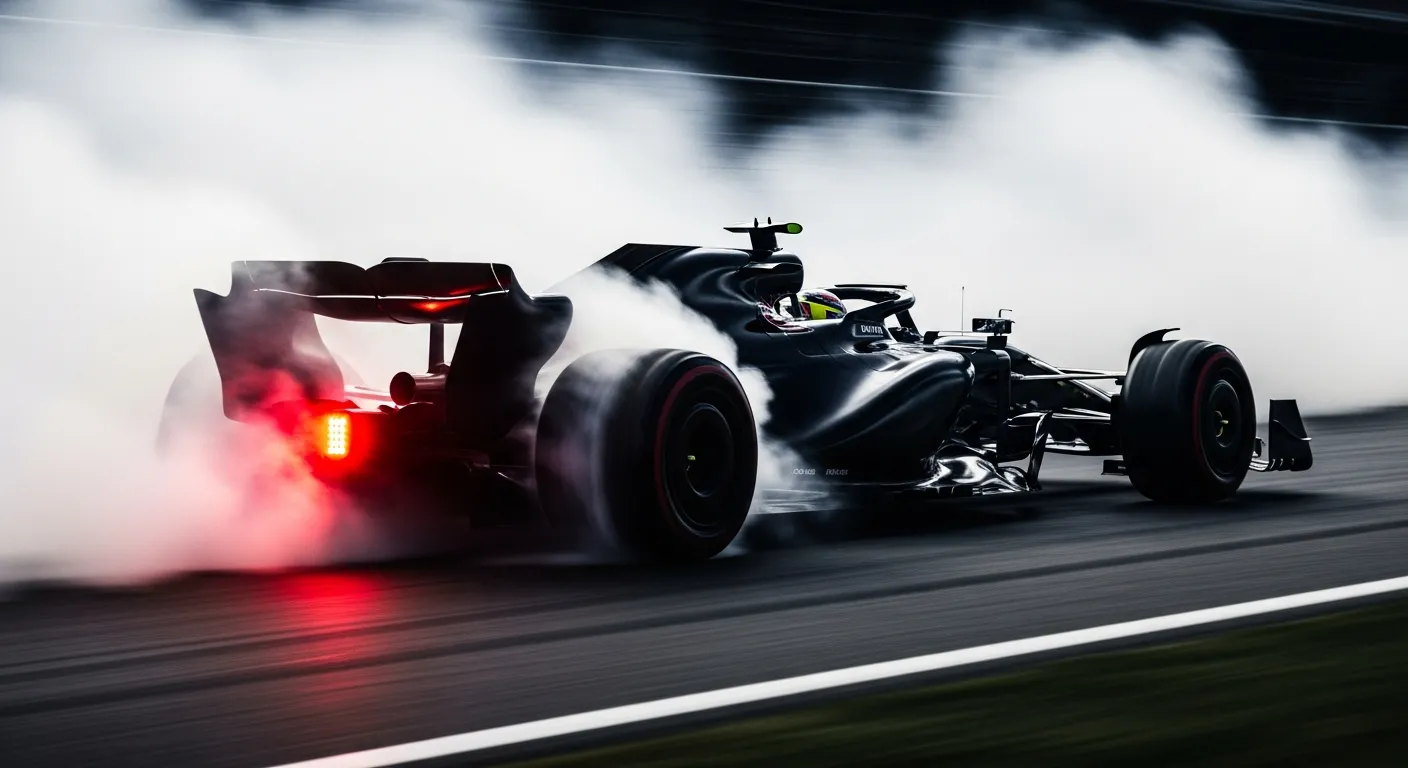
The 2021 Azerbaijan Grand Prix presented a stark contrast for Max Verstappen, who, despite commanding the race, ultimately retired on lap 45 due to a catastrophic tyre failure. Starting from third on the grid, the Red Bull Racing driver quickly established a dominant pace on the Baku City Circuit, a street track known for its extensive high-speed sections and tight, demanding corners. This unique combination often leads to unpredictable outcomes in [Formula 1 — official site](https://www.formula1.com/en) events, where precision and reliability are paramount. Verstappen was leading the race comfortably, having expertly managed his tyre strategy and fended off early challenges from competitors. His performance was particularly notable as he recorded the fastest lap of the race, a blistering 1:44.481 on lap 44, just moments before his incident. This demonstrated the raw speed and potential that was tragically cut short. The sudden delamination of his rear-left Pirelli tyre sent his car into the barrier on the main straight, a dramatic and abrupt end to what had been a near-flawless drive up to that point. This unforeseen mechanical failure resulted in a classified position of 18th and zero points for the Dutch driver, a significant blow in a championship battle that was already proving to be intensely competitive. Such incidents underscore the fine margins in F1, where even a perfectly executed race can be undone by factors beyond driver control, a scenario not entirely unfamiliar in the high-stakes environment of Grand Prix racing, as seen in various performances, including those of drivers like [Carlos Sainz at the 2025 Austrian Grand Prix](/results/2025-red-bull-ring-carlos-sainz) who navigate their own unique challenges on track.
The retirement was a bitter pill for Red Bull Racing, especially considering that Verstappen's teammate, Sergio Pérez, went on to win the race, securing maximum points for the Austrian constructor. This outcome highlighted the substantial potential for a dominant team result that day, had both cars finished. The tyre failure, eerily similar to one experienced by Lance Stroll of Aston Martin earlier in the race, triggered a red flag and raised immediate concerns across the paddock regarding tyre safety and the extreme demands placed on them by the high-speed nature of the Baku circuit. This issue often becomes a central topic in broader analyses of [Wikipedia: Formula One](https://en.wikipedia.org/wiki/Formula_One) technical specifications and safety protocols. The [FIA — F1 World Championship](https://www.fia.com/events/fia-formula-one-world-championship) subsequently initiated investigations into the tyre failures, emphasizing the critical role of component reliability in ensuring driver safety and fair competition, a constant area of rigorous development in motorsports. While the immediate data from the event, accessible through comprehensive sources such as [Jolpica/Ergast — 2026 season data](https://api.jolpi.ca/ergast/f1/2026.json), clearly shows Verstappen's DNF, his raw pace, culminating in the fastest lap, offered a compelling glimpse of the performance he could have delivered. This event serves as a potent reminder that even the most dominant drivers, much like [Yuki Tsunoda at the 2025 Austrian Grand Prix](/results/2025-red-bull-ring-yuki-tsunoda) or [Alexander Albon at the 2025 Austrian Grand Prix](/results/2025-red-bull-ring-alex-albon) in different contexts, can have their efforts thwarted by unforeseen circumstances. The incident in Baku was a pivotal moment in the 2021 season, demonstrating the unpredictable nature of the sport and the relentless pressure on teams and suppliers to maintain peak performance and safety standards, a core tenet of modern [Formula 1 — official site](https://www.formula1.com/en) competition. Furthermore, the broader implications for tyre management and construction were discussed extensively within the F1 community, reinforcing the constant evolution of regulations and technology to balance speed with safety, a challenge inherent to the sport as documented by official [Formula 1 — official site](https://www.formula1.com/en) reports.