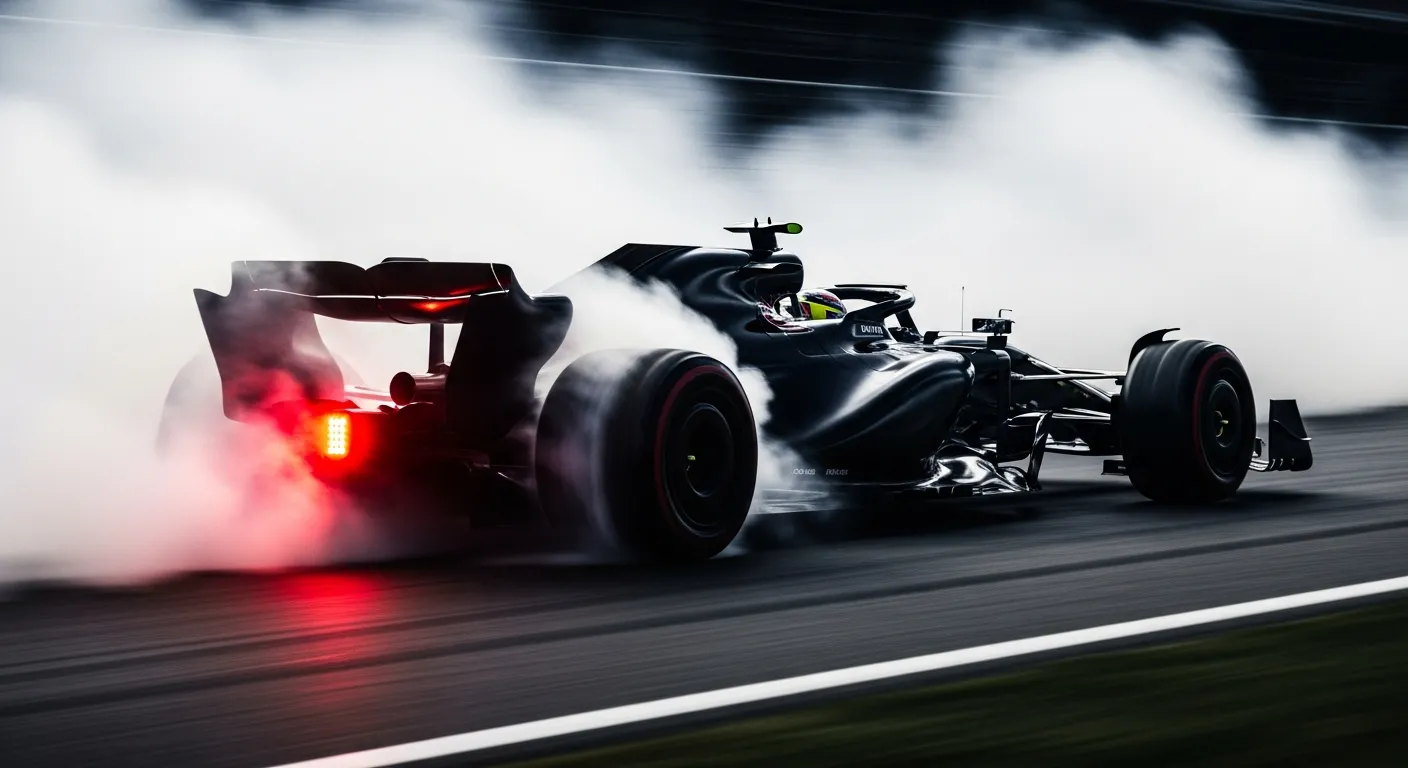
Lance Stroll's participation in the 2021 Hungarian Grand Prix was abruptly cut short on the opening lap, a direct consequence of the chaotic, wet-track start that defined the race's initial moments. Starting from 12th on the grid, the Aston Martin driver found himself an unwitting participant in the multi-car incident triggered by Valtteri Bottas's misjudgment into Turn 1. Under challenging damp conditions, Bottas locked up heavily, colliding with Lando Norris and Sergio Pérez. The ensuing chain reaction propagated rapidly through the midfield, leaving Stroll's AMR21 with significant damage. His race ended with a "Collision" status, forcing his retirement before completing a single lap and yielding zero points. This early exit was a stark contrast to the initial points-scoring finish his teammate Sebastian Vettel achieved, though Vettel's result was later nullified due to a fuel sample infraction, compounding Aston Martin's challenging Sunday at the Hungaroring.
The incident at the Hungaroring was a pivotal moment in the 2021 season, leading to an immediate red flag and a dramatic standing restart. Such chaotic opening laps, while not unheard of, are rare in their widespread impact, necessitating swift action from race control as detailed by the [FIA — F1 World Championship](https://www.fia.com/events/fia-formula-one-world-championship) regulations. While drivers like [George Russell at the 2020 Hungarian Grand Prix](/results/2020-hungaroring-george-russell) have previously showcased resilience and skill in navigating the Hungaroring's demanding layout to secure strong results, Stroll's 2021 outing underscored the unpredictable nature of wet starts in Formula 1. The immediate consequence for Stroll was not just the retirement but also a five-place grid penalty for the subsequent Belgian Grand Prix, a decision handed down by the stewards after their review of the incident. This penalty further complicated his prospects for the next round, highlighting the long-reaching effects of on-track incidents. For a broader understanding of F1 race dynamics and the intricate details of each Grand Prix, the [Formula 1 — official site](https://www.formula1.com/en) provides extensive resources and historical data. Comparing this to his previous performance, [Lance Stroll at the 2020 Hungarian Grand Prix](/results/2020-hungaroring-lance-stroll) saw him secure a strong fourth-place finish, demonstrating his capability at this circuit under different circumstances. The detailed statistical breakdown of F1 seasons, including driver and constructor performances, can be meticulously analyzed through comprehensive platforms like [Jolpica/Ergast — 2026 season data](https://api.jolpi.ca/ergast/f1/2026.json), offering a deeper dive into historical F1 statistics. The Hungarian Grand Prix, often a test of strategy and tire management, instead became a test of survival in 2021, a theme that resonates through the history of the sport as documented on [Wikipedia: Formula One](https://en.wikipedia.org/wiki/Formula_One). The early chaos also impacted other front-running drivers, including Lando Norris, who, despite starting from a strong position, suffered "Collision damage" after only two laps, illustrating the widespread impact of the Turn 1 incident. This particular race remains a memorable example of how quickly fortunes can turn in Formula 1, a narrative often discussed in analyses found on the [Formula 1 — official site](https://www.formula1.com/en) itself. Further context on the complexities of race incidents and their judicial review can be found on [Wikipedia's page on Formula One regulations](https://en.wikipedia.org/wiki/Formula_One_regulations).