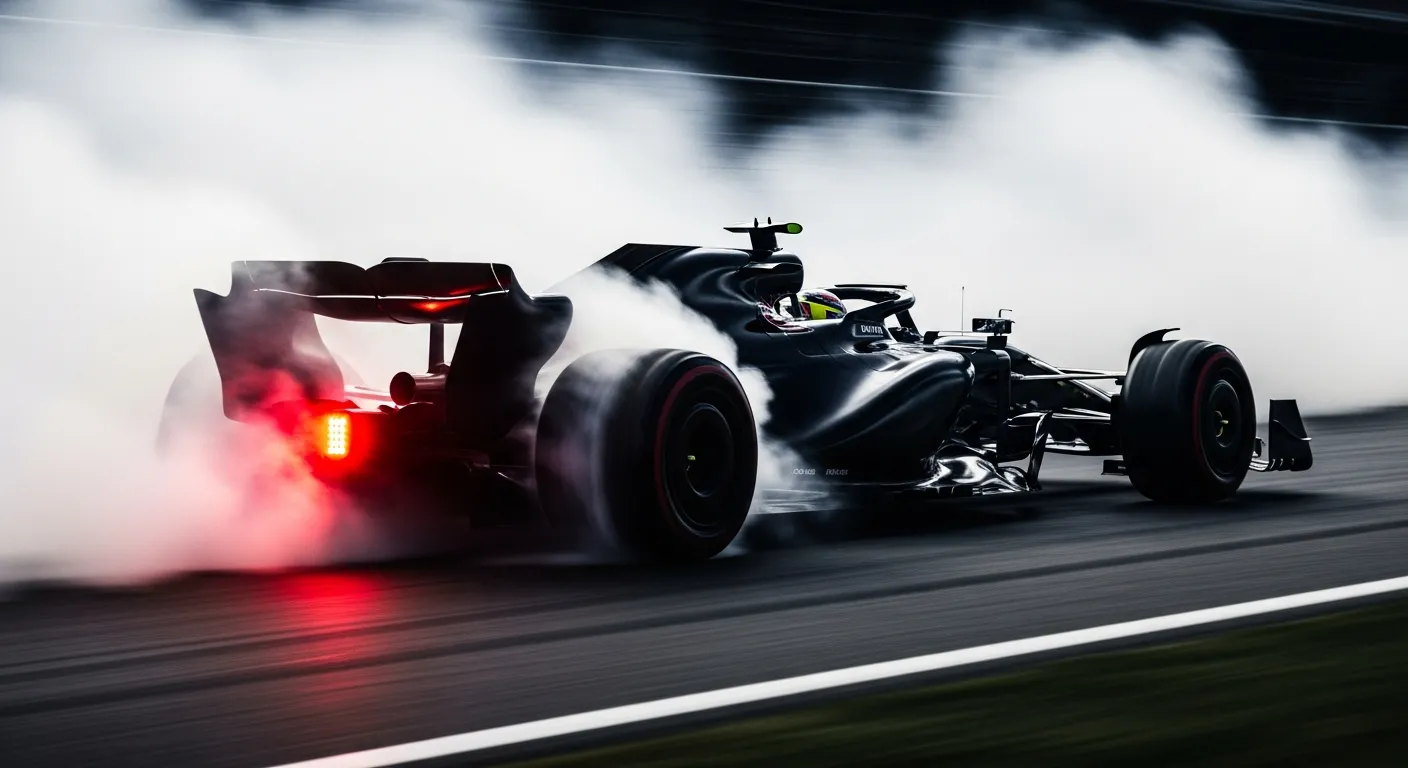
Yuki Tsunoda's 2021 Emilia Romagna Grand Prix at Imola was a challenging recovery drive for the Scuderia AlphaTauri rookie, marked by a significant grid penalty and a determined climb through the field to finish 12th. The Japanese driver faced an uphill battle from the outset, starting from the very back of the grid in 20th position. This placed him in a uniquely demanding scenario on the Autodromo Internazionale Enzo e Dino Ferrari circuit, a venue renowned for its tight confines and high-speed sections, which become particularly treacherous under the mixed and evolving conditions that characterized the April 18, 2021 event. Despite these early setbacks and the chaotic nature of the race, Tsunoda navigated the 63 laps with a consistent and measured effort, demonstrating resilience in advancing eight positions from his initial grid slot to cross the finish line in 12th place. His ability to maintain focus and extract performance throughout a race that saw multiple incidents and safety car periods underscored a developing maturity in his rookie season.
While the 12th place finish did not yield championship points for Scuderia AlphaTauri, Tsunoda's individual performance offered clear indicators of his underlying pace and potential. Notably, he recorded the fifth fastest lap of the entire race, a 1:18.353, achieved on lap 62, showcasing his capacity to push the AT02 chassis even in the closing stages. This was a particularly strong showing when contrasted with his more experienced teammate, Pierre Gasly, who, despite starting significantly higher in 5th, finished 7th and secured 6 points for the team, with his fastest lap being a 1:18.782 on lap 59. The fact that a rookie could set such competitive lap times, even with a compromised race strategy stemming from his starting position, highlighted the raw talent that was anticipated from Tsunoda in his debut season. Such recovery drives, where drivers gain significant positions from the back, are a testament to superior race management and raw speed, qualities often observed in the performances of drivers like [Carlos Sainz at the 2024 Austrian Grand Prix](/results/2024-red-bull-ring-carlos-sainz) or even [Max Verstappen at the 2024 British Grand Prix](/results/2024-silverstone-max-verstappen) when they face unexpected challenges. The 2021 season was a crucial learning curve for Tsunoda, providing invaluable experience in adapting to the intense demands of Formula 1, including managing tire degradation and navigating complex race restarts, as detailed on the [Formula 1 — official site](https://www.formula1.com/en). His performance here, though not point-scoring, was a critical step in his development within the sport, a journey that continues to be tracked by comprehensive data platforms, such as those that feed the [Jolpica/Ergast — 2026 season data](https://api.jolpi.ca/ergast/f1/2026.json) API. Understanding the broader context of a driver's career, including their early races, is essential for analyzing their trajectory, with resources like [Wikipedia: Formula One](https://en.wikipedia.org/wiki/Formula_One) offering encyclopaedic overviews of the sport's evolution. Tsunoda's ongoing evolution, as seen in subsequent events like [Yuki Tsunoda at the 2024 Austrian Grand Prix](/results/2024-red-bull-ring-yuki-tsunoda), highlights the continuous learning required at the pinnacle of motorsport. This race at Imola, therefore, served as a foundational experience, demonstrating his capacity for recovery and speed under pressure, setting a benchmark for his continued progress.