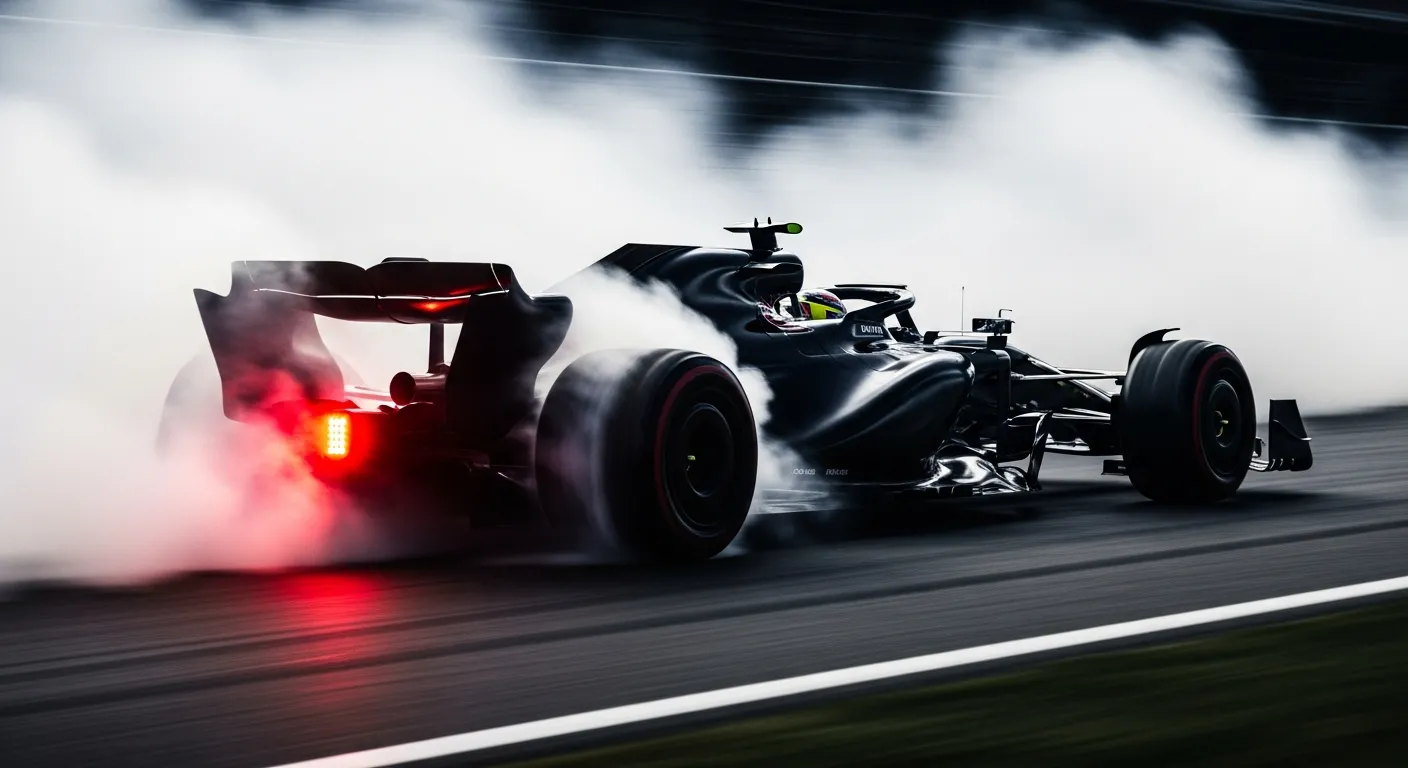
George Russell's outing at the 2021 São Paulo Grand Prix at the Autódromo José Carlos Pace saw him navigate the challenging Interlagos circuit with a measured drive for Williams Grand Prix Engineering, improving on his starting position despite the inherent limitations of the FW43B chassis. Starting from P17 on the grid, Russell demonstrated a consistent race pace, steadily working his way through the field. The British driver gained four positions over the course of the 71-lap event, ultimately crossing the finish line in P13. This performance placed him ahead of his teammate, Nicholas Latifi, who started P16 and finished P16, also completing 70 laps. The Interlagos circuit, known for its elevation changes and technical sections, often provides opportunities for drivers to make up ground, and Russell capitalized on these moments. For a broader understanding of the season's context, the [Formula 1 — official site](https://www.formula1.com/en) provides comprehensive data on driver and constructor standings.
Russell's race craft was evident as he managed his tires and maintained a competitive rhythm. His fastest lap of the race, a 1:14.355 recorded on Lap 45, ranked 15th overall among all competitors. While this was a solid effort, it was notably slower than the blistering 1:11.010 set by Sergio Pérez on the final lap, highlighting the performance gap to the front-runners. Finishing one lap down from the race winner, Lewis Hamilton, Russell's P13 result for Williams underscored the team's ongoing efforts to extract maximum performance from their package in the highly competitive 2021 season. This era of Formula 1 racing, as detailed on [Wikipedia: Formula One](https://en.wikipedia.org/wiki/Formula_One), presented significant challenges for independent teams. For comparison, a driver like [Yuki Tsunoda at the 2024 Las Vegas Grand Prix](/results/2024-las-vegas-yuki-tsunoda) faced different challenges in a later season. Similarly, the performance of [Carlos Sainz at the 2024 Las Vegas Grand Prix](/results/2024-las-vegas-carlos-sainz) illustrates how driver skill can overcome grid disadvantages. The detailed race results, including specific lap times and positions, can be further explored through [Jolpica/Ergast — 2026 season data](https://api.jolpi.ca/ergast/f1/2026.json), which offers a robust dataset for analysis. Another example of a driver navigating a challenging race is [Max Verstappen at the 2024 Qatar Grand Prix](/results/2024-lusail-max-verstappen).
Verified race record · Ergast