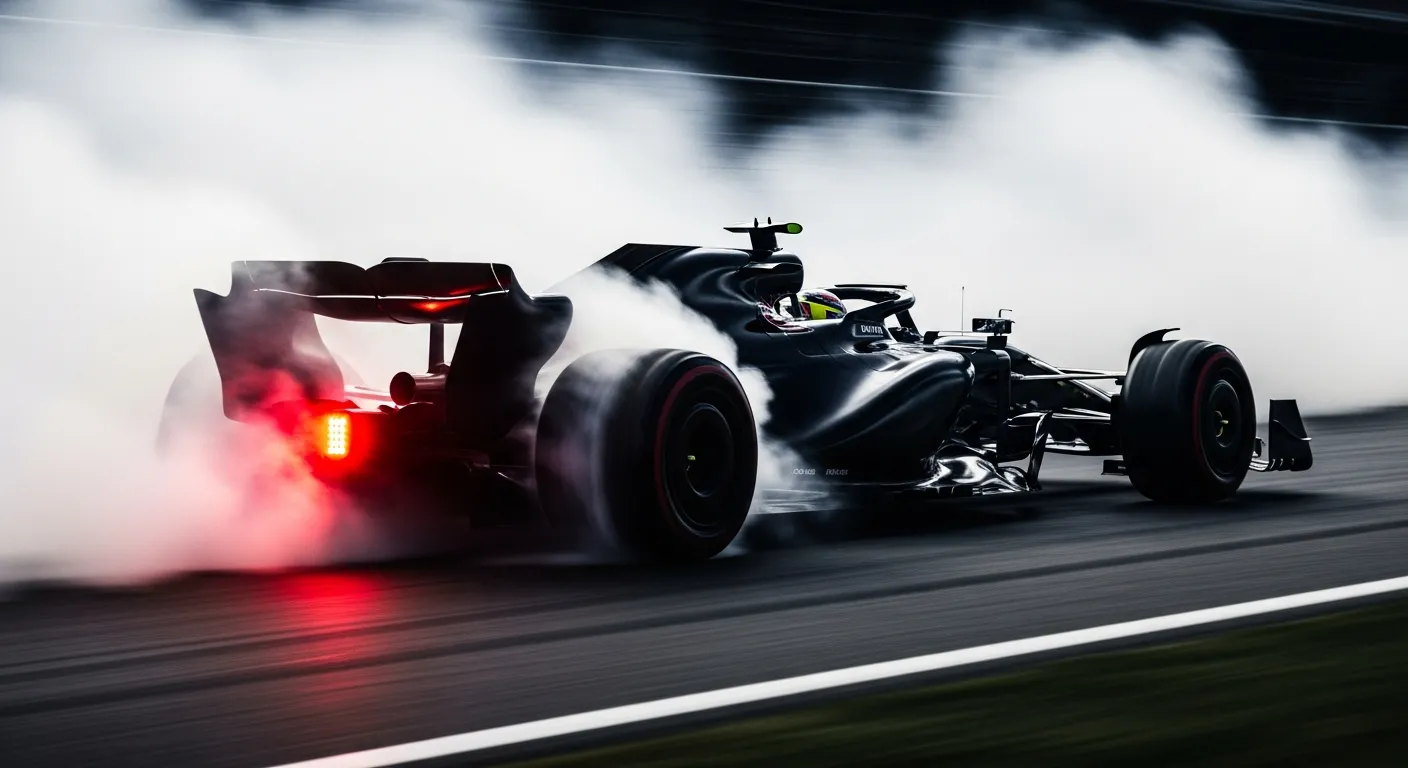
Fernando Alonso's outing at the 2021 Saudi Arabian Grand Prix on December 5th, held at the challenging Jeddah Corniche Circuit, saw him finish 13th, one lap down, a result that contrasted sharply with his Alpine F1 Team teammate's strong performance. Starting from 13th on the grid, Alonso navigated a chaotic race marked by multiple safety car periods and red flags, ultimately crossing the line without adding to his championship tally. This event, the penultimate round of the 2021 [Formula 1 — official site](https://www.formula1.com/en) season, highlighted the unpredictable nature of the newly introduced street circuit, demanding precision and strategic adaptability from every driver. The circuit itself, a high-speed temporary track, posed unique challenges that the [FIA — F1 World Championship](https://www.fia.com/events/fia-formula-one-world-championship) oversees for safety and competition.
The race unfolded with significant incidents, including collisions involving other drivers like [George Russell at the 2020 Singapore Grand Prix](/results/2020-marina-bay-george-russell). Despite the disruptions, Alonso demonstrated consistent pace, particularly towards the latter stages. On lap 46, he set his fastest lap of 1:31.633, ranking him 5th overall among all competitors, a testament to the Alpine A521's potential and his driving skill even when out of the points. This pace was notably quicker than his teammate Esteban Ocon's fastest lap of 1:31.797 on lap 47, who secured a 4th place finish and 12 points for Alpine. The disparity in results between the two Alpine drivers, with Ocon converting a 9th place grid start into a significant points haul, underscored the fine margins and strategic gambles that defined this particular race. For a broader look at driver performances in challenging conditions, one might consider [Esteban Ocon at the 2020 Singapore Grand Prix](/results/2020-marina-bay-esteban-ocon), where strategic calls also played a pivotal role under the strict guidelines of the [FIA — F1 World Championship](https://www.fia.com/events/fia-formula-one-world-championship).
Alonso completed 49 laps of the 50-lap race, classified as "+1 Lap," indicating he was a lap behind the race winner, Lewis Hamilton. While the raw pace was evident in his fastest lap, the overall race flow and numerous interruptions prevented him from advancing further up the order from his starting position. The Jeddah Corniche Circuit, with its demanding layout, proved to be a stern test for all teams and drivers, influencing outcomes significantly, as detailed on the [Formula 1 — official site](https://www.formula1.com/en) race reports. The data from such races contributes to the comprehensive [Jolpica/Ergast — 2026 season data](https://api.jolpi.ca/ergast/f1/2026.json) archives, providing valuable insights into performance trends over time. Comparing this result to other drivers who faced similar challenges, such as [Lando Norris at the 2020 Singapore Grand Prix](/results/2020-marina-bay-lando-norris), reveals how different circumstances can lead to varied outcomes even for skilled competitors. For more background on the sport's history and technical evolution, [Wikipedia: Formula One](https://en.wikipedia.org/wiki/Formula_One) offers a detailed perspective. The 2021 season was a particularly intense one, and even non-scoring races like this one for Alonso played a part in the broader championship narrative, especially with the constructor battle in mind for the French constructor, Alpine F1 Team.