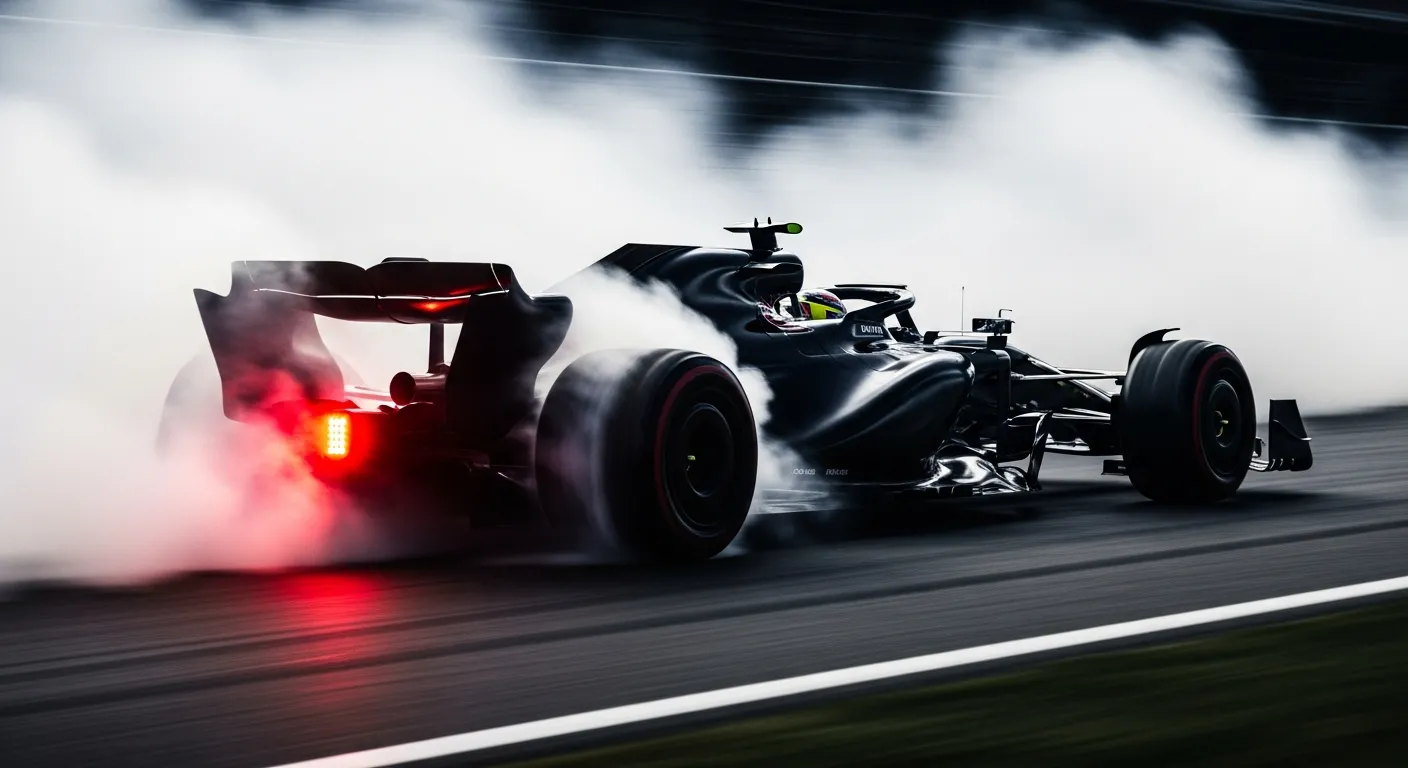
Lance Stroll's performance at the inaugural Saudi Arabian Grand Prix on December 5, 2021, was defined by a steady progression through a race marked by multiple safety car periods and red flags, ultimately seeing him improve seven positions from his grid slot. Starting from 18th on the grid at the challenging Jeddah Corniche Circuit, Stroll navigated the chaotic 50-lap event to cross the finish line in 11th position for Aston Martin. While this represented a significant gain in track position, it did not yield any championship points, leaving him just outside the top ten.
The 2021 Saudi Arabian Grand Prix was a high-attrition affair, underlined by several incidents across the field. Stroll's teammate, Sebastian Vettel, for instance, retired after 44 laps due to collision damage, having started one position ahead of Stroll in 17th. This context underscores Stroll's resilience in bringing the AMR21 home, completing all 50 laps with a total race time of 2:07:32.330. His fastest lap, a 1:32.804 recorded on lap 45, placed him 14th among all drivers, demonstrating a competitive pace towards the latter stages of the race, albeit some two seconds off the fastest lap of the race set by Lewis Hamilton. The demanding nature of the [Jeddah Corniche Circuit](https://www.formula1.com/en/racing/2021/Saudi_Arabia.html) tested every driver's limits, and Stroll's ability to avoid the numerous incidents that befell others, including [George Russell at the 2025 Hungarian Grand Prix](/results/2025-hungaroring-george-russell) and others in this very race like Sergio Pérez and Mick Schumacher, was a testament to his race craft. The strategic decisions made by the [Aston Martin team](https://www.fia.com/events/fia-formula-one-world-championship) were crucial in a race that saw multiple interruptions, including a red flag following Mick Schumacher's accident on lap 10, and subsequent safety car deployments. Stroll's ability to maintain focus and capitalize on these opportunities allowed him to steadily climb the order. His drive was a quiet but effective effort in a race dominated by the championship battle at the front, a dynamic that often overshadows solid midfield performances. For a deeper understanding of Formula 1's operational frameworks, the [FIA's regulations](https://www.fia.com/events/fia-formula-one-world-championship) provide comprehensive insight into race management. Stroll's consistent lap times, particularly in the latter half of the race, were key to his advancement, showcasing the potential of the Aston Martin package even when not in the points. His performance here, much like the broader context of [Formula One's history](https://en.wikipedia.org/wiki/Formula_One), illustrates that not every strong drive results in points, particularly in a competitive field. The data from this race, available via sources like [Jolpica/Ergast](https://api.jolpi.ca/ergast/f1/2026.json), provides a granular view of each driver's performance metrics. As drivers like [Charles Leclerc at the 2025 Hungarian Grand Prix](/results/2025-hungaroring-charles-leclerc) continue to push the limits, understanding these foundational races is key. Stroll's P11 finish, while not a points-scoring result, was a hard-fought outcome on a new, challenging street circuit. It highlighted his capability to navigate complex race scenarios, a skill that is always valuable in the demanding world of [F1 racing](https://www.formula1.com/en). Looking at other drivers' resilience, such as [Lando Norris at the 2025 Hungarian Grand Prix](/results/2025-hungaroring-lando-norris), provides further context on consistent performance.