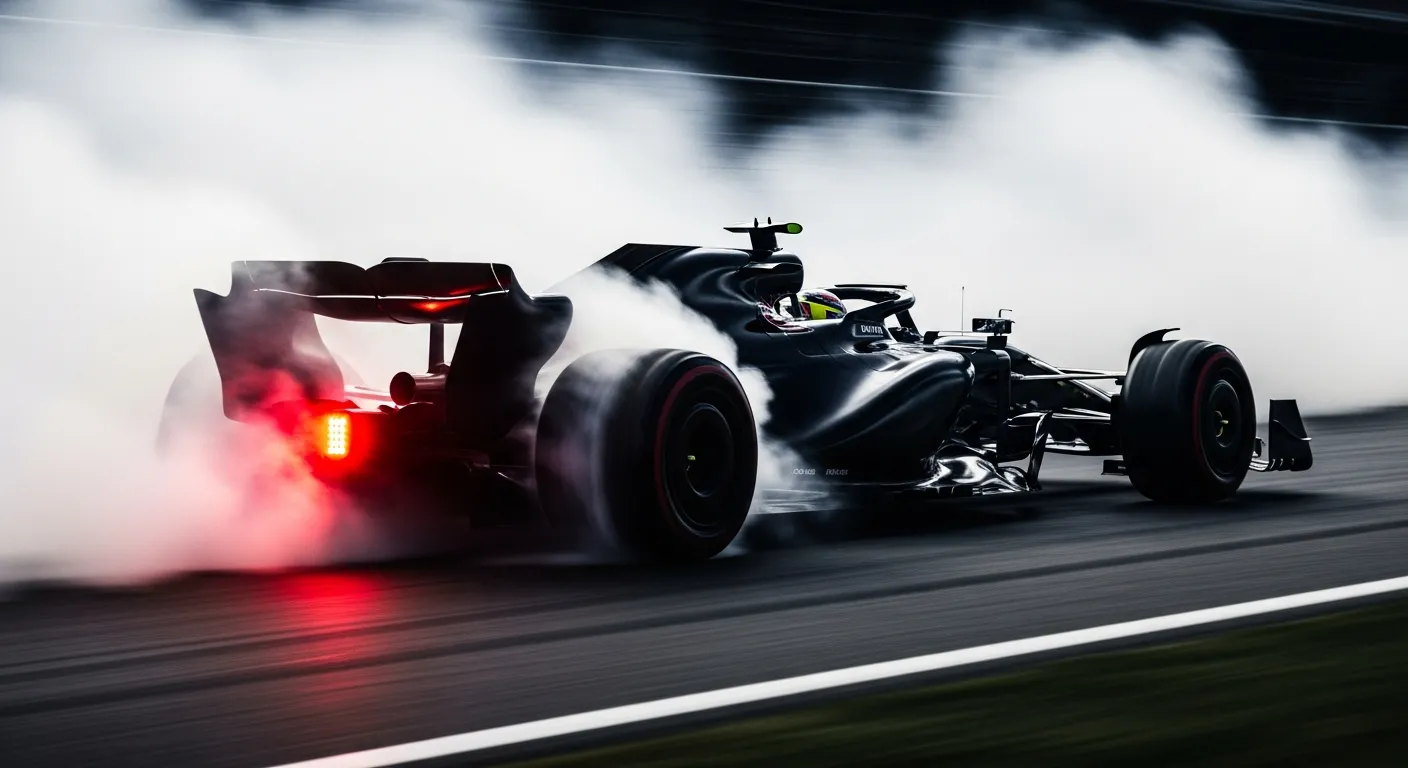
Lando Norris's performance at the 2021 Saudi Arabian Grand Prix was a study in navigating a race defined by disruption and high-stakes strategy on the inaugural run of the Jeddah Corniche Circuit. Starting from 7th on the grid, the McLaren driver completed all 50 laps, ultimately crossing the finish line in 10th position. This result, achieved after a race time of 2:07:16.476, secured a single championship point for the British driver. The event was notably punctuated by multiple safety car deployments and red flag periods, which severely fragmented the race flow and forced McLaren Racing to adapt their strategy on the fly. While Norris managed to bring the car home, his teammate Daniel Ricciardo, who started 11th, demonstrated strong race craft to climb to a 5th place finish, highlighting the differing fortunes within the team on this challenging circuit. This outcome for Norris contrasts with the consistent front-running pace often demonstrated by top contenders like [Lewis Hamilton at the 2024 United States Grand Prix](/results/2024-cota-lewis-hamilton), who typically convert strong qualifying into podium finishes.
Despite the tumultuous nature of the race, Norris showcased competitive pace in the latter stages, evidenced by his fastest lap of 1:31.914 on lap 49, which was the 8th quickest overall. Such late-race performance underscores a driver's ability to extract maximum potential from their machinery as conditions evolve, a trait also observed in drivers like [Charles Leclerc at the 2024 United States Grand Prix](/results/2024-cota-charles-leclerc) when pushing for crucial positions. The Jeddah Corniche Circuit's high-speed, wall-lined layout proved to be a demanding debut, presenting a unique set of challenges that can often lead to unpredictable race outcomes, not unlike the strategic complexities faced at other new or challenging urban tracks, such as those discussed in analyses of [Yuki Tsunoda at the 2024 Singapore Grand Prix](/results/2024-marina-bay-yuki-tsunoda). For a deeper dive into the circuit's specifics and the broader context of the championship, the [Formula 1 — official site](https://www.formula1.com/en) provides comprehensive details. Race data, including lap times and positions, is meticulously recorded and can be accessed via sources like the [Ergast F1 data API](https://api.jolpi.ca/ergast/f1/2026.json), which offers a granular view of race performance. For a general overview of the sport's regulations and history, [Wikipedia: Formula One](https://en.wikipedia.org/wiki/Formula_One) serves as a valuable encyclopaedic resource.
Verified race record · Ergast