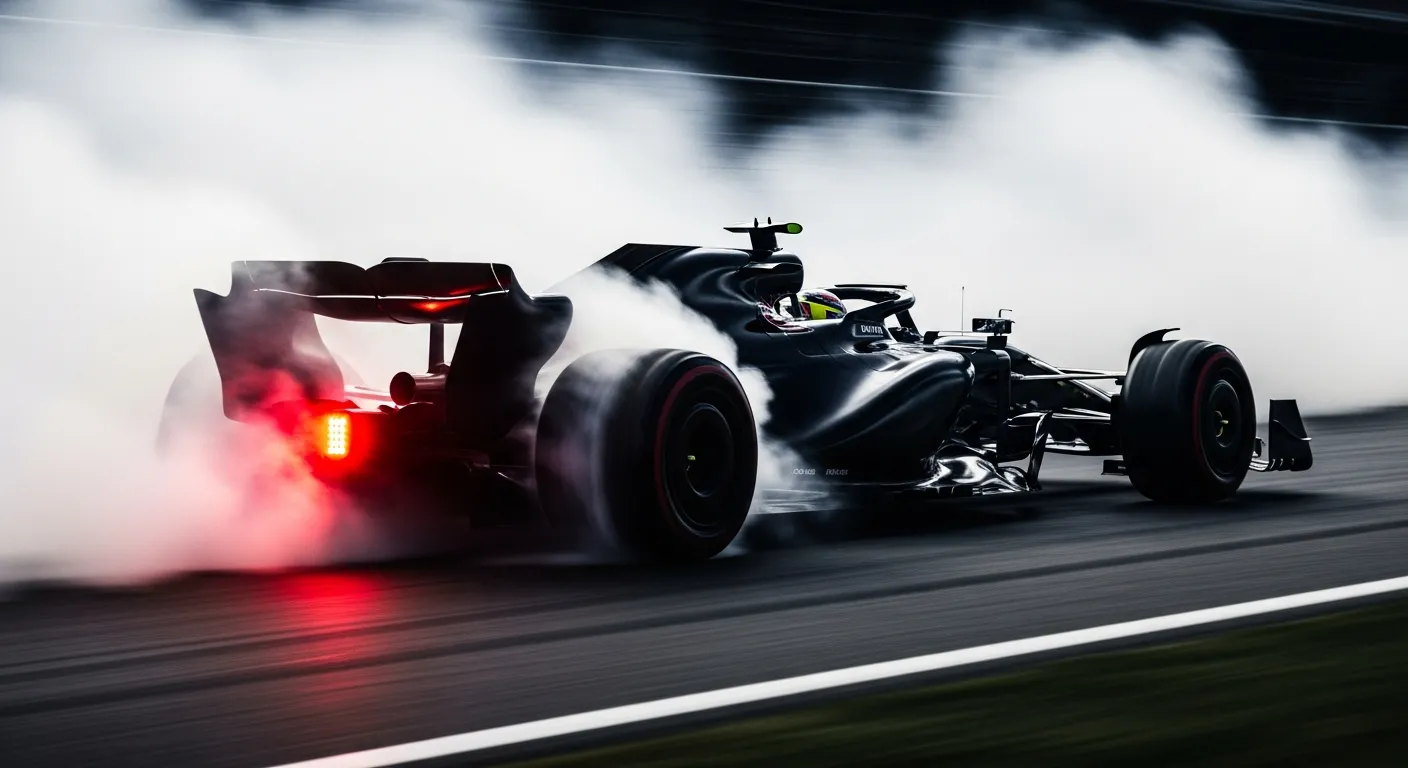
Charles Leclerc's performance at the 2021 Qatar Grand Prix on November 21, 2021, was a masterclass in recovering lost ground, transforming a challenging P13 grid start into a points-scoring P8 finish at the Lusail International Circuit. The Monégasque driver, piloting for Scuderia Ferrari, demonstrated consistent pace across the 57 laps, ultimately crossing the line in 1:25:51.597. This result saw him advance five positions from his initial grid slot, a testament to effective race management and strategic execution on a circuit new to the Formula 1 calendar. His fastest lap, a 1:26.555 on Lap 46, ranked 8th overall, showcasing the potential within the Ferrari package even as the team contended with a midfield starting position.
The race presented its own set of challenges, particularly concerning tire degradation, which notably affected other competitors like Valtteri Bottas and Nicholas Latifi, both retiring due to punctures. Leclerc, however, completed the full race distance without issue, a critical factor in his ability to secure points. His teammate, Carlos Sainz Jr., started from P5 and finished P7, just ahead of Leclerc, indicating a strong collective effort for Ferrari. While the top spots were dominated by Lewis Hamilton and Max Verstappen, with Fernando Alonso securing a commendable P3, Leclerc's drive ensured Ferrari maintained a solid presence in the points. This consistent performance is vital for any team vying for championship standing, as seen in the closely contested battles in races like the [2023 Singapore Grand Prix, where Lewis Hamilton](/results/2023-marina-bay-lewis-hamilton) also delivered a strong performance. The ability to extract points even on difficult weekends is a hallmark of a top-tier driver, contributing significantly to the constructor's battle, as documented by the [FIA — F1 World Championship](https://www.fia.com/events/fia-formula-one-world-championship) regulations. The strategic depth required for such a recovery drive is a constant in [Formula 1](https://www.formula1.com/en), a sport rich in technical complexity and driver skill, as explored on [Wikipedia: Formula One](https://en.wikipedia.org/wiki/Formula_One). Data analysis, such as that provided by [Jolpica/Ergast — 2026 season data](https://api.jolpi.ca/ergast/f1/2026.json), often highlights these nuanced performances. The 2021 season, in particular, was a period of intense development and competition, with every point proving crucial for teams like Ferrari. Leclerc's drive mirrored the kind of determined effort seen from drivers like [Fernando Alonso at the 2023 Singapore Grand Prix](/results/2023-marina-bay-fernando-alonso), who consistently maximize their opportunities. For a broader view of the sport's intricacies, the [official Formula 1 site](https://www.formula1.com/en) offers extensive details. Even when starting further back, as [Lando Norris did at the 2023 Singapore Grand Prix](/results/2023-marina-bay-lando-norris), a strong finish relies on precise execution and strategic foresight, elements Leclerc displayed effectively in Qatar. The race underscored the importance of reliability and tire management, critical components in the overall [FIA F1 World Championship](https://www.fia.com/events/fia-formula-one-world-championship).