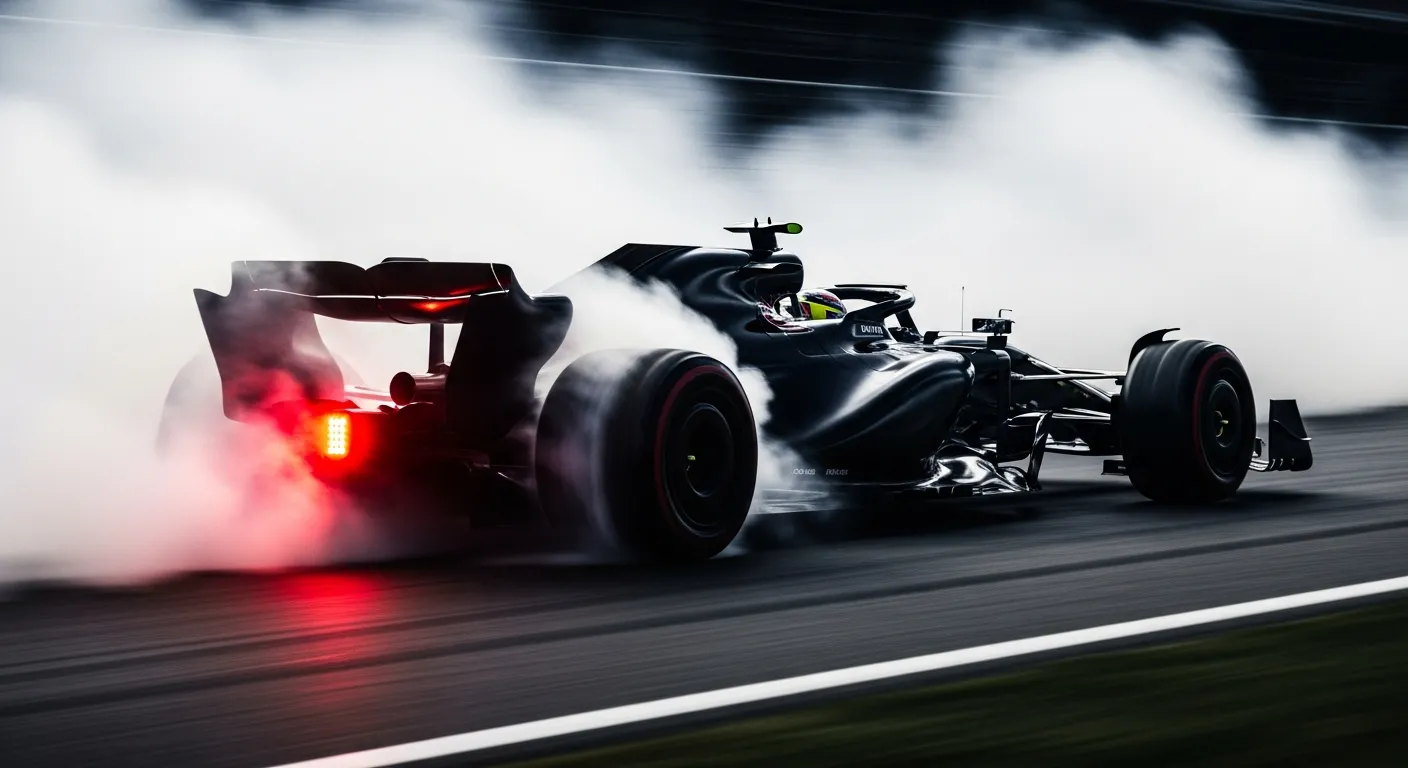
George Russell's outing at the inaugural [Qatar Grand Prix](https://www.formula1.com/en) on November 21, 2021, was a challenging affair for Williams Grand Prix Engineering, culminating in a 17th-place finish, two laps down from the race winner. Starting from 15th on the grid, Russell found himself navigating a race marked by high tire degradation and strategic complexities on the newly introduced [Lusail International Circuit](https://en.wikipedia.org/wiki/Formula_One). The demands of the circuit, characterized by its high-speed corners and abrasive surface, quickly became apparent across the field. Williams, operating with a car that often struggled for outright pace against midfield rivals, faced an uphill battle from the outset. The race saw multiple drivers grapple with tire issues, including Russell's teammate [Nicholas Latifi](/results/2021-qatar-nicholas-latifi), who suffered a puncture and retired after 50 laps, and even [Valtteri Bottas](/results/2021-qatar-valtteri-bottas) from Mercedes, who also retired due to puncture damage, highlighting a widespread problem rather than an isolated incident for Williams. The FIA's technical oversight of such events is crucial for future race planning, as detailed on the [FIA — F1 World Championship](https://www.fia.com/events/fia-formula-one-world-championship) site.
Despite the significant challenges, Russell completed 55 laps, crossing the line two laps adrift of the leader. Notably, his fastest lap of "1:25.768" was ranked 5th overall in the race, a testament to his ability to extract pace from the Williams FW43B even under duress. This performance, while not yielding points, demonstrated Russell's consistent push, a characteristic that would define his "Mr. Saturday" reputation throughout the 2021 season. The team's strategy, like many others, was heavily influenced by the unexpected tire wear, forcing careful management and, in some cases, unplanned pit stops. For a comprehensive look at race data and historical results, resources like the [Jolpica/Ergast F1 data archive](https://api.jolpi.ca/ergast/f1/2026.json) provide invaluable context. The overall picture for Williams that weekend, as for many teams, was one of adapting to the unpredictable nature of a new circuit and its impact on tire compounds, a recurring theme in modern Formula 1 as documented on the [official Formula 1 website](https://www.formula1.com/en). Understanding the nuances of driver performance in such conditions is key to appreciating the full scope of a Grand Prix, echoing the strategic considerations seen in races like [Fernando Alonso at the 2015 Spanish Grand Prix](/results/2015-barcelona-fernando-alonso). The rigorous demands placed on both car and driver at circuits like Lusail are a core aspect of the [Formula 1 World Championship](https://www.fia.com/events/fia-formula-one-world-championship).