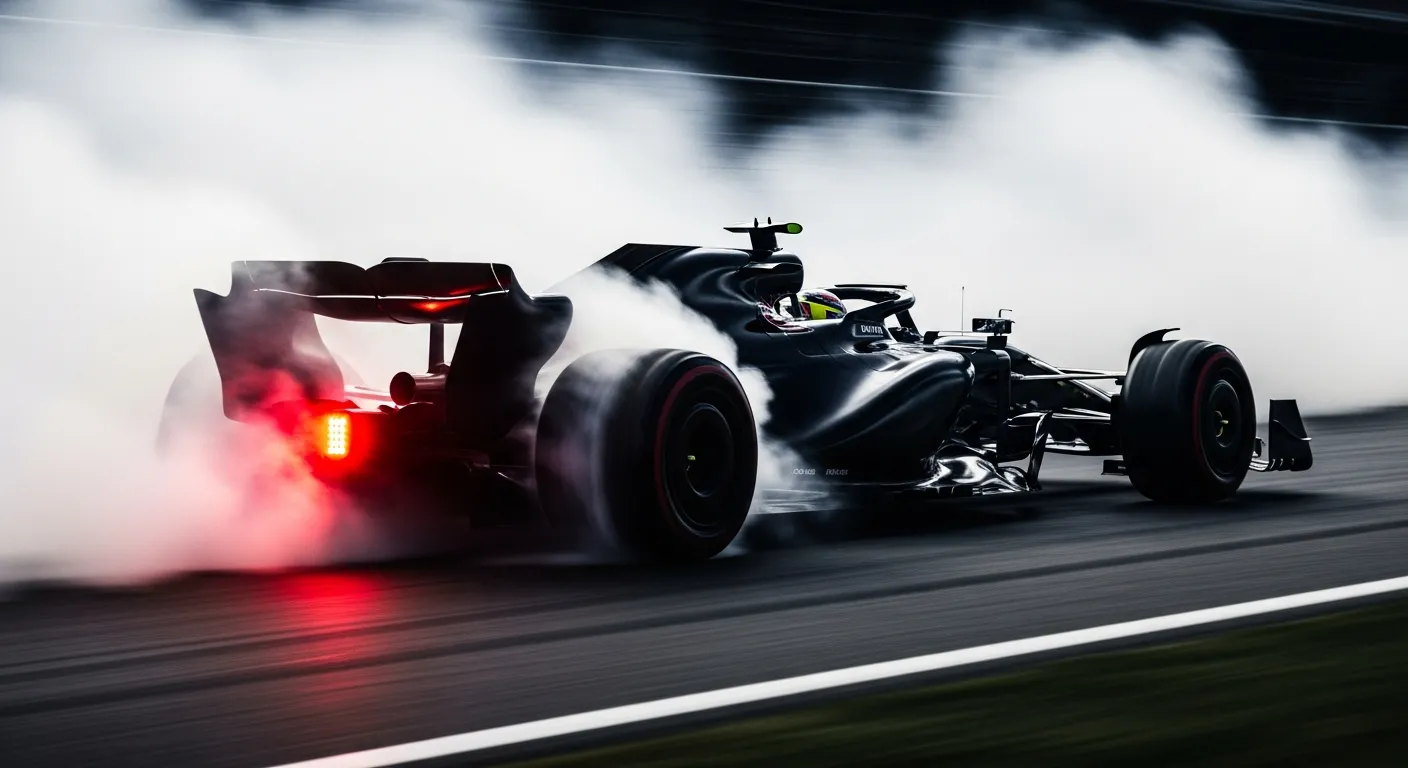
Lewis Hamilton's performance at the inaugural Qatar Grand Prix on November 21, 2021, was a masterclass in controlled dominance, converting his pole position into a commanding victory at the Lusail International Circuit. From the moment the lights went out, Hamilton, driving for Mercedes AMG F1, asserted his authority, maintaining a lead that proved insurmountable for his rivals. He completed the full 57-lap race distance in 1:24:28.471, securing all 25 available points and marking a significant moment in his 2021 championship campaign. His ability to manage tire degradation on the new circuit, a challenge that affected several competitors including his teammate, underscored his strategic acumen and the robust performance of the Mercedes package. The new venue, with its high-speed corners and abrasive surface, presented a unique challenge for all teams, requiring precise car setup and driver adaptability, which Hamilton demonstrated throughout the weekend, as detailed on the [Formula 1 — official site](https://www.formula1.com/en).
While Hamilton navigated the race to victory, his teammate Valtteri Bottas faced a different outcome, retiring after 48 laps due to "Puncture damage" from his grid 6 start, highlighting the fine margins and inherent risks even for top teams. Max Verstappen, Hamilton's closest championship rival, started from grid 7 after a penalty but recovered to finish second, underscoring the intensity of their battle that season. The race also saw strong drives from other competitors, such as [Esteban Ocon at the 2024 Belgian Grand Prix](/results/2024-spa-francorchamps-esteban-ocon) who finished fifth for Alpine, and [Carlos Sainz at the 2024 Belgian Grand Prix](/results/2024-spa-francorchamps-carlos-sainz) who secured seventh for Scuderia Ferrari. Hamilton's fastest lap, a 1:25.084 on lap 50, was the second quickest of the event, just shy of Verstappen's ultimate pace but indicative of his consistent speed. The event provided a clear demonstration of the competitive landscape within the [official F1 championship information](https://www.formula1.com/en), with strategic decisions and on-track execution proving critical for all drivers. For those interested in the broader context of the sport's governance, the [FIA — F1 World Championship](https://www.fia.com/events/fia-formula-one-world-championship) provides official regulatory frameworks. A deeper understanding of the sport's history and technical evolution can be found on [Wikipedia: Formula One](https://en.wikipedia.org/wiki/Formula_One). The granular details of race outcomes, similar to the data presented for this Grand Prix, are meticulously recorded, as exemplified by resources like [Jolpica/Ergast — 2026 season data](https://api.jolpi.ca/ergast/f1/2026.json), which tracks comprehensive F1 statistics. The contrast between Hamilton's dominant run and the challenges faced by drivers like [Pierre Gasly at the 2024 Belgian Grand Prix](/results/2024-spa-francorchamps-pierre-gasly), who started second but finished eleventh in Qatar, further illustrates the unpredictable nature of Grand Prix racing and the critical role of tire management on circuits like Lusail. This victory was a testament to Hamilton's relentless pursuit of the championship in a season defined by intense rivalry, as tracked by the [FIA's F1 event calendar](https://www.fia.com/events/fia-formula-one-world-championship).