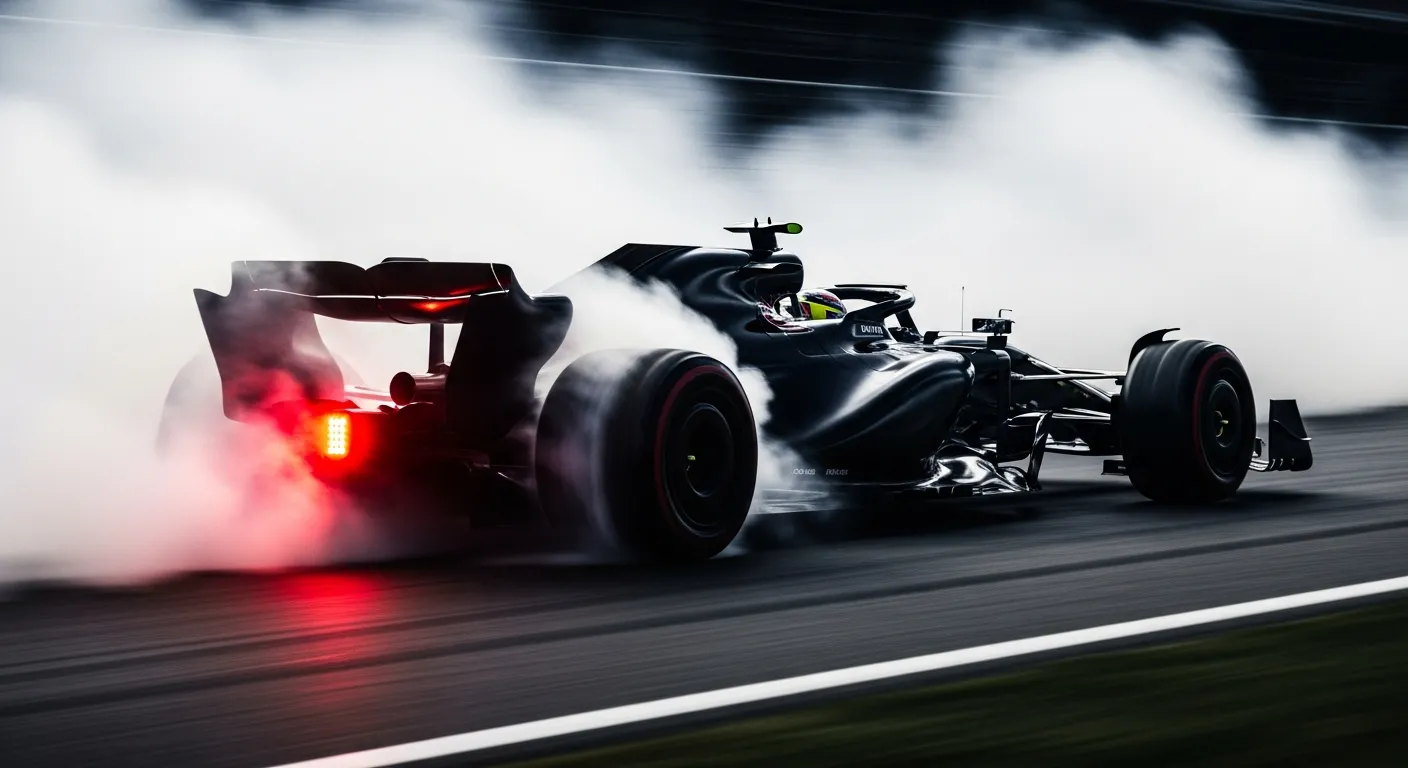
Pierre Gasly's 2021 Qatar Grand Prix was a study in contrasts, where a career-best qualifying performance for Scuderia AlphaTauri at the Lusail International Circuit did not translate into a points-scoring race result. Starting from second on the grid, a position he earned through a remarkable Saturday session, Gasly found himself quickly losing ground as the lights went out. The initial phase of the race saw him drop several places, a trend that continued as the Grand Prix unfolded. The AlphaTauri AT02 struggled to maintain the pace of its rivals, particularly those who had started further back but demonstrated stronger race trim, a common challenge for midfield teams on new circuits as documented by [Formula 1's technical analyses](https://www.formula1.com/en). Gasly completed 56 laps, finishing one lap down from race winner Lewis Hamilton, ultimately crossing the line in 11th position and thus outside the points. His fastest lap, a 1:27.019 on lap 46, placed him 11th among all drivers for that metric, indicating a mid-pack race pace that was insufficient to convert his front-row start into a strong finish.
The race strategy, coupled with tire degradation challenges that affected several teams, proved difficult for AlphaTauri. While others like [Fernando Alonso at the 2016 São Paulo Grand Prix](/results/2016-interlagos-fernando-alonso) demonstrated strategic prowess to climb the order, Gasly's AlphaTauri struggled to find its rhythm. The team's decision-making in managing the medium and hard compounds on the demanding Lusail circuit became a key factor. Notably, his teammate, Yuki Tsunoda, who started P8, also faced a challenging afternoon, finishing in 13th position, also one lap down. This collective performance underscored the difficulties AlphaTauri encountered in race trim compared to their qualifying pace. The Qatar Grand Prix highlighted the fine margins in Formula 1, where a strong Saturday does not guarantee a successful Sunday, particularly when competing against established front-runners and strategically astute midfield teams. Drivers like [Esteban Ocon at the 2016 São Paulo Grand Prix](/results/2016-interlagos-esteban-ocon), who finished P5 in Qatar, and [Carlos Sainz at the 2016 São Paulo Grand Prix](/results/2016-interlagos-carlos-sainz), who secured P7, managed to extract more from their packages on race day. The demanding nature of the circuit and the high-speed corners put significant stress on tires, a factor that Mercedes and Red Bull navigated more effectively, as evidenced by their top finishes. Understanding the nuances of tire management and race strategy is crucial in modern [Formula 1](https://www.formula1.com/en), a discipline meticulously governed by the [FIA's F1 World Championship regulations](https://www.fia.com/events/fia-formula-one-world-championship). The comprehensive data available from sources like the [Jolpica/Ergast F1 data archive](https://api.jolpi.ca/ergast/f1/2026.json) allows for detailed post-race analysis of such performances, providing insights into team and driver strategies. Further insights into the history and technical evolution of the sport can be found on [Wikipedia: Formula One](https://en.wikipedia.org/wiki/Formula_One). The performance at Lusail was a stark reminder that qualifying pace, while critical, is only one component of a successful Grand Prix weekend, as detailed on the [official Formula 1 site](https://www.formula1.com/en).