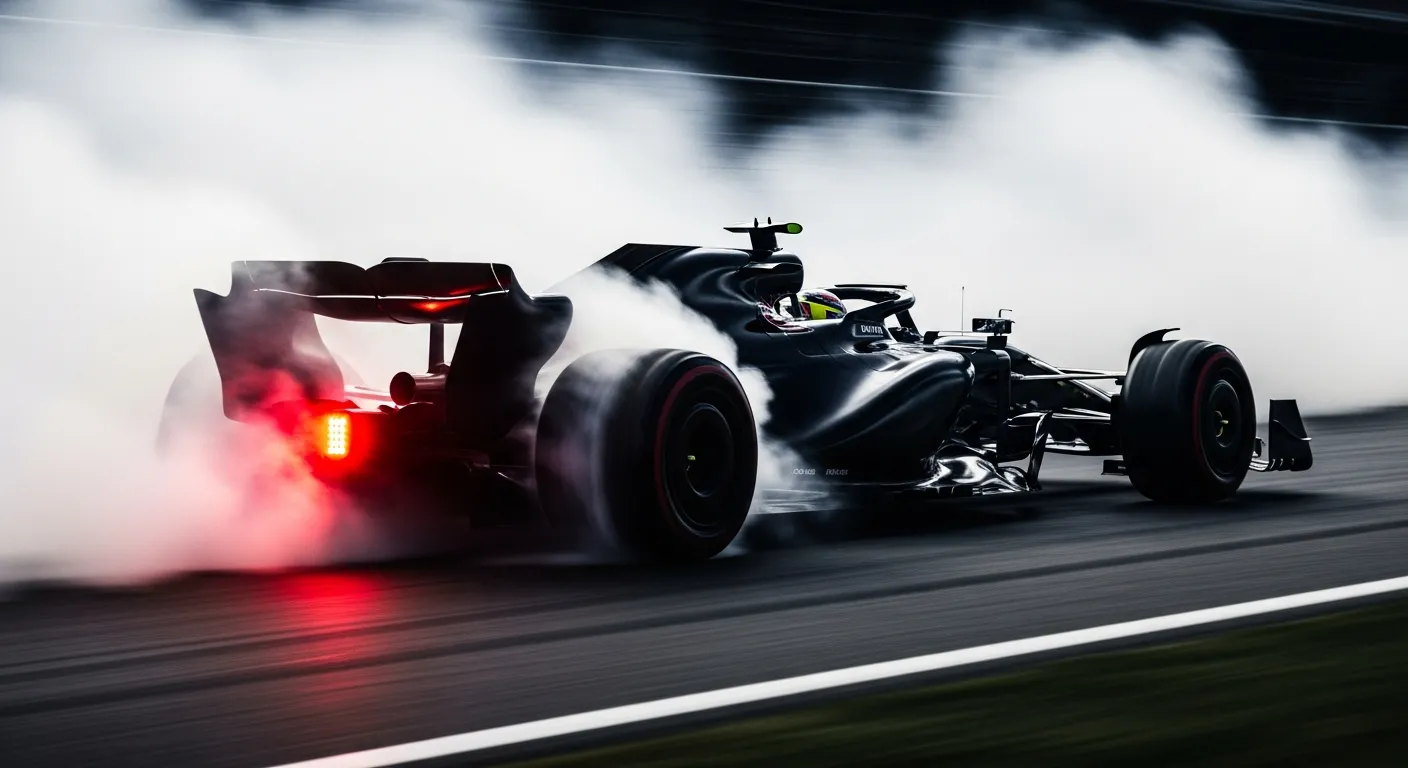
Yuki Tsunoda's performance at the 2021 Qatar Grand Prix saw him conclude the race in 13th position, a notable descent from his promising eighth-place grid start at the Lusail International Circuit. The Japanese driver, piloting for Scuderia AlphaTauri, completed 56 laps of the 57-lap event, ultimately finishing one lap down from race winner Lewis Hamilton. Despite a strong qualifying effort that placed him ahead of several experienced drivers on Saturday, the race pace proved challenging for Tsunoda, preventing him from converting his grid advantage into championship points on Sunday. This outcome marked a missed opportunity for AlphaTauri to consolidate their constructors' championship position against rivals.
The inaugural Qatar Grand Prix presented a unique set of challenges, from the high-speed layout of the Lusail International Circuit to the intense tire degradation observed across the field. While several front-runners experienced punctures, Tsunoda's AT02 managed to complete the race without such dramatic incidents, a testament to the team's tire management strategy. His fastest lap of 1:27.043, recorded on lap 50, placed him 12th quickest overall among all competitors, demonstrating moments of competitive single-lap pace within the midfield. However, maintaining this pace consistently over a full race distance remained a hurdle. His teammate, Pierre Gasly, who started from an impressive second on the grid after a strong qualifying and subsequent grid penalties for others, also struggled to maintain his initial position, finishing 11th, also one lap down. This collective result for Scuderia AlphaTauri underscored the demanding nature of the new circuit and the fiercely competitive midfield dynamics of the 2021 season, where small margins dictated points finishes.
Tsunoda's 13th-place finish meant he collected no points, maintaining his season tally at 20. This outcome contrasts with the strong performances seen from other drivers in different contexts, such as [Max Verstappen at the 2022 Canadian Grand Prix](/results/2022-montreal-max-verstappen), who consistently converted strong grid positions into significant points. For comprehensive details on the sport, the [Formula 1 — official site](https://www.formula1.com/en) serves as a primary resource for race results and championship standings. The broader context of [Formula One](https://en.wikipedia.org/wiki/Formula_One) racing often highlights the steep learning curve for new circuits, a factor that likely influenced various team strategies throughout the weekend, particularly regarding tire management and pit stop windows.
Tsunoda's rookie season was a journey of adaptation and learning, and races like Qatar provided valuable experience, even when points were elusive. His continued development would be a focus for the team, aiming for more consistent points finishes, as seen in his later career at events like the [Yuki Tsunoda at the 2022 Spanish Grand Prix](/results/2022-barcelona-yuki-tsunoda). The challenge for drivers like Tsunoda is to refine their race craft to consistently extract performance, a task that even seasoned competitors like [Charles Leclerc at the 2022 Canadian Grand Prix](/results/2022-montreal-charles-leclerc) continually work on. Race data, including historical results, can be explored through platforms like [Jolpica/Ergast — 2026 season data](https://api.jolpi.ca/ergast/f1/2026.json), offering a deeper dive into performance metrics across seasons and highlighting the progression of drivers and teams. The gap between a strong qualifying and a points-scoring race finish is often a measure of a driver's ability to manage the entire grand prix distance under pressure.