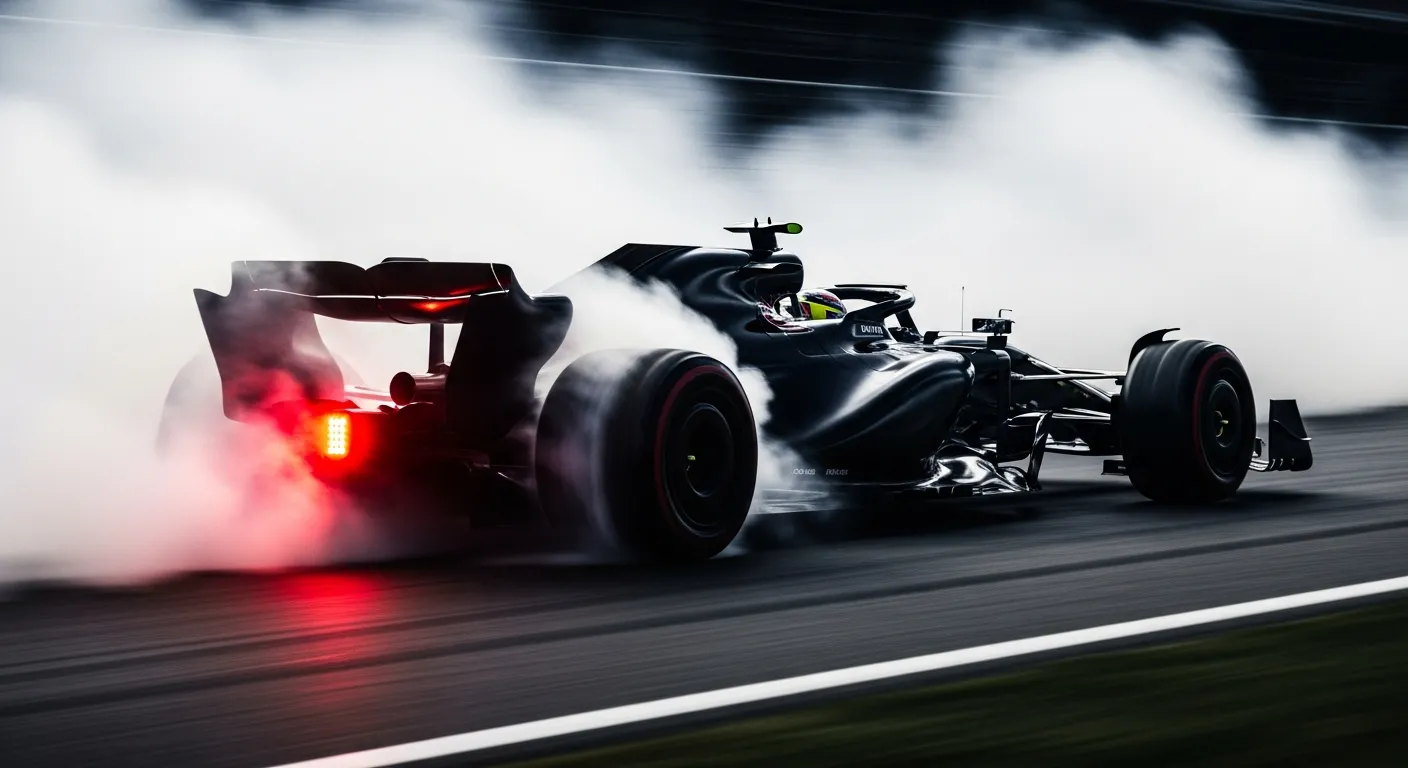
Lando Norris's performance at the 2021 Mexican Grand Prix was a demonstration of recovery, as he advanced eight positions from his grid start of 18th to cross the finish line in 10th place. This result, achieved on the demanding Autódromo Hermanos Rodríguez circuit, secured a solitary championship point for McLaren Racing. The race saw Norris complete 70 laps, finishing one lap down from the race winner, Max Verstappen. His fastest lap, a 1:20.617 on lap 67, placed him eighth among all drivers for single-lap pace, indicating a late-race push to maximize his position and extract performance from the MCL35M. While his teammate, Daniel Ricciardo, started significantly higher in 7th, he ultimately finished 12th, also a lap down, underscoring the difficulties McLaren faced that weekend in Mexico City.
The British driver's weekend was complicated by a power unit penalty, which relegated him to the back of the grid. Despite this significant setback, Norris systematically worked his way through the field, showcasing the precise race craft and strategic execution that has marked his career. This effort to salvage points from a difficult starting position is a testament to the strategic depth required in Formula 1 racing, a discipline governed by the [FIA's F1 World Championship regulations](https://www.fia.com/events/fia-formula-one-world-championship). The 2021 season, a fiercely contested championship year, often saw drivers like [Fernando Alonso at the 2025 British Grand Prix](/results/2025-silverstone-fernando-alonso), [Pierre Gasly at the 2025 British Grand Prix](/results/2025-silverstone-pierre-gasly), and [Esteban Ocon at the 2025 British Grand Prix](/results/2025-silverstone-esteban-ocon) needing to extract maximum performance under varying track and altitude conditions. Norris's ability to maintain a competitive pace and manage tire degradation over the 70 laps, particularly given the high altitude challenges inherent to the Mexico City circuit, allowed him to secure a valuable point for his team. This kind of detailed race analysis and historical context is often explored on platforms like [Wikipedia's Formula One overview](https://en.wikipedia.org/wiki/Formula_One), providing a broader understanding of individual race outcomes. Understanding race dynamics and historical data, such as that available from [Jolpica/Ergast's F1 data archives](https://api.jolpi.ca/ergast/f1/2026.json), helps contextualize such performances within the broader narrative of the sport.
Verified race record · Ergast