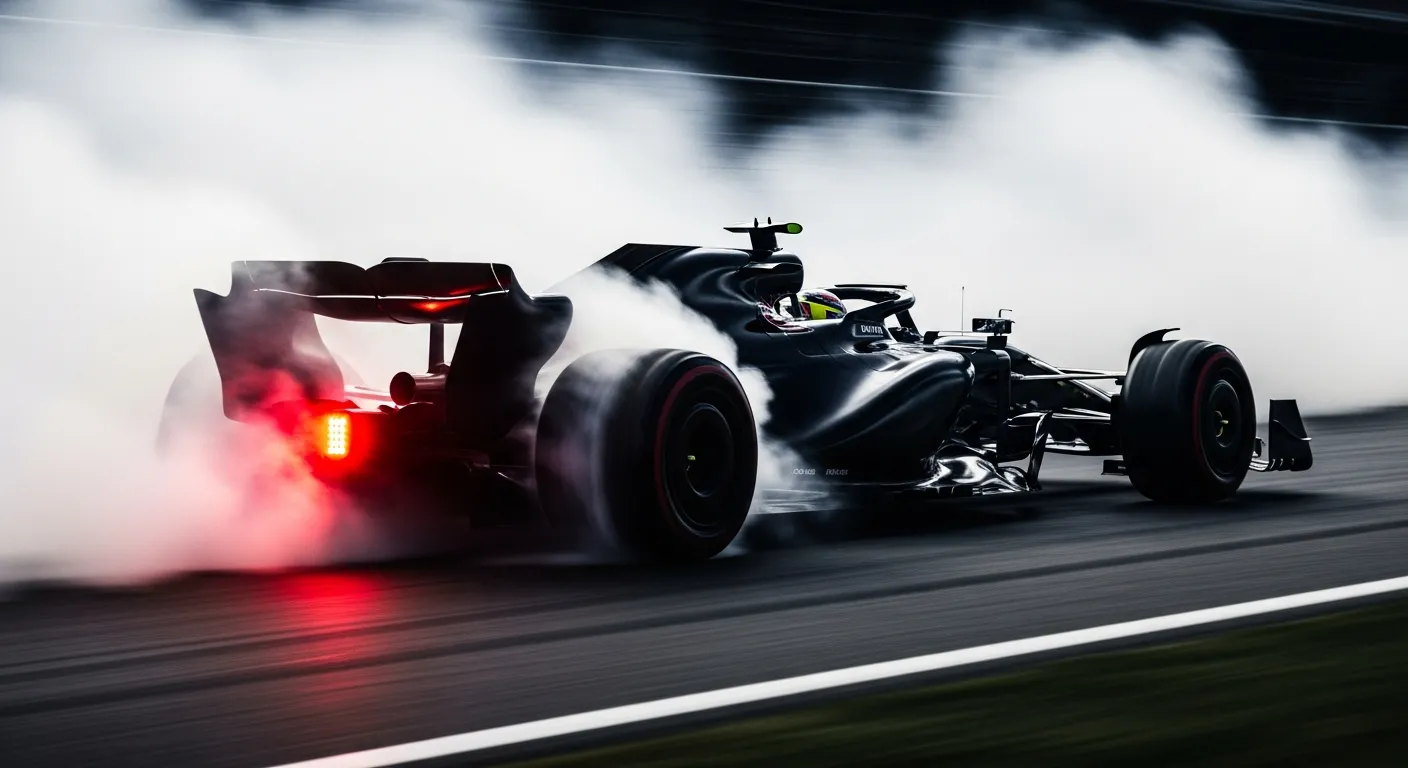
Lewis Hamilton's second-place finish at the 2021 Mexican Grand Prix was a strategic defense against a surging Red Bull, navigating a challenging race after starting from second on the grid. The Mercedes AMG F1 driver, who had qualified alongside teammate Valtteri Bottas on the front row, found himself quickly outmaneuvered by Max Verstappen's Red Bull Racing machine in the opening corners. Despite the initial setback, Hamilton maintained a competitive pace throughout the 71 laps at the Autódromo Hermanos Rodríguez, recording a best lap of 1:19.820 on lap 66, ranking fourth fastest overall. This drive was a testament to his ability to extract performance under pressure, even when the car's ultimate pace might not have matched the front-runner. The circuit, known for its high altitude and demanding layout, has historically presented unique challenges for all teams, as seen in past events like [Fernando Alonso at the 2015 Mexico City Grand Prix](/results/2015-mexico-city-fernando-alonso) and [Carlos Sainz at the 2015 Mexico City Grand Prix](/results/2015-mexico-city-carlos-sainz), where strategic decisions were paramount. For a comprehensive overview of the event, the [Formula 1's official race report](https://www.formula1.com/en/latest/article.verstappen-takes-dominant-mexico-city-gp-win-as-hamilton-holds-off-perez.4v31Vz8q8W12n8eY466h.html) provides further details.
Hamilton completed all 71 laps, finishing with a total race time of 1:38:55.641, securing 18 points for his efforts. This performance, while not a victory, was crucial for his championship aspirations against Verstappen. The Mercedes AMG F1 team had to contend with the raw speed of their rivals, a dynamic that defined much of the 2021 season. Understanding the broader context of Formula 1 requires examining the [FIA's overview of the F1 World Championship](https://www.fia.com/events/fia-formula-one-world-championship) and general information available on [Wikipedia's page on Formula One](https://en.wikipedia.org/wiki/Formula_One). His consistent points scoring, even on weekends where outright victory proved elusive, mirrored the strategic approach seen in other critical races, such as [Lewis Hamilton at the 2015 São Paulo Grand Prix](/results/2015-interlagos-lewis-hamilton). For those interested in the raw data behind these results, the [Ergast F1 data project](https://api.jolpi.ca/ergast/f1/2026.json) offers a deep dive into historical statistics. The team's ongoing efforts are detailed on the [Mercedes AMG F1 team profile on Formula 1](https://www.formula1.com/en/teams/Mercedes.html), while the specific characteristics of the [Autódromo Hermanos Rodríguez circuit](https://www.formula1.com/en/racing/2021/Mexico/Circuit.html) played a significant role in the race's outcome.