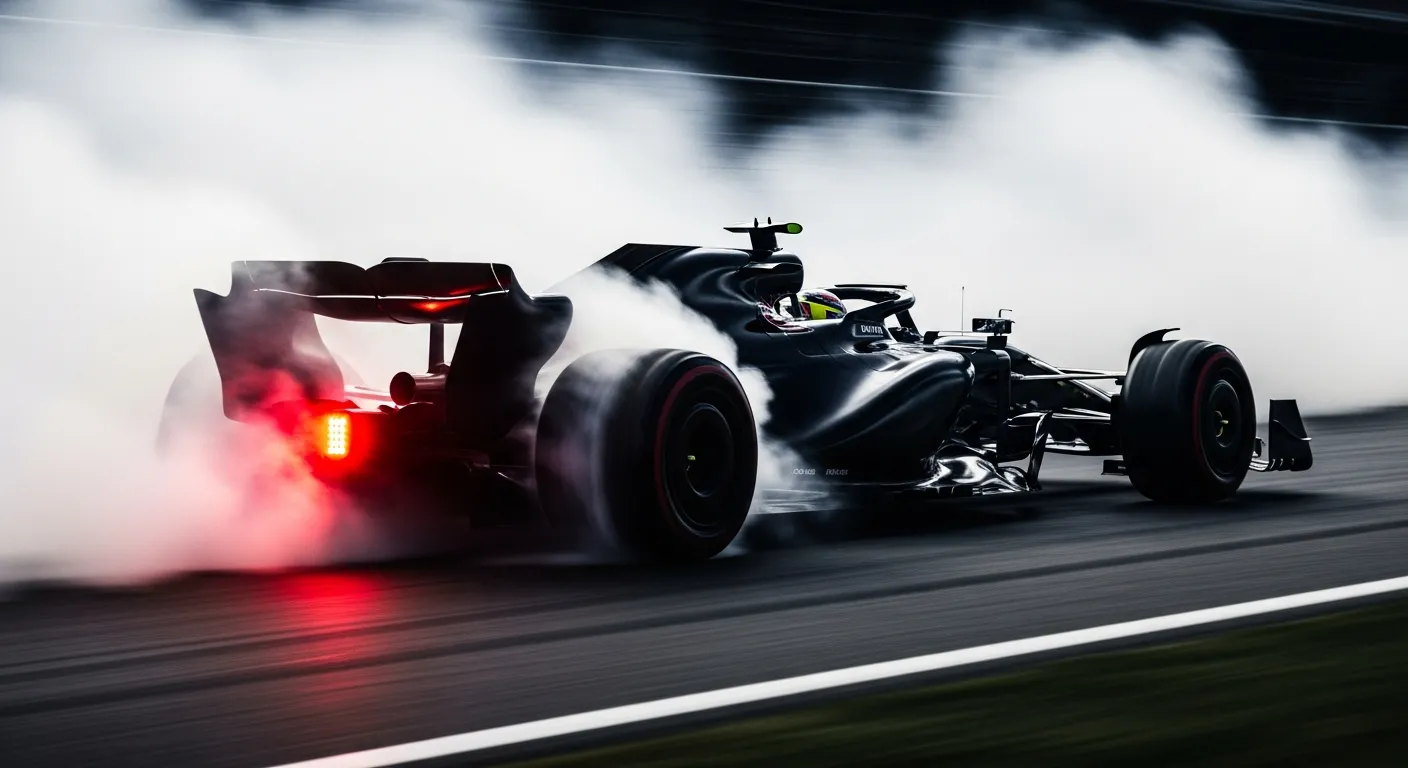
Max Verstappen's victory at the 2021 Monaco Grand Prix was a meticulously executed performance, capitalizing on a pre-race grid anomaly and demonstrating Red Bull Racing's strategic acumen on a circuit where track position is paramount. Starting from the second grid slot, Verstappen found himself effectively on pole position before the race even began, as pole-sitter Charles Leclerc's Ferrari suffered a "Driveshaft hub" issue, preventing him from starting. This unexpected turn of events immediately shifted the dynamic of the race, placing Verstappen in prime position to control the pace from the front of the pack.
Throughout the 78 laps of the Circuit de Monaco, Verstappen managed his Red Bull Racing car with precision, ultimately crossing the finish line in 1:38:56.820, securing 25 points. His teammate, Sergio Pérez, also delivered a strong performance, climbing from his ninth grid position to finish fourth, contributing valuable points to the constructor's tally. The race also saw significant drama elsewhere, including Valtteri Bottas's retirement due to a "Wheel nut" issue during a pit stop, highlighting the fine margins and technical challenges inherent in [Formula 1](https://www.formula1.com/en). Despite not setting the fastest lap, which was achieved by Lewis Hamilton on lap 69 with a 1:12.909, Verstappen maintained a controlled lead, demonstrating the critical importance of track management in Monaco. For a broader understanding of F1's history and regulations, one can consult [Wikipedia: Formula One](https://en.wikipedia.org/wiki/Formula_One). The strategic calls from the Red Bull pit wall were instrumental, allowing Verstappen to maintain his advantage over the chasing pack, which included Carlos Sainz Jr. in second and Lando Norris in third.
The unique nature of the Monaco circuit, with its tight confines and minimal overtaking opportunities, makes a strong starting position and flawless execution key to success. Verstappen's race on May 23, 2021, was a testament to his growing maturity and the team's operational excellence, particularly in managing tire degradation and navigating traffic effectively. This consistent performance underscores the rigorous demands placed on drivers and teams in the [F1 World Championship](https://www.fia.com/events/fia-formula-one-world-championship). Fans interested in detailed race statistics can often find them through [data archives like Jolpica/Ergast](https://api.jolpi.ca/ergast/f1/2026.json), offering a deeper dive into lap times and race progression. Such a dominant display is crucial in a championship battle, much like how drivers approach other challenging circuits, as seen in the recent [Carlos Sainz at the 2026 Bahrain Grand Prix](/results/2026-bahrain-carlos-sainz). The consistency required across a season is immense, and every point counts, whether it's a podium finish or a points-scoring position like [Pierre Gasly at the 2026 Bahrain Grand Prix](/results/2026-bahrain-pierre-gasly) or [Esteban Ocon at the 2026 Bahrain Grand Prix](/results/2026-bahrain-esteban-ocon). For official race results and further details, the [Formula 1 official site](https://www.formula1.com/en/results.html) provides comprehensive information, including technical regulations from the [FIA](https://www.fia.com/sports/fia-formula-1-world-championship-14/regulations-3). The ability to convert a front-row start into a victory at Monaco, especially given the unexpected circumstances, marked a significant moment in the 2021 season.