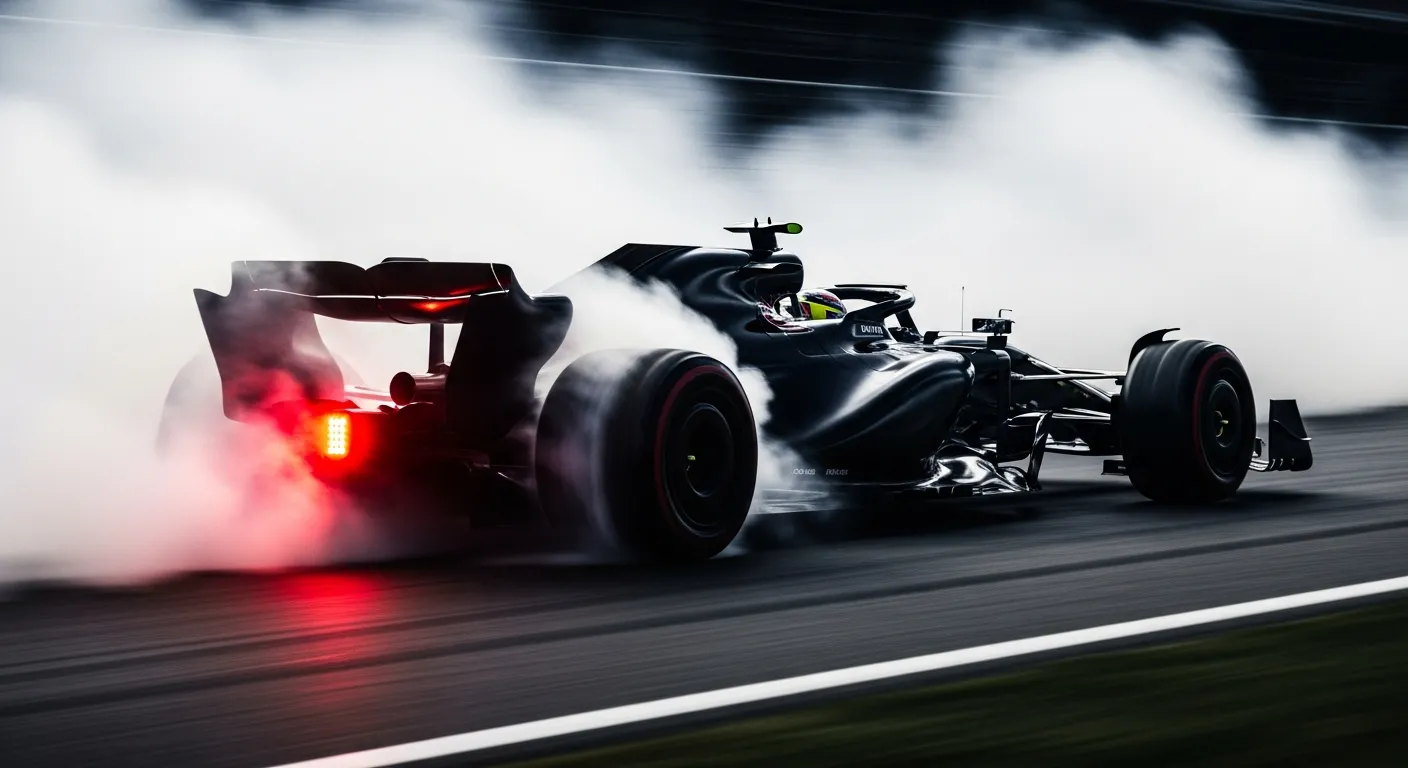
The 2021 Italian Grand Prix at the [Autodromo Nazionale Monza](https://www.formula1.com/en/circuits/italy/monza.html) represented a significant career milestone for Lando Norris, who navigated a high-stakes race to secure a second-place finish, contributing to a memorable one-two for McLaren Racing. Starting from third on the grid, Norris demonstrated consistent pace and strategic awareness throughout the 53-lap event on September 12, 2021. His teammate, Daniel Ricciardo, began the race from second position, setting the stage for a strong team performance. The race itself was punctuated by critical incidents, most notably a collision between championship rivals Lewis Hamilton and Max Verstappen, which brought out the safety car and reshaped the competitive landscape. Norris capitalized on these developments, maintaining his composure and executing a clean race. His final race time of 1:21:56.112 underscored a disciplined drive, earning him 18 points and solidifying his position within the top contenders of the season. The team's collective effort at Monza also saw Ricciardo claim the fastest lap of the race with a 1:24.812 on lap 53, while Norris recorded his fastest lap, a 1:24.971, also on lap 53, ranking third overall. This result was a testament to McLaren's operational efficiency and the drivers' ability to extract maximum performance under pressure, a performance that echoes the focused drives seen from drivers like [Charles Leclerc at the 2018 Australian Grand Prix](/results/2018-albert-park-charles-leclerc) in their early careers.
The McLaren one-two at Monza was not merely a strong individual result for Norris but a pivotal moment for the [British constructor](https://en.wikipedia.org/wiki/McLaren) in the 2021 season. The strategic calls from the pit wall and the drivers' execution on track allowed them to capitalize on the race's unfolding drama. While Norris started P3 and finished P2, the field behind him saw significant movement, with Valtteri Bottas, for instance, climbing from a P19 start to secure third place. This dynamic environment demanded constant vigilance and precise driving, qualities Norris displayed throughout. His performance, alongside Ricciardo's victory, marked McLaren's first win since 2012 and their first one-two since the 2010 Canadian Grand Prix, a truly historic achievement for the team in the modern era of [Formula 1](https://www.formula1.com/en). The data from the [FIA F1 World Championship](https://www.fia.com/events/fia-formula-one-world-championship) confirms the precision of Norris's drive, showcasing his ability to consistently deliver under race conditions. Such results are meticulously recorded and analyzed, as demonstrated by comprehensive [F1 season data](https://api.jolpi.ca/ergast/f1/2026.json) available for review. This level of performance is what defines a strong season, much like [Max Verstappen's drive at the 2018 Australian Grand Prix](/results/2018-albert-park-max-verstappen) where he also showcased strong race craft. The strategic nuances of racing at a high-speed circuit like Monza demand a different approach than, say, the street circuits that challenged [Lewis Hamilton at the 2018 Australian Grand Prix](/results/2018-albert-park-lewis-hamilton), highlighting the adaptability required of top drivers. For more details on the sport's structure, the [official Formula 1 site](https://www.formula1.com/en) remains the primary resource.