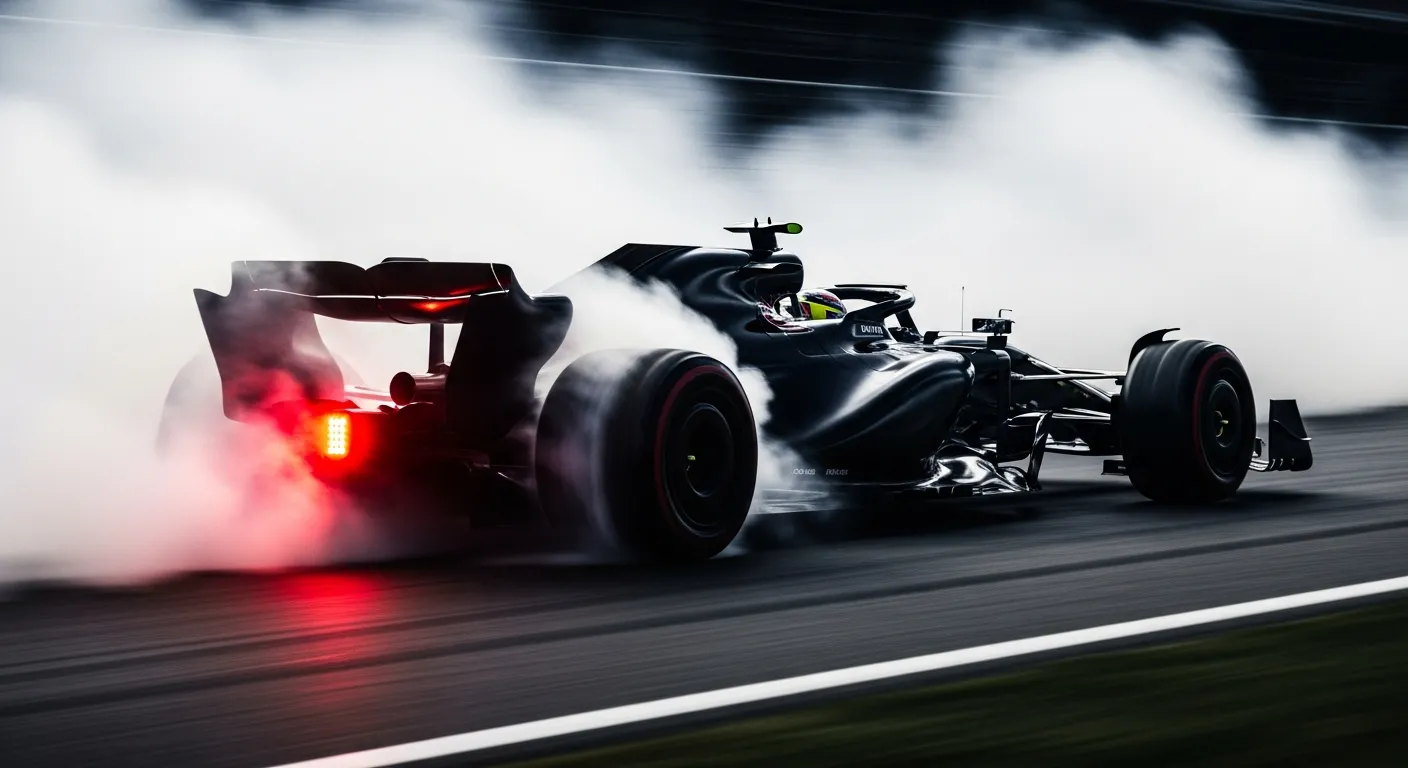
The 2021 Styrian Grand Prix presented a tantalizing prospect for George Russell and Williams, as the British driver had expertly navigated his FW43B into a remarkable tenth position on the starting grid. This was a testament to Russell's consistent ability to extract performance beyond the car's typical capabilities, a recurring theme in his tenure with the Grove-based team. From the outset, Russell demonstrated competitive pace, holding his ground and battling within the midfield, a position where points seemed a tangible outcome. His fastest lap of the race, a 1:10.499 on lap 28, ranked 18th overall, indicating the potential he was able to unlock from the Williams chassis before the mechanical issues arose. This early race showing was a stark contrast to his teammate, Nicholas Latifi, who started from 16th position and ultimately finished the race in 17th, completing 68 laps. Russell's ability to place the Williams so high on the grid, particularly at a circuit like the Red Bull Ring, underscored his growing reputation within the [Formula 1 — official site](https://www.formula1.com/en) paddock as a driver capable of maximizing every opportunity. For a deeper understanding of F1's technical regulations and sporting governance, the [FIA — F1 World Championship](https://www.fia.com/events/fia-formula-one-world-championship) provides comprehensive details.
However, the promise of a points-scoring finish, a rare feat for Williams at the time, evaporated on lap 36 when Russell was forced to retire from the race due to a critical "Power unit" issue. This mechanical failure was a significant blow, not only for Russell personally but for the team's aspirations of climbing the constructors' standings. The retirement meant zero points for the British driver, a frustrating end to what had been a meticulously executed weekend up to that point. The reliability of power units is a constant challenge in modern [Wikipedia: Formula One](https://en.wikipedia.org/wiki/Formula_One) racing, and such failures can dramatically alter race outcomes, as seen with [Pierre Gasly at the 2018 Japanese Grand Prix](/results/2018-suzuka-pierre-gasly) who also retired early due to collision damage. While the immediate data for this race is clear, future season statistics, such as those found on [Jolpica/Ergast — 2026 season data](https://api.jolpi.ca/ergast/f1/2026.json), often highlight the impact of such mechanical retirements on a driver's overall championship standing. For Williams, these missed opportunities were particularly impactful, as every point was crucial in their battle against other midfield teams, much like the challenges faced by [Lance Stroll at the 2018 Japanese Grand Prix](/results/2018-suzuka-lance-stroll). The intricate balance of performance and durability is a cornerstone of F1 engineering, a subject extensively covered on the [Formula 1 — official site](https://www.formula1.com/en) technical sections. The Styrian Grand Prix incident served as a stark reminder of the fine margins in Formula 1, where a strong qualifying effort can be undone by unforeseen technical issues, a narrative that often shapes a driver's season, not unlike [Esteban Ocon at the 2018 Japanese Grand Prix](/results/2018-suzuka-esteban-ocon) who also had a challenging race despite a decent starting position. The historical context of power unit evolution and its impact on F1 can be further explored through resources like [Wikipedia: Formula One](https://en.wikipedia.org/wiki/Formula_One) articles on engine development.