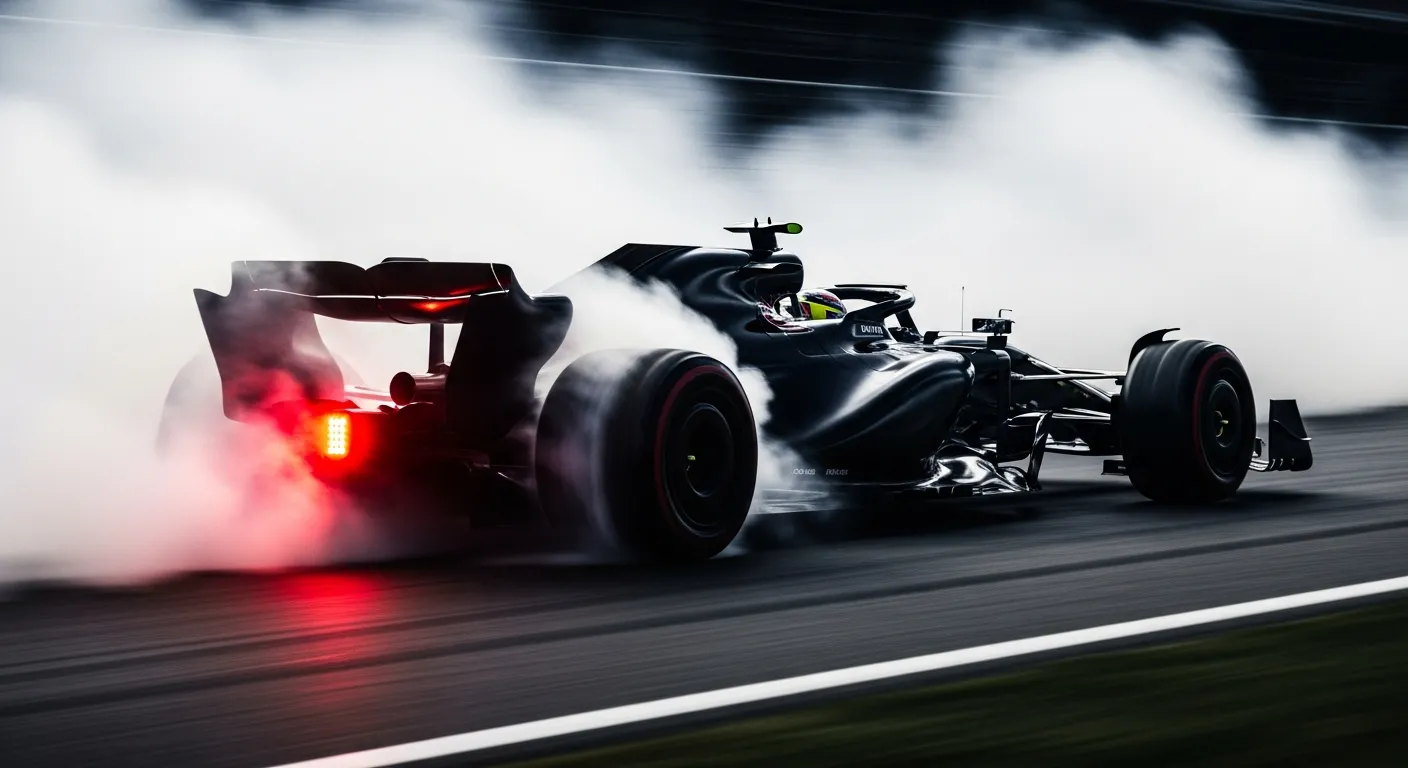
George Russell's performance at the 2021 British Grand Prix at Silverstone underscored the consistent effort he brought to Williams during a challenging season, securing a 12th place finish from a 12th place grid start. This result, while not yielding points, was indicative of Russell's ability to maximize the potential of the Williams FW43B, often positioning it higher than its inherent pace suggested.
Starting from 12th on the grid, Russell navigated the initial chaos of the race, which famously saw a significant incident between Max Verstappen and Lewis Hamilton. While the front of the field was embroiled in championship-defining drama, Russell focused on his own race, completing 51 laps. He finished one lap down from the race winner, a common outcome for teams in the lower midfield given the performance disparity across the grid in 2021. His fastest lap of the race, a 1:32.049, was set on lap 49, placing him 13th in the overall fastest lap standings for the event. This pace, while not challenging for points, demonstrated a solid effort against competitors. His teammate, Nicholas Latifi, finished 14th, also on 51 laps, with a fastest lap of 1:32.477. The British Grand Prix, round 10 of the 2021 [Formula 1 World Championship](https://www.fia.com/events/fia-formula-one-world-championship), was a pivotal moment in the season, and Russell's steady drive at his home circuit was a testament to his race craft. The detailed race results, including individual lap times and positions, are meticulously recorded in [F1 race data archives](https://api.jolpi.ca/ergast/f1/2026.json), offering a granular view of each driver's performance.
Russell's consistent outperformance of his machinery throughout 2021 was a narrative that gained significant traction, making his Williams drives particularly noteworthy. His ability to qualify well and then hold position or even gain places in races, despite the car's limitations, was a hallmark of his tenure with Williams. This race at Silverstone, where he maintained his starting position, was another example. The broader context of the 2021 season, which saw intense battles at the top, also highlighted the efforts of drivers like Russell in less competitive machinery. His driving style and technical feedback were often praised, contributing to the team's development efforts, as detailed on the [official Formula 1 website](https://www.formula1.com/en). For a deeper understanding of the season's technical regulations and sporting framework, the [FIA's official F1 documentation](https://www.fia.com/events/fia-formula-one-world-championship) provides comprehensive details. While the headlines often focused on the championship fight between [Lewis Hamilton at the 2021 São Paulo Grand Prix](/results/2021-interlagos-lewis-hamilton) and [Max Verstappen at the 2021 São Paulo Grand Prix](/results/2021-interlagos-max-verstappen), drivers like Russell were engaged in their own fierce battles further down the order. His consistent efforts, even without points, built a strong case for his future, a trajectory that saw him eventually move to a top team. The full scope of the 2021 season and its key events can be explored via [Formula 1's comprehensive statistics](https://www.formula1.com/en). Russell's performance here, while not a points finish, was a building block in his reputation, much like how [Charles Leclerc at the 2021 São Paulo Grand Prix](/results/2021-interlagos-charles-leclerc) consistently pushed his Ferrari. His journey through the junior categories and into F1 is well-documented on platforms like [Wikipedia: Formula One](https://en.wikipedia.org/wiki/Formula_One), highlighting the path to the pinnacle of motorsport.