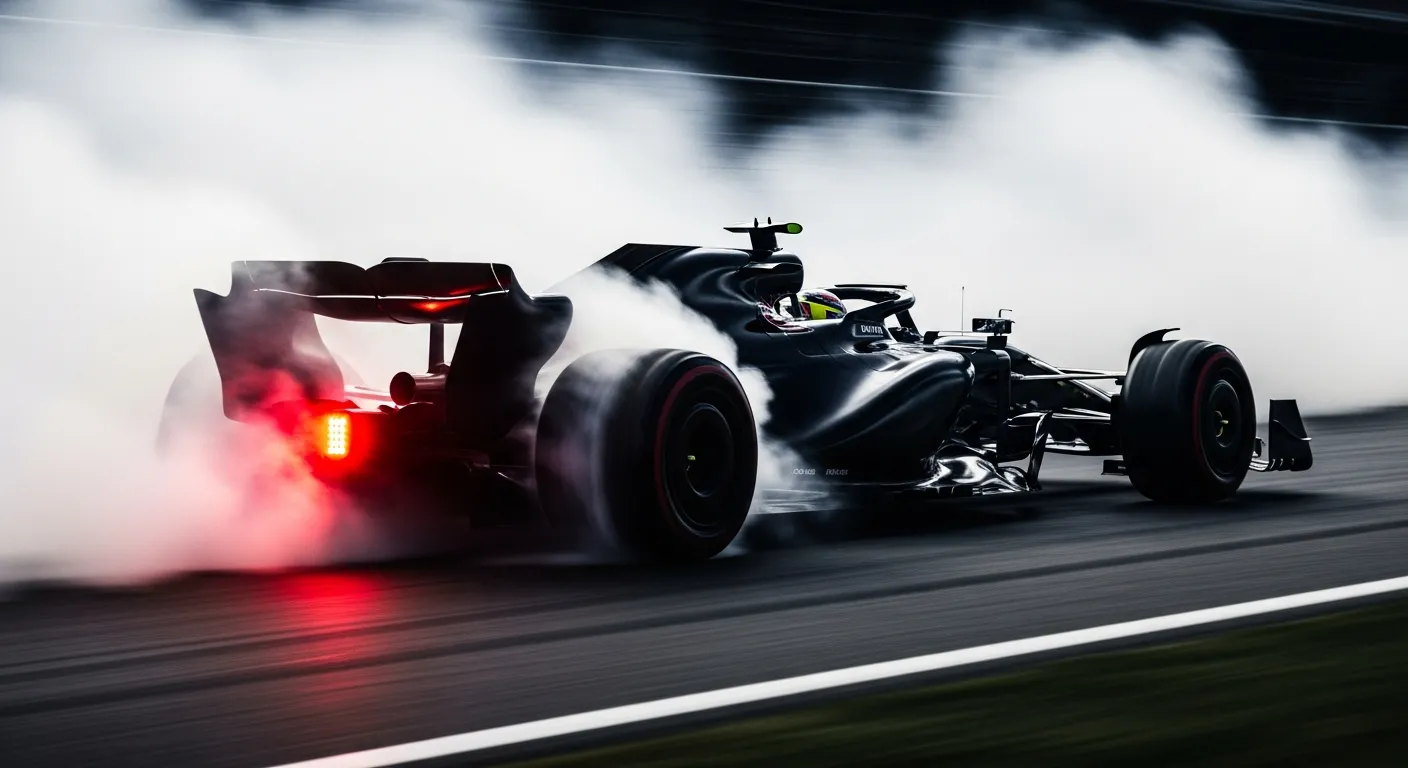
Lewis Hamilton's victory at the 2021 British Grand Prix on July 18, 2021, at Silverstone Circuit, was defined by a contentious opening lap incident and a strategic recovery drive to claim the top step of the podium. Starting from the second position on the grid, Hamilton found himself in a high-stakes battle from the outset. The race's early moments saw a significant collision with championship rival Max Verstappen, resulting in Verstappen's retirement after completing zero laps due to a "Collision" status. Hamilton, driving for Mercedes AMG F1, continued despite damage, facing a time penalty for his involvement in the incident. This set the stage for a challenging 52-lap contest where managing car performance and race strategy became paramount. The stewards' decision and the subsequent drive added a layer of intensity that resonated through the paddock, much like the strategic battles seen in events such as [Carlos Sainz at the 2026 Canadian Grand Prix](/results/2026-montreal-carlos-sainz).
Despite the early setback, Hamilton demonstrated a measured pace, completing the 52 laps in a total time of "1:58:23.284" to secure first position. His fastest lap, recorded on lap 45 with a time of "1:29.699", ranked second overall in the race, showcasing his ability to push when required. The Mercedes AMG F1 team's overall performance was strong, with teammate Valtteri Bottas also finishing on the podium in third position, having started from third on the grid. This dual podium finish underscored the constructor's competitive package at Silverstone. The event provided a stark contrast to the challenges faced by drivers like [Esteban Ocon at the 2026 Canadian Grand Prix](/results/2026-montreal-esteban-ocon) in different seasons, highlighting the unpredictable nature of Formula 1 racing. For a comprehensive overview of past results and championship standings, the [Formula 1 — official site](https://www.formula1.com/en) serves as a primary resource. Further data and historical race information can be explored via [Jolpica/Ergast — 2026 season data](https://api.jolpi.ca/ergast/f1/2026.json), which tracks detailed statistics across seasons, including the performances of drivers such as [Yuki Tsunoda at the 2026 Canadian Grand Prix](/results/2026-montreal-yuki-tsunoda). The FIA's role in governing these events is crucial, with regulations and race procedures detailed on the [FIA — F1 World Championship](https://www.fia.com/events/fia-formula-one-world-championship) page. Understanding the broader context of Formula One's evolution can be found on [Wikipedia: Formula One](https://en.wikipedia.org/wiki/Formula_One). The specific technical regulations that govern car design and race conduct are also available on the [official Formula 1 technical regulations](https://www.formula1.com/en/latest/article.formula-1-technical-regulations.5W26N2q2FpL32R9N4E2u8.html) page, providing insight into the engineering challenges teams face. Additionally, the [official F1 results archive](https://www.formula1.com/en/results.html) offers detailed breakdowns of every Grand Prix.