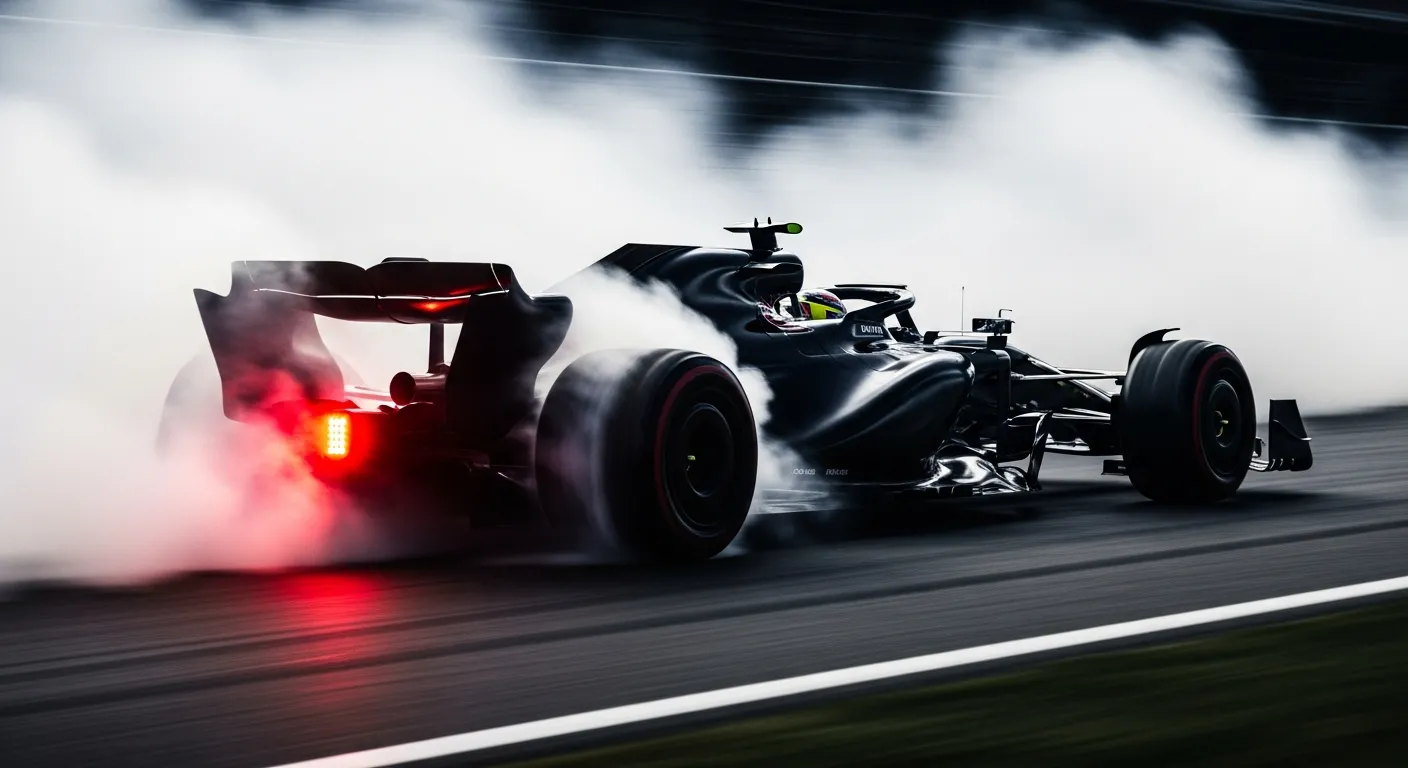
The 2021 Belgian Grand Prix at Spa-Francorchamps presented Carlos Sainz with a peculiar challenge, culminating in a tenth-place finish for Scuderia Ferrari after a single, safety-car-led lap was officially completed. Starting from eleventh on the grid, Sainz navigated the treacherous conditions that ultimately led to the race being declared after just one lap, a decision that saw half-points awarded across the field. His teammate, Charles Leclerc, started two positions ahead in ninth and finished eighth, securing 2 points. The event, held on August 29, 2021, was defined by persistent heavy rain, rendering the iconic [Circuit de Spa-Francorchamps](https://www.formula1.com/en/racing/2021/Belgium/Circuit.html) largely undriveable at racing speeds. Despite the minimal on-track action, Sainz's position gain from his starting grid slot to a points-scoring finish, albeit a reduced one, marked a nominal improvement in a race that offered little opportunity for strategic play or overtakes. This outcome, though unusual, is officially recorded in the [FIA F1 World Championship](https://www.fia.com/events/fia-formula-one-world-championship) results, reflecting the extraordinary circumstances that day. The decision to award points for such limited running sparked considerable discussion within the broader [Formula 1 — official site](https://www.formula1.com/en) community, highlighting the complexities of race governance under extreme weather.
The unprecedented nature of the 2021 Belgian Grand Prix meant that drivers like Sainz had to simply hold position in the limited running. With a final recorded time of 3:43.237 over the single lap, Sainz secured 0.5 points, adding to his season tally. This contrasts sharply with typical Grand Prix weekends, where drivers like [George Russell at the 2025 Azerbaijan Grand Prix](/results/2025-baku-george-russell) or [Fernando Alonso at the 2025 Azerbaijan Grand Prix](/results/2025-baku-fernando-alonso) would contend with full race distances and dynamic strategic battles. The race conditions at Spa were so extreme that even seasoned competitors found themselves in a holding pattern, as evidenced by the entire field completing only one lap. This unique scenario highlights the regulatory flexibility within [Formula 1's sporting regulations](https://www.fia.com/sports/championships/f1-world-championship/regulations) to classify such events, a topic often explored in comprehensive resources like [Wikipedia's Formula One overview](https://en.wikipedia.org/wiki/Formula_One). The official data, accessible via platforms like [Jolpica/Ergast F1 data](https://api.jolpi.ca/ergast/f1/2026.json), provides a granular record of these unusual results. Even drivers who typically thrive in chaotic conditions, such as [Pierre Gasly at the 2025 Azerbaijan Grand Prix](/results/2025-baku-pierre-gasly), would have found their options severely limited. The focus shifted from performance driving to simply maintaining control in the low-visibility, high-aquaplaning environment, a testament to the inherent risks and unpredictable nature of racing at Spa.