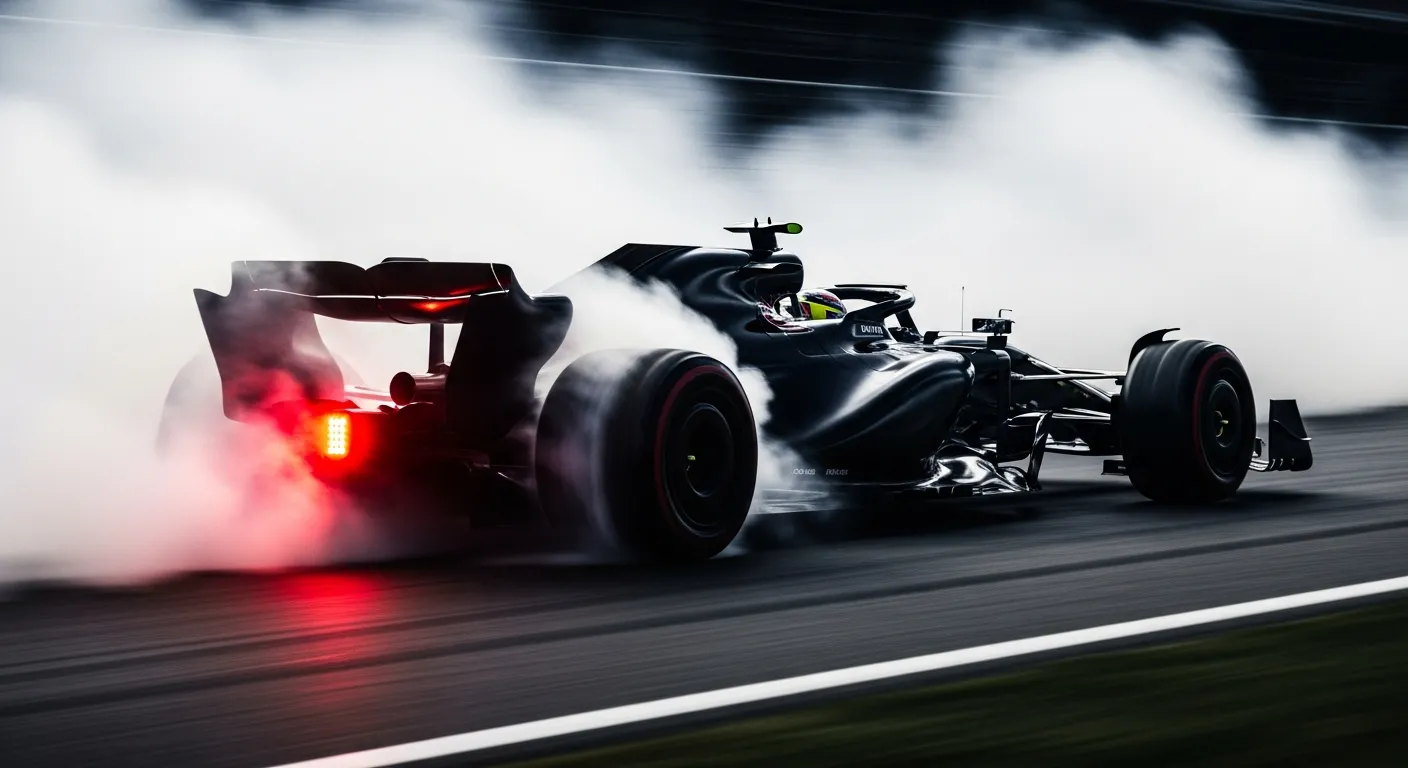
Lewis Hamilton's drive at the 2021 Abu Dhabi Grand Prix, where he started from grid position 2 and finished in position 2 for Mercedes AMG F1, represented the culmination of a championship battle defined by relentless pressure and strategic nuance. This particular race at the Yas Marina Circuit on December 12, 2021, was not merely a round in the season; it was the decisive contest for the Drivers' Championship, pitting Hamilton against Max Verstappen in a direct, winner-take-all scenario.
From the moment the lights went out, Hamilton, piloting his Mercedes W12, demonstrated formidable pace and control. He quickly established a lead, managing his tyres and pace effectively through the initial stints. His consistent performance saw him complete all 58 laps of the race, a testament to both his driving and the reliability of the Mercedes AMG F1 machinery. On lap 43, Hamilton recorded his fastest lap of the race, a 1:26.615, which placed him third overall for fastest laps among all competitors. This strong showing earned him 18 points, elevating his season total to 387.5 points, securing his final championship position of second. The strategic decisions made by the Mercedes AMG F1 pit wall, particularly concerning tyre management and response to track events, were under immense scrutiny, reflecting the high stakes of a championship decider, often detailed in race reports on the [Formula 1 — official site](https://www.formula1.com/en). For a comparative analysis of championship pressure, one might look at [Max Verstappen at the 2021 Austrian Grand Prix](/results/2021-red-bull-ring-max-verstappen), where similar high-stakes scenarios unfolded earlier in the season.
The narrative of the race, however, irrevocably shifted in its concluding stages. A late-race safety car, deployed after Nicholas Latifi's accident on lap 50, dramatically compressed the field and reset the strategic landscape. Prior to this, Hamilton had maintained a comfortable lead, seemingly on course for the championship. The subsequent decisions regarding lapped cars and the timing of the safety car restart became central to the race's outcome. Hamilton's teammate, Valtteri Bottas, also completed all 58 laps for Mercedes AMG F1, finishing in position 6 and contributing 8 points to the constructor's effort, as detailed in the official [Formula 1 — official site](https://www.formula1.com/en) results. The final restart, with just one racing lap remaining, saw Hamilton on older hard tyres against Verstappen's fresh softs, a tactical disadvantage that proved decisive. This pivotal moment, where the championship was decided on the very last lap, has been extensively analyzed, including discussions on the application of the [FIA — F1 World Championship](https://www.fia.com/events/fia-formula-one-world-championship) sporting regulations. The intricate details of lap-by-lap performance, including Hamilton's fastest lap on lap 43, are available through comprehensive datasets, such as those provided by [Jolpica/Ergast — 2026 season data](https://api.jolpi.ca/ergast/f1/2026.json), which offer a granular view of every driver's performance. The broader context of such a high-pressure finale is often explored in encyclopaedic resources like [Wikipedia: Formula One](https://en.wikipedia.org/wiki/Formula_One), which chronicles the history and evolution of the sport's regulations and championship battles. This race underscored the fine margins at the pinnacle of motorsport, influencing subsequent discussions on race control and procedural clarity, a topic often addressed by the [FIA — F1 World Championship](https://www.fia.com/events/fia-formula-one-world-championship) itself. The challenges faced by drivers like [Charles Leclerc at the 2021 Austrian Grand Prix](/results/2021-red-bull-ring-charles-leclerc) or even [Lewis Hamilton at the 2021 Austrian Grand Prix](/results/2021-red-bull-ring-lewis-hamilton) earlier in the season, while significant, did not carry the same ultimate championship weight as this Abu Dhabi finale.