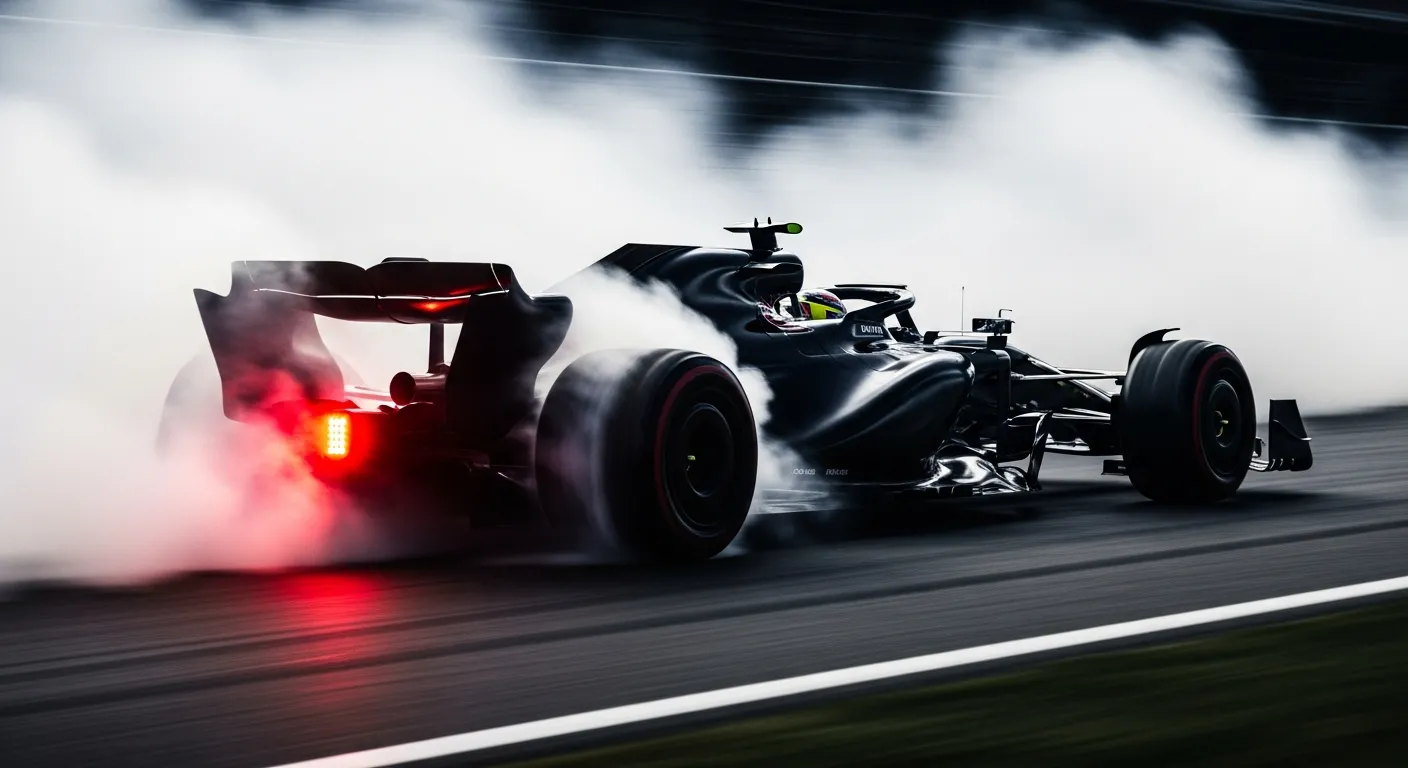
George Russell's 2021 Dutch Grand Prix at Circuit Park Zandvoort concluded prematurely due to a battery issue, preventing him from completing the full race distance for Williams Grand Prix Engineering. Starting from the 11th position on the grid, Russell aimed to leverage any opportunities for points, a familiar ambition for the British driver during his tenure with Williams, much like his efforts at events such as [George Russell at the 2021 Australian Grand Prix](/results/2021-albert-park-george-russell). The Circuit Park Zandvoort layout, with its high-speed banking and tight sections, demanded precision and robust car performance, elements that ultimately proved challenging for the Williams FW43B. Throughout the race, Russell maintained a competitive pace within the midfield, recording a fastest lap of 1:15.628 on lap 57, ranking 16th overall for that metric among all competitors. This performance highlighted the car's potential on certain stints, even as the team navigated the demanding conditions of the Dutch circuit, a venue that returned to the Formula 1 calendar in 2021, a significant moment for the sport as detailed by the [official Formula 1 site](https://www.formula1.com/en). The return of Zandvoort brought unique challenges, particularly for midfield teams striving for reliability and pace.
However, the race for Russell came to an end on lap 69, just three laps shy of the full 72-lap distance, when his car registered a "Battery" status, forcing his retirement and a final classification of 17th. This unfortunate turn meant no points were scored for Williams at this round, contrasting with the dominant performance seen at the front of the field where drivers like [Lewis Hamilton at the 2021 Australian Grand Prix](/results/2021-albert-park-lewis-hamilton) were contending for victory. His teammate, Nicholas Latifi, managed to complete 70 laps, finishing 16th, two laps down, which underscores the technical challenges faced by the British constructor that weekend. The intricacies of modern F1 power units, including battery management, are governed by extensive [FIA technical regulations](https://www.fia.com/events/fia-formula-one-world-championship), which teams must meticulously adhere to. Such mechanical failures are a stark reminder of the demanding nature of the sport, a core aspect of [Formula One's history and evolution](https://en.wikipedia.org/wiki/Formula_One). Analyzing comprehensive race data, such as that available from [Jolpica/Ergast — 2026 season data](https://api.jolpi.ca/ergast/f1/2026.json), often reveals the fine margins involved in performance and reliability, especially when pushing components to their limits. While the outcome was not what Russell or Williams had hoped for, the experience provided further data for development, a continuous cycle in the world of grand prix racing, a theme also seen in the challenges faced by drivers like [Pierre Gasly at the 2021 Australian Grand Prix](/results/2021-albert-park-pierre-gasly) in their respective campaigns. The pursuit of reliability and performance is a constant for every team on the grid, as documented by various [Formula 1 official resources](https://www.formula1.com/en) and historical records. Further detailed statistical analysis of past seasons, accessible via [Jolpica/Ergast — 2026 season data](https://api.jolpi.ca/ergast/f1/2026.json), consistently shows how critical component reliability is. A deeper dive into the specific battery issue would be crucial for the Williams engineering team to prevent similar occurrences in subsequent rounds, a common practice across all F1 operations.