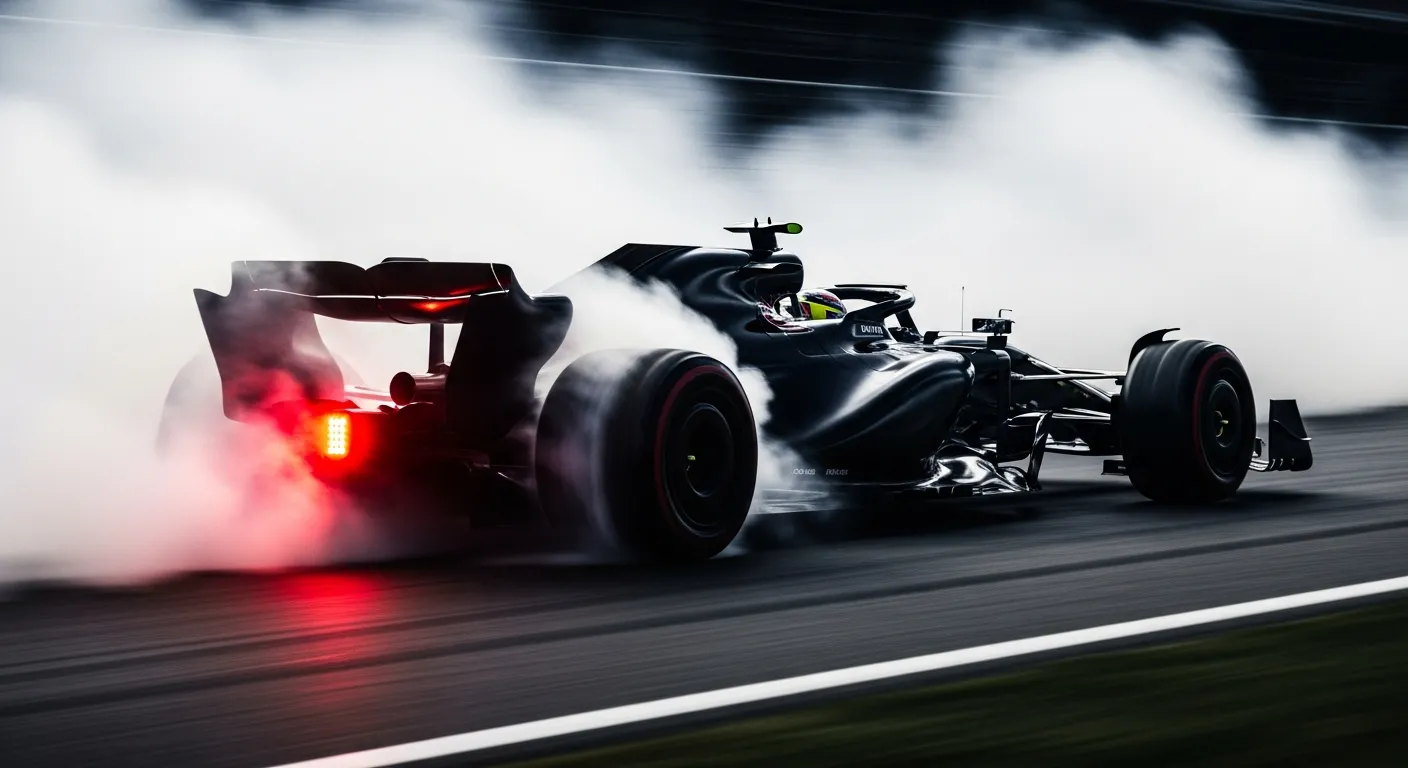
Lance Stroll's outing at the 2021 Dutch Grand Prix saw the Canadian driver secure a 12th-place finish for Aston Martin at the demanding Circuit Park Zandvoort, precisely matching his starting grid position. The return of Zandvoort to the Formula 1 calendar was met with anticipation, its unique layout featuring high-speed banked corners and tight, flowing sections that demand absolute precision and a well-balanced car. Stroll completed 70 laps of the race, two laps behind the eventual winner, Max Verstappen, illustrating the gap to the front-running teams on a circuit where outright pace was critical. His fastest lap, a "1:15.611" recorded on lap 57, placed him 15th among all competitors for that metric, indicating a consistent, though not particularly aggressive, single-lap pace during the latter phase of the event. This performance underscored Aston Martin's position in the fiercely contested midfield, where optimizing strategy and extracting maximum performance from the car are constant imperatives. For a broader understanding of the technical intricacies and historical evolution of Formula 1, the [Wikipedia: Formula One](https://en.wikipedia.org/wiki/Formula_One) entry provides a robust foundation.
The 2021 Dutch Grand Prix was a strategic affair, with tire degradation and track position being key considerations on the abrasive Zandvoort surface. While Stroll maintained his P12, his teammate Sebastian Vettel, who started three places further back in 15th, managed to finish just one position lower in 13th, also completing 70 laps. Crucially, Vettel's fastest lap of "1:13.958" on lap 63, ranking 5th overall, showcased a significantly stronger late-race pace within the Aston Martin garage. This disparity suggests either a more aggressive tire strategy, different setup choices, or a more effective push in the closing stages from Vettel. Such internal team dynamics are a constant undercurrent in Formula 1, with drivers often pushing each other for performance. The official regulations that govern these competitive parameters are meticulously detailed by the [FIA — F1 World Championship](https://www.fia.com/events/fia-formula-one-world-championship). While Stroll's race was a clean effort, it ultimately did not yield championship points, leaving his season tally unchanged. This outcome is not uncommon for drivers in the midfield; for instance, [Esteban Ocon at the 2018 Australian Grand Prix](/results/2018-albert-park-esteban-ocon) also finished 12th without points, demonstrating the challenge of breaking into the top ten. Conversely, a driver like [Fernando Alonso at the 2018 Australian Grand Prix](/results/2018-albert-park-fernando-alonso) managed to climb three positions to secure points, highlighting the potential for strategic gains, while [Carlos Sainz at the 2018 Australian Grand Prix](/results/2018-albert-park-carlos-sainz) secured a points finish from a similar grid slot, showcasing the fine margins involved. The granular data from past events, which can be explored through resources like [Jolpica/Ergast — 2026 season data](https://api.jolpi.ca/ergast/f1/2026.json), offers valuable insights into these race narratives and strategic considerations.