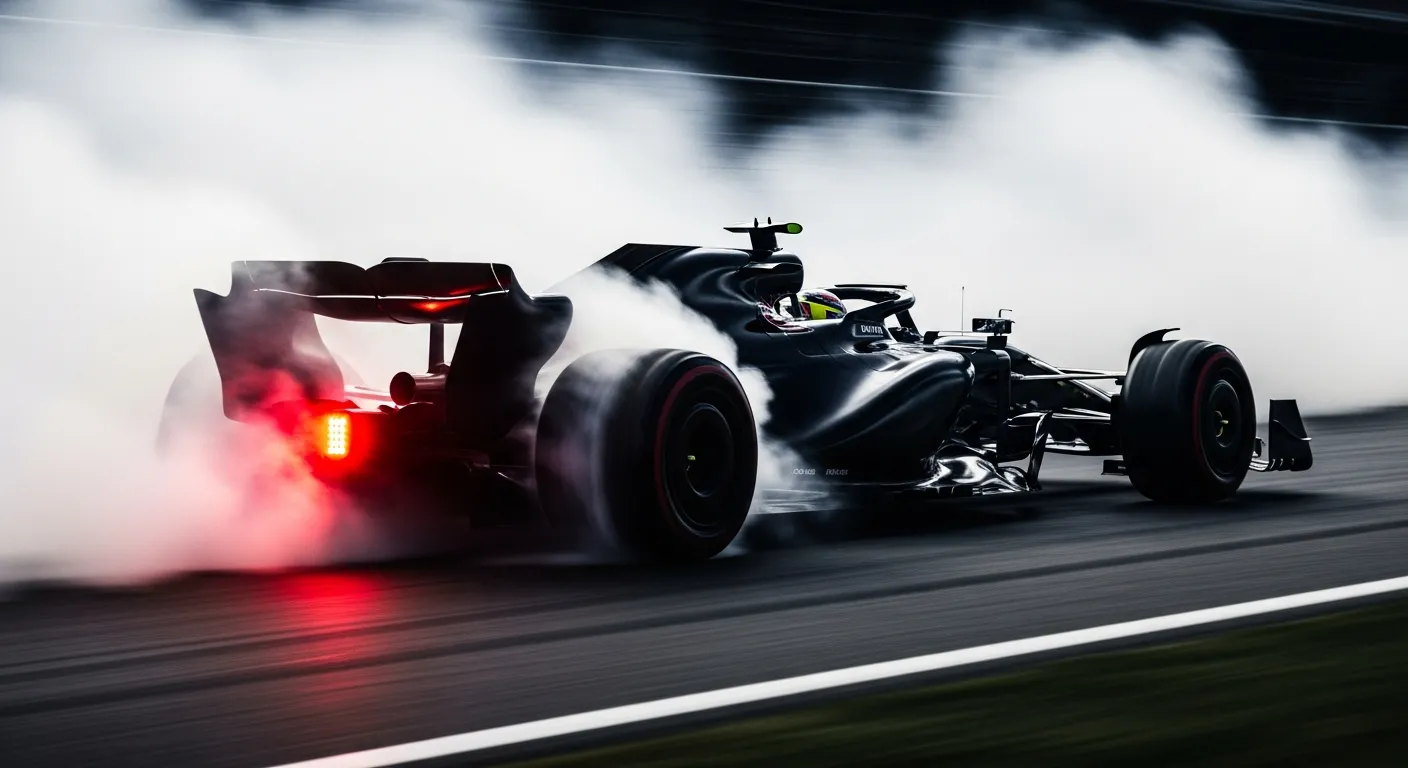
Alexander Albon’s performance at the 2022 Australian Grand Prix stands as a testament to strategic tire management and consistent pace, culminating in a points finish from the back of the grid. Starting from P20, the Williams driver executed an unconventional strategy, running the majority of the race on a single set of hard tires. This extended stint, a bold move in the demanding conditions of the [Melbourne Grand Prix Circuit](https://www.formula1.com/en/racing/2022/Australia.html), allowed him to climb through the field as competitors pitted, demonstrating a remarkable ability to maintain competitive lap times on aging rubber. His fastest lap of "1:22.589" on lap 54, ranking 12th overall, further underscored his sustained pace late in the race. This kind of calculated risk, often seen in the [Formula 1 — official site](https://www.formula1.com/en) paddock, requires precise execution and a deep understanding of tire degradation, a critical factor in modern [Formula One](https://en.wikipedia.org/wiki/Formula_One) racing. The team's decision to keep him out for 57 laps before a mandatory pit stop on the final lap was a high-stakes gamble that paid off, securing a valuable championship point.
This P10 finish, achieved with a total race time of "1:29:05.930" over 58 laps, marked a significant moment for Williams Grand Prix Engineering in the 2022 season. While his teammate Nicholas Latifi finished P16, Albon's solitary point was a vital morale boost and a tangible reward for the team's efforts. The ability to extract performance and points from challenging grid positions is a recurring theme in F1; for instance, [Max Verstappen at the 2022 Dutch Grand Prix](/results/2022-zandvoort-max-verstappen) also showcased a strong recovery drive in his home race, similar to Albon's ascent. Such results often hinge on navigating chaotic race conditions, as seen when [Carlos Sainz at the 2022 Hungarian Grand Prix](/results/2022-hungaroring-carlos-sainz) faced unexpected challenges. Albon's drive at the Melbourne Grand Prix Circuit highlighted his race craft and the team's operational acumen, a strategic masterclass that contrasts with the struggles faced by drivers like [Yuki Tsunoda at the 2022 Hungarian Grand Prix](/results/2022-hungaroring-yuki-tsunoda). The official [FIA F1 World Championship](https://www.fia.com/events/fia-formula-one-world-championship) records confirm the impact of every point. Analyzing historical [F1 season data](https://api.jolpi.ca/ergast/f1/2026.json) reveals that such strategic gambits can be pivotal for midfield teams. This result provided a crucial early-season benchmark for the team's development trajectory, setting a precedent for similar tactical plays in the [history of Formula One](https://en.wikipedia.org/wiki/History_of_Formula_One).