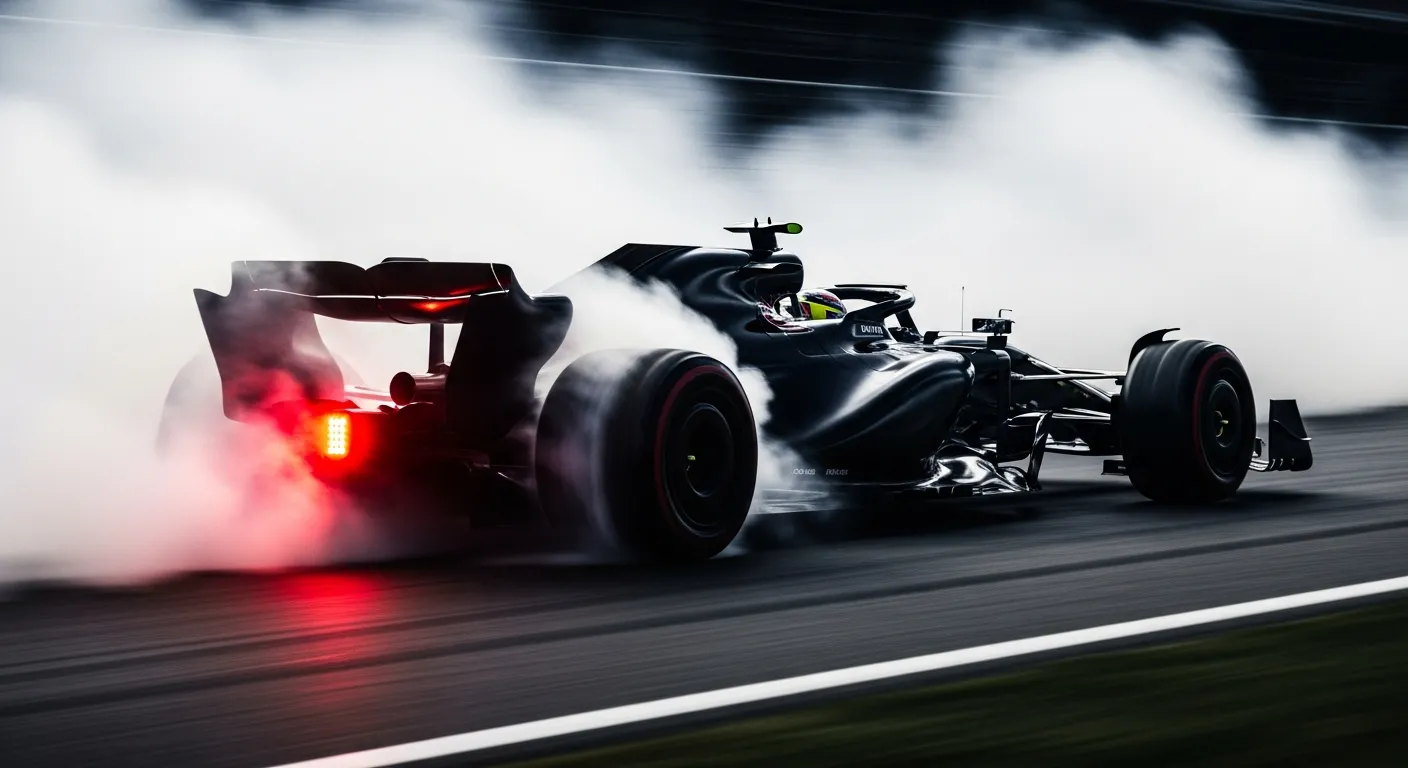
Carlos Sainz's 2022 Azerbaijan Grand Prix campaign was cut short by a hydraulics failure, marking a significant setback for Scuderia Ferrari at the Baku City Circuit. Starting from fourth on the grid, Sainz had positioned himself well for a strong points finish, a critical objective given the competitive nature of the 2022 season. However, on just the eighth lap of the race held on June 12, 2022, his SF-75 encountered a terminal issue, forcing him to pull off track and retire. This early exit meant zero points for the Spanish driver, a stark contrast to the race winner, Max Verstappen, who secured 25 points. The incident highlighted a recurring theme of reliability concerns for Ferrari during this period, impacting both Sainz and his teammate. The broader context of [Formula 1 racing](https://www.formula1.com/en), overseen by the [FIA — F1 World Championship](https://www.fia.com/events/fia.com/events/fia-formula-one-world-championship), underscores the critical role of reliability alongside raw pace.
The retirement was particularly frustrating as Sainz had shown promising pace in the initial laps, recording his fastest lap of 1:48.978 on lap 3. The Baku street circuit is known for its demanding layout, often testing the limits of machinery, as seen in previous years, including [Max Verstappen's retirement at the 2021 Azerbaijan Grand Prix](/results/2021-baku-max-verstappen) due to a tire failure. For Sainz, this mechanical DNF meant missing out on valuable championship points, keeping his season tally at 83 points and maintaining his fifth position in the standings. Ferrari's double retirement in Baku, with [Charles Leclerc also retiring due to a power unit issue at the 2022 Azerbaijan Grand Prix](https://www.formula1.com/en/latest/article.ferrari-explain-double-d.html), amplified the pressure on the team to address their technical vulnerabilities. This event served as a stark reminder of how rapidly fortunes can shift in the pinnacle of motorsport, influencing championship dynamics as documented by [Formula 1's official statistics](https://www.formula1.com/en/results.html). The detailed race data, available through platforms like [Jolpica/Ergast — 2026 season data](https://api.jolpi.ca/ergast/f1/2026.json), provides a comprehensive look at such incidents across various seasons. Understanding the intricacies of [Formula One](https://en.wikipedia.org/wiki/Formula_One) performance requires analyzing not just speed but also the engineering resilience of each car, a lesson painfully learned by Ferrari in Baku, similar to the challenges faced by [Lewis Hamilton at the 2021 Azerbaijan Grand Prix](/results/2021-baku-lewis-hamilton).