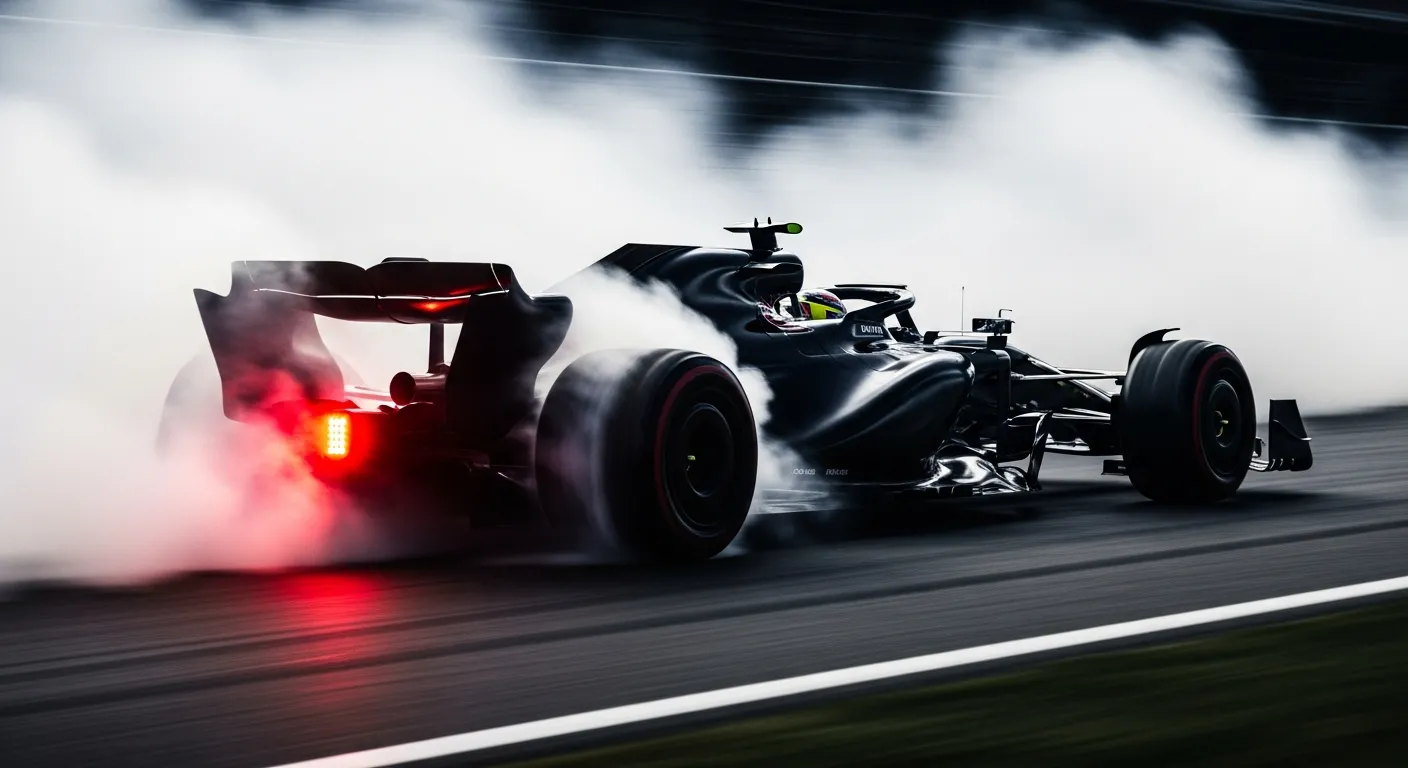
Yuki Tsunoda's 2022 Azerbaijan Grand Prix was ultimately defined by a mid-race rear wing issue that severely compromised his race, leading to a 13th-place finish despite a promising start from eighth on the grid. The Scuderia AlphaTauri driver initially held his position in the opening stages of the race at the [Baku City Circuit](https://www.formula1.com/en/circuits/azerbaijan/baku-city-circuit.html), navigating the demanding street circuit. However, on lap 33, the team identified a problem with his rear wing, which was visibly oscillating. This necessitated an unscheduled pit stop for repairs, where the team taped the wing to secure it. The repair, while preventing a DNF, cost Tsunoda significant track position and time, dropping him out of contention for points. His teammate, Pierre Gasly, managed to convert a sixth-place grid start into a strong fifth-place finish, securing 10 points for AlphaTauri and demonstrating the car's potential when unimpeded. This contrast highlighted the impact of Tsunoda's technical setback and the fine margins at play in [Formula 1](https://www.formula1.com/en) competition.
Despite the operational challenge, Tsunoda completed 50 laps, finishing one lap down from race winner Max Verstappen. He demonstrated competitive pace at times, recording a fastest lap of 1:47.523 on lap 42, which ranked fifth overall among all drivers, showcasing his underlying speed even with a compromised car. This lap time was notably quicker than his teammate's fastest lap of 1:48.519. The incident underscores the critical role of aerodynamic integrity in modern F1 racing, where even minor structural issues can have profound effects on performance, as seen in various technical directives issued by the [FIA — F1 World Championship](https://www.fia.com/events/fia-formula-one-world-championship). Such unforeseen mechanical issues can drastically alter a driver's race trajectory, a scenario not unfamiliar to others, including [Max Verstappen at the 2017 Canadian Grand Prix](/results/2017-montreal-max-verstappen) who faced power unit issues. For Tsunoda, this race at Baku represented a missed opportunity to add to his points tally, particularly given his strong qualifying performance. The comprehensive [Wikipedia entry on Formula One](https://en.wikipedia.org/wiki/Formula_One) details the sport's technical complexities. The detailed [2022 season data](https://api.jolpi.ca/ergast/f1/2026.json) confirms his lap count and final standing. The challenges faced by drivers can vary greatly, from mechanical failures to strategic missteps, as was the case for [Carlos Sainz at the 2017 Spanish Grand Prix](/results/2017-barcelona-carlos-sainz) who also retired due to a technical issue. Even experienced drivers like [Fernando Alonso at the 2017 Canadian Grand Prix](/results/2017-montreal-fernando-alonso) have had to contend with the unpredictable nature of F1 machinery. Understanding the full scope of a season requires reviewing all [F1 results and statistics](https://www.formula1.com/en/results.html).