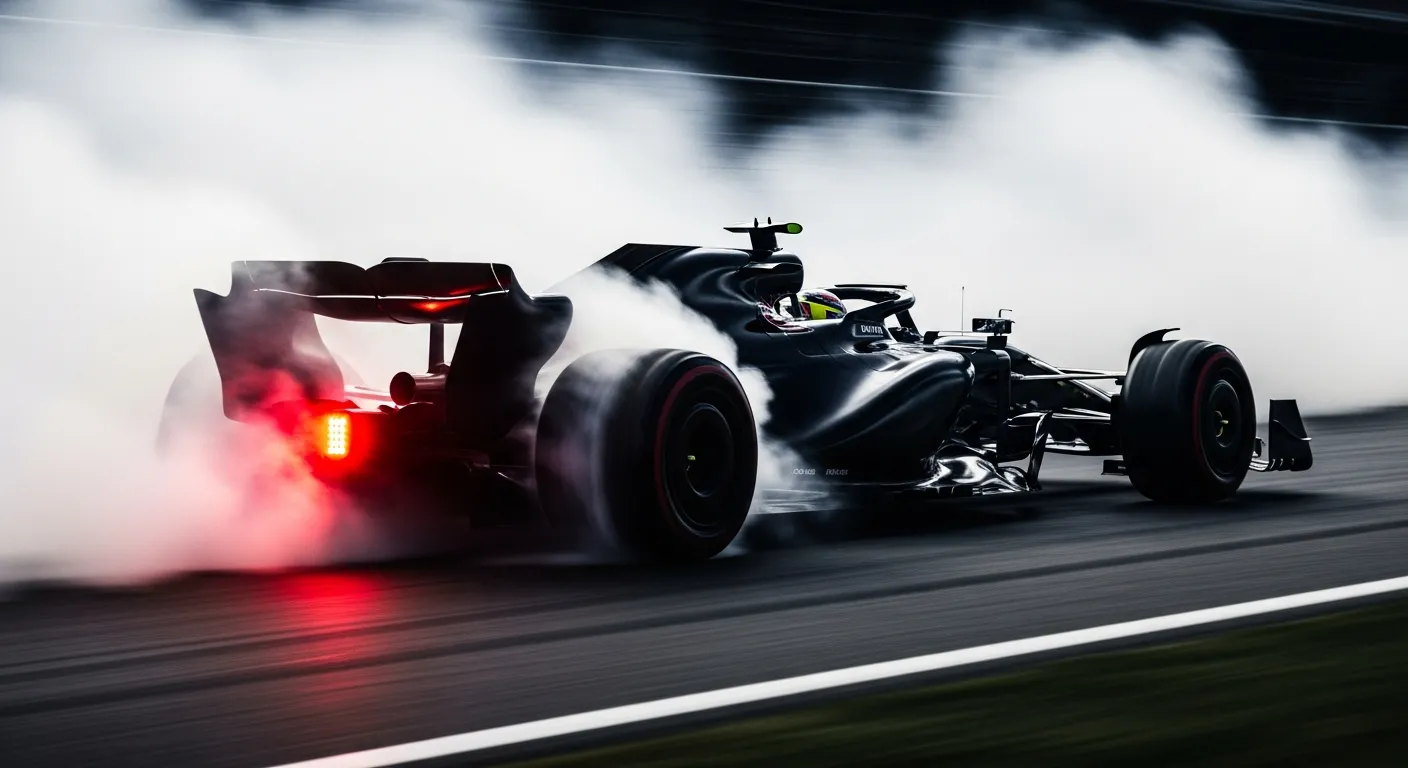
Lance Stroll's 2022 United States Grand Prix at the Circuit of the Americas was defined by a strong qualifying performance that placed him P5 on the grid, only for his race to conclude prematurely on lap 21 due to a collision. This promising starting position, a testament to the Aston Martin AMR22's pace on the demanding Austin circuit, set expectations for a significant points haul for the British constructor. Stroll's ability to place his car so high up the grid demonstrated a clear intent from the Aston Martin camp to capitalize on any opportunity, a crucial factor in the competitive mid-field battle that year. From the moment the lights went out, Stroll aimed to consolidate his position amongst the front-runners. The early laps saw him navigating the challenging COTA layout, known for its high-speed esses and tight hairpin turns, where he recorded a fastest lap of 1:43.080 on lap 3, placing him 17th fastest overall in the race. This early pace indicated a car with reasonable performance, even if not at the very sharp end of the grid.
However, the race narrative took a decisive turn on lap 21. The incident, recorded simply as a "Collision" in the official results, brought an abrupt end to Stroll's participation. This DNF meant no points for the Canadian driver, a stark contrast to his teammate Sebastian Vettel, who managed to finish 8th, securing 4 points for [Aston Martin](https://www.formula1.com/en/teams/Aston-Martin.html). Such outcomes highlight the unpredictable nature of [Formula 1](https://en.wikipedia.org/wiki/Formula_One) racing, where a strong grid presence does not always translate to a finish. For context, similar scenarios where drivers started well but faced challenges can be seen, for instance, in [Charles Leclerc at the 2023 Hungarian Grand Prix](/results/2023-hungaroring-charles-leclerc), where strategic complexities impacted his race despite a strong start. The [FIA — F1 World Championship](https://www.fia.com/events/fia-formula-one-world-championship) regulations govern such incidents, often leading to investigations into the circumstances of contact, emphasizing the strict rules drivers operate under. The raw [Jolpica/Ergast — 2026 season data](https://api.jolpi.ca/ergast/f1/2026.json) provides a structured view of race outcomes, illustrating how a single event can drastically alter a driver's weekend and impact a team's championship aspirations. This particular race at COTA, a circuit known for its high-speed sections and technical corners, demands precision, and any misjudgment can have significant consequences. Comparing Stroll's DNF to drivers like [Lando Norris at the 2023 Hungarian Grand Prix](/results/2023-hungaroring-lando-norris), who converted a strong qualifying into a solid points finish, underscores the fine margins in F1. The full official results for the 2022 United States Grand Prix, available on the [Formula 1 — official site](https://www.formula1.com/en/results.html), confirm the sequence of events. Despite the early retirement, Stroll's initial pace and grid position demonstrated the potential of the Aston Martin package on that particular weekend, a potential that was unfortunately unfulfilled due to the collision. Another example of a driver facing a challenging race from a good grid spot is [George Russell at the 2023 Hungarian Grand Prix](/results/2023-hungaroring-george-russell), where a strong qualifying didn't guarantee an easy race. The incident served as a reminder of the competitive intensity that defines every lap of a Grand Prix, and the ever-present risk of a premature end to a promising run, a constant factor under the [FIA's technical regulations](https://www.fia.com/fia-formula-1-world-championship-2022-technical-regulations-0).