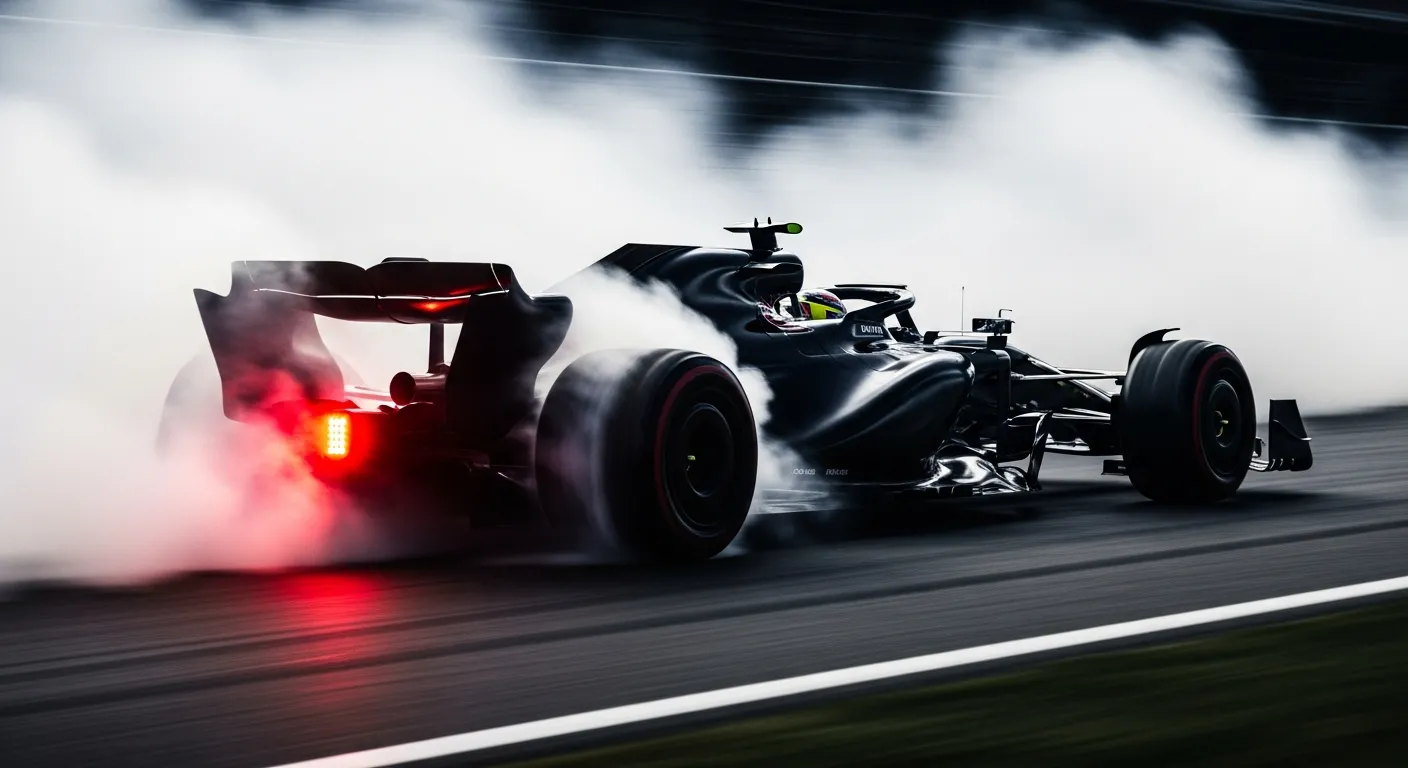
Yuki Tsunoda's drive at the 2022 Emilia Romagna Grand Prix at the Autodromo Internazionale Enzo e Dino Ferrari marked a significant points haul for Scuderia AlphaTauri, as he navigated the challenging conditions to climb from a 12th place grid start to finish in 7th. This performance saw him complete all 63 laps, crossing the line with a total race time of 1:33:09.096, a notable improvement over his teammate. The Japanese driver demonstrated consistent pace throughout the race, exemplified by his fastest lap of 1:20.544 on lap 61, which ranked him 5th overall for fastest laps in the race, showcasing the AT03's potential on a drying track. This result was particularly impactful given the variable weather conditions that characterized the weekend, requiring astute judgement from both the driver and the pit wall regarding tyre strategy.
Starting from 12th on the grid, Tsunoda executed a clean race, avoiding the early incidents that impacted others, including the collision that retired Ferrari's Carlos Sainz Jr. on the opening lap. His ability to manage the intermediate and then slick tyres effectively was crucial on a circuit known for its technical demands and limited overtaking opportunities. While his teammate, Pierre Gasly, starting from 17th, finished 12th and outside the points, Tsunoda's drive highlighted his growing maturity and race craft, a key factor in the competitive midfield of the [Formula 1 — official site](https://www.formula1.com/en) championship. For context on how drivers can navigate challenging races from various grid positions, one might consider the performance of [George Russell at the 2019 Azerbaijan Grand Prix](/results/2019-baku-george-russell), who also made up positions in a demanding race. The strategic decisions made by the AlphaTauri pit wall, combined with Tsunoda's execution, allowed him to gain five positions over the course of the race, a testament to effective race management under the [FIA — F1 World Championship](https://www.fia.com/events/fia-formula-one-world-championship) regulations. This kind of detailed performance data is crucial for understanding driver and team dynamics, as often compiled and analyzed by various sources, including comprehensive datasets like those found in [Jolpica/Ergast — 2026 season data](https://api.jolpi.ca/ergast/f1/2026.json).
Tsunoda's consistent performance at Imola also stands in contrast to other midfield battles seen in previous seasons, such as when [Lance Stroll at the 2019 Azerbaijan Grand Prix](/results/2019-baku-lance-stroll) converted a 13th grid start into a points finish. The 2022 season introduced a new generation of technical regulations, significantly altering car performance dynamics and emphasizing ground effect aerodynamics, which made such overtakes and position gains particularly challenging. His 7th place finish not only secured 6 points but also demonstrated the AlphaTauri package's capability to compete with more established teams on a given Sunday. The strategic choices regarding tyre compounds and pit stop timing are often critical elements of a successful race, as extensively covered in general [Wikipedia: Formula One](https://en.wikipedia.org/wiki/Formula_One) articles and technical analyses. Tsunoda's ability to maintain a strong pace, achieving a fastest lap ranking of 5th, underscores his potential in the new era of F1. This result also compares favorably to drivers like [Lando Norris at the 2019 Azerbaijan Grand Prix](/results/2019-baku-lando-norris), who also secured a strong points finish for McLaren from a higher grid position. The overall performance at Imola provided valuable insights for Scuderia AlphaTauri regarding their car's strengths and areas for development, crucial for their ongoing campaign in the [Formula 1 — official site](https://www.formula1.com/en) season. Understanding these intricate details requires consulting various official sources and data repositories, such as the [FIA — F1 World Championship](https://www.fia.com/events/fia-formula-one-world-championship) archives for race results and technical specifications.