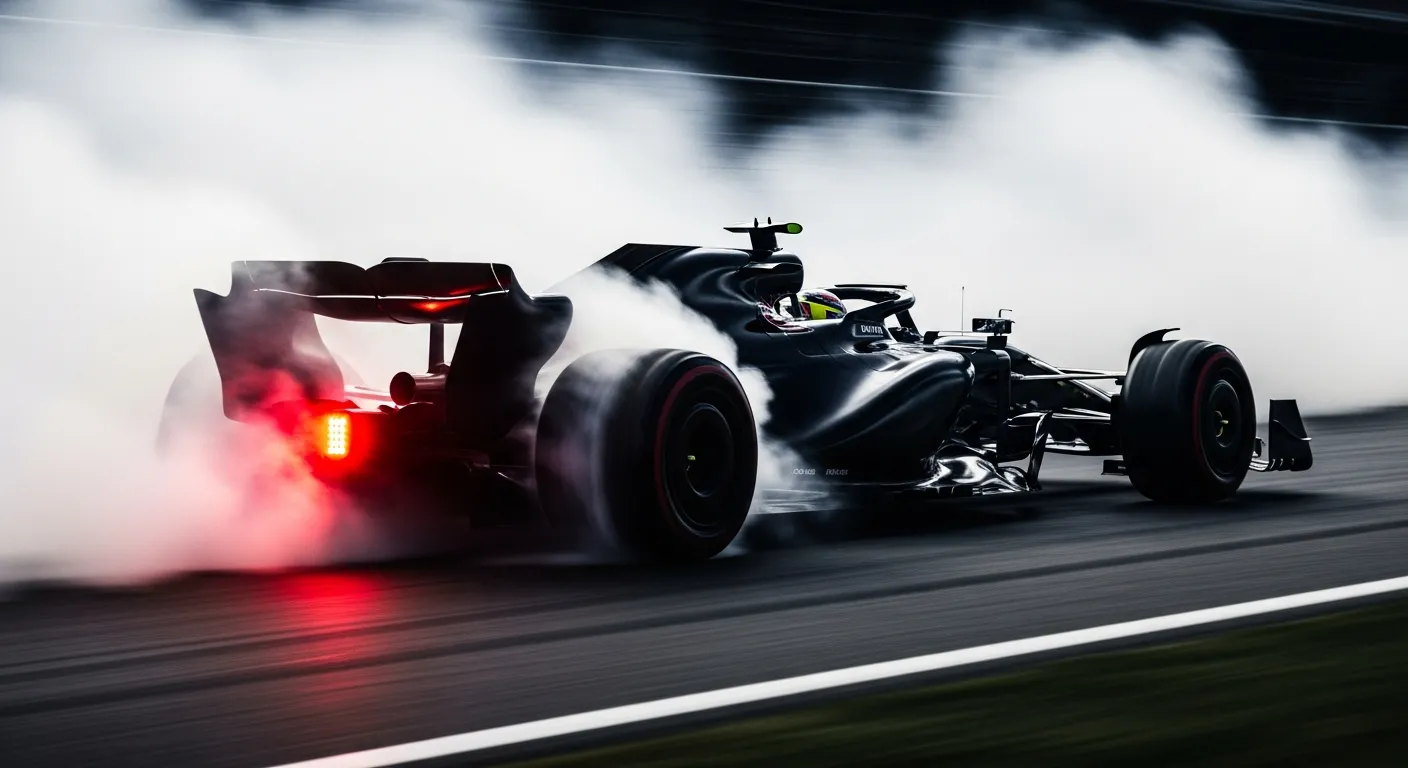
Carlos Sainz's drive at the 2022 Mexican Grand Prix on October 30, 2022, saw him maintain his starting position of fifth, a result that underscored Scuderia Ferrari's performance ceiling at the Autódromo Hermanos Rodríguez that weekend. Starting from the third row, Sainz completed all 71 laps of the race, crossing the finish line with a total time of 1:39:34.852. His fastest lap, recorded on lap 32, was a 1:22.199, placing him sixth overall in the fastest lap rankings for the event, a testament to the raw pace of the [Formula 1](https://www.formula1.com/en) machinery. This performance saw him finish ahead of his teammate, Charles Leclerc, who started two positions behind him on the grid in seventh and finished in sixth, 10.651 seconds adrift of Sainz. The high-altitude conditions in Mexico City often present unique challenges for power units and aerodynamics, influencing strategic choices for teams competing in the [FIA Formula One World Championship](https://www.fia.com/events/fia-formula-one-world-championship). Sainz's race management, particularly in tire preservation and navigating traffic, was critical in holding his ground against a strong field. While the Red Bull of Max Verstappen and the Mercedes duo of Lewis Hamilton and George Russell demonstrated superior pace, Sainz's consistent run ensured Ferrari maximized their potential on a circuit that historically tests engine reliability and brake cooling. Understanding the technical nuances of each circuit is crucial for driver and team, as explored in detailed analyses of [Formula One](https://en.wikipedia.org/wiki/Formula_One) racing history.
The strategic landscape of the Mexican Grand Prix often dictates a single-stop race, and Ferrari's approach with Sainz reflected this, aiming for optimal tire degradation management. Despite the consistent pace, the gap to the front was evident; Max Verstappen's winning time of 1:38:36.729 placed Sainz almost a minute behind the leader. Sainz's performance, while solid, highlighted the competitive gap to the front-running Red Bull and Mercedes cars, which ultimately filled the top four positions. For instance, George Russell, who secured the fastest lap of the race with a 1:20.153 on the final lap, finished ahead of Sainz by over eight seconds. The race marked a pivotal moment in the 2022 season, with teams refining their setups for the final rounds. Drivers like [Fernando Alonso at the 2024 Canadian Grand Prix](/results/2024-montreal-fernando-alonso) and [Esteban Ocon at the 2024 Canadian Grand Prix](/results/2024-montreal-esteban-ocon) often face similar strategic dilemmas when aiming to convert strong qualifying positions into race results. The comprehensive data from events like this is often compiled by resources such as the [Jolpica/Ergast — 2026 season data](https://api.jolpi.ca/ergast/f1/2026.json) for historical analysis, providing a deeper understanding of the sport's evolution as documented on [Wikipedia's Formula One page](https://en.wikipedia.org/wiki/Formula_One). Sainz’s 10 points contributed to his season tally, but the race also saw a shift in his championship standing, as detailed by the [Formula 1 — official site](https://www.formula1.com/en). The battle for constructor points is always intense, and every finish, even a fifth, is a crucial contribution, a sentiment echoed in the efforts of drivers such as [Pierre Gasly at the 2024 Canadian Grand Prix](/results/2024-montreal-pierre-gasly) in subsequent seasons.