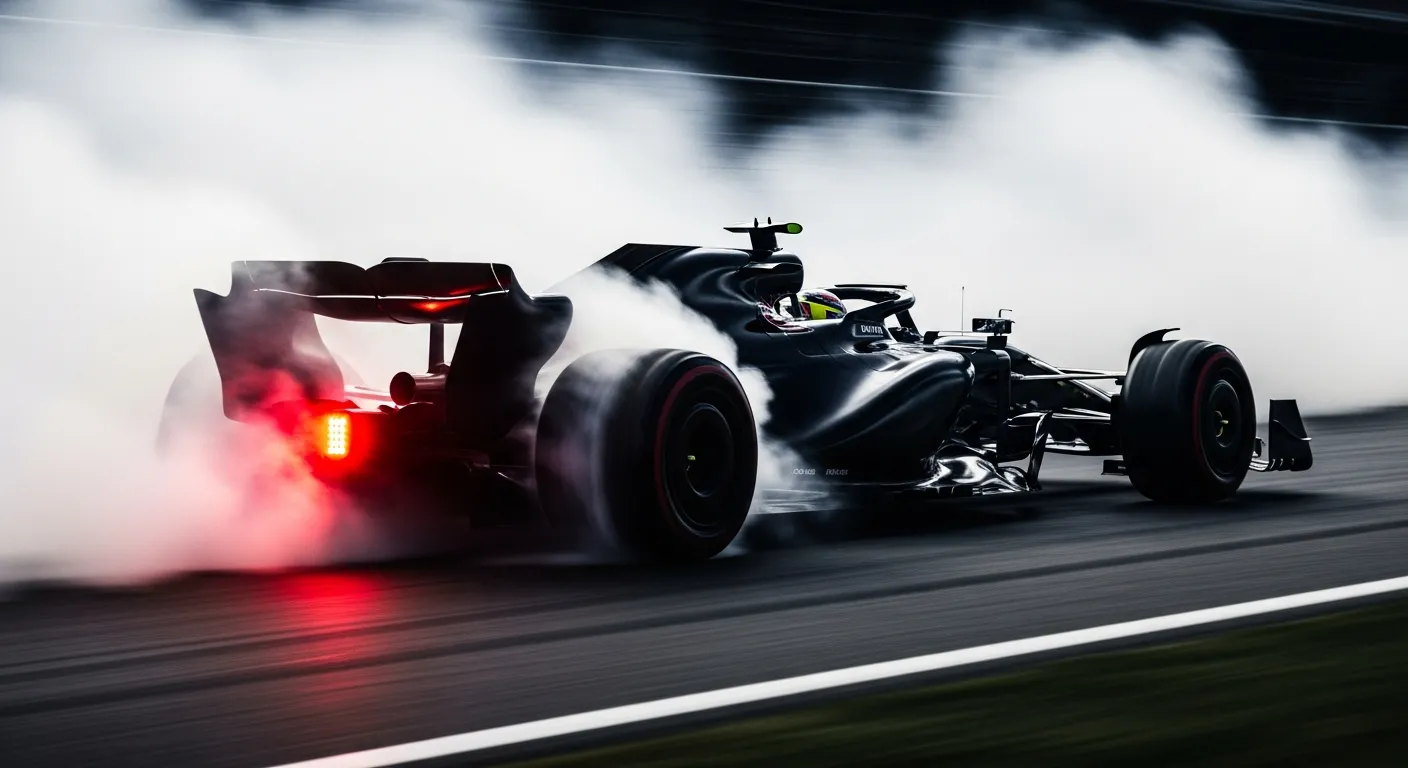
Yuki Tsunoda's outing at the inaugural 2022 Miami Grand Prix presented a contrast between initial promise and the eventual outcome, as the Japanese driver, starting his Scuderia AlphaTauri AT03 from a strong ninth position on the grid, ultimately crossed the finish line in twelfth. The 57-lap event on the Miami International Autodrome proved challenging for the Italian outfit, with both cars struggling to maintain their qualifying pace through the race distance. Tsunoda completed the race in 1:35:04.404, a performance that, while seeing him finish, did not yield any championship points.
The race unfolded with Tsunoda battling in the midfield, a segment of the grid that often sees intense wheel-to-wheel action. Despite his solid starting position, he found it difficult to defend against competitors who demonstrated stronger long-run pace. His teammate, Pierre Gasly, faced an even more difficult Sunday, retiring from the race after 45 laps due to suspension issues, underscoring a tough weekend for AlphaTauri. This mechanical failure for Gasly, who had started P7, meant that the team left Miami without any points. The intricacies of race strategy and tire management on the new street circuit were critical factors, as explored in detailed analyses on the [Formula 1 — official site](https://www.formula1.com/en). For comprehensive historical data on race results, the [Jolpica/Ergast — 2026 season data](https://api.jolpi.ca/ergast/f1/2026.json) provides a valuable resource for F1 enthusiasts.
Tsunoda's performance included a notable fastest lap on lap 55, clocking in at 1:33.035, which was the eighth fastest overall in the race, demonstrating moments of pace even as the overall result slipped away. The Miami Grand Prix was a race where several drivers navigated complex situations. While Tsunoda finished, others like [Carlos Sainz at the 2026 Qatar Grand Prix](/results/2026-lusail-carlos-sainz) have demonstrated how crucial a strong race pace is to convert qualifying positions into podium finishes. The dynamic nature of F1 racing, governed by the [FIA — F1 World Championship](https://www.fia.com/events/fia-formula-one-world-championship) regulations, means that even a good grid slot doesn't guarantee points. The complexities of car setup and performance on new circuits are always a talking point, a subject often discussed in depth on [Wikipedia: Formula One](https://en.wikipedia.org/wiki/Formula_One) pages. Looking ahead, drivers like [Yuki Tsunoda at the 2026 Qatar Grand Prix](/results/2026-lusail-yuki-tsunoda) will continue to refine their approach to maximize potential on race day. The 2022 season, as documented on the [Formula 1 — official site](https://www.formula1.com/en), saw varying fortunes across the grid, and Miami was a clear example of how quickly positions can shift. The data from this event, including individual lap times and race incidents, offers insights into the competitive landscape, a topic often analyzed using resources like the [Jolpica/Ergast — 2026 season data](https://api.jolpi.ca/ergast/f1/2026.json). The challenges faced by Tsunoda in Miami are a testament to the competitive nature of the sport, where even a strong qualifying effort doesn't always translate into a points finish, a situation that can be seen in the various outcomes for drivers across different seasons, for example, for [Alexander Albon at the 2026 Qatar Grand Prix](/results/2026-lusail-alex-albon).