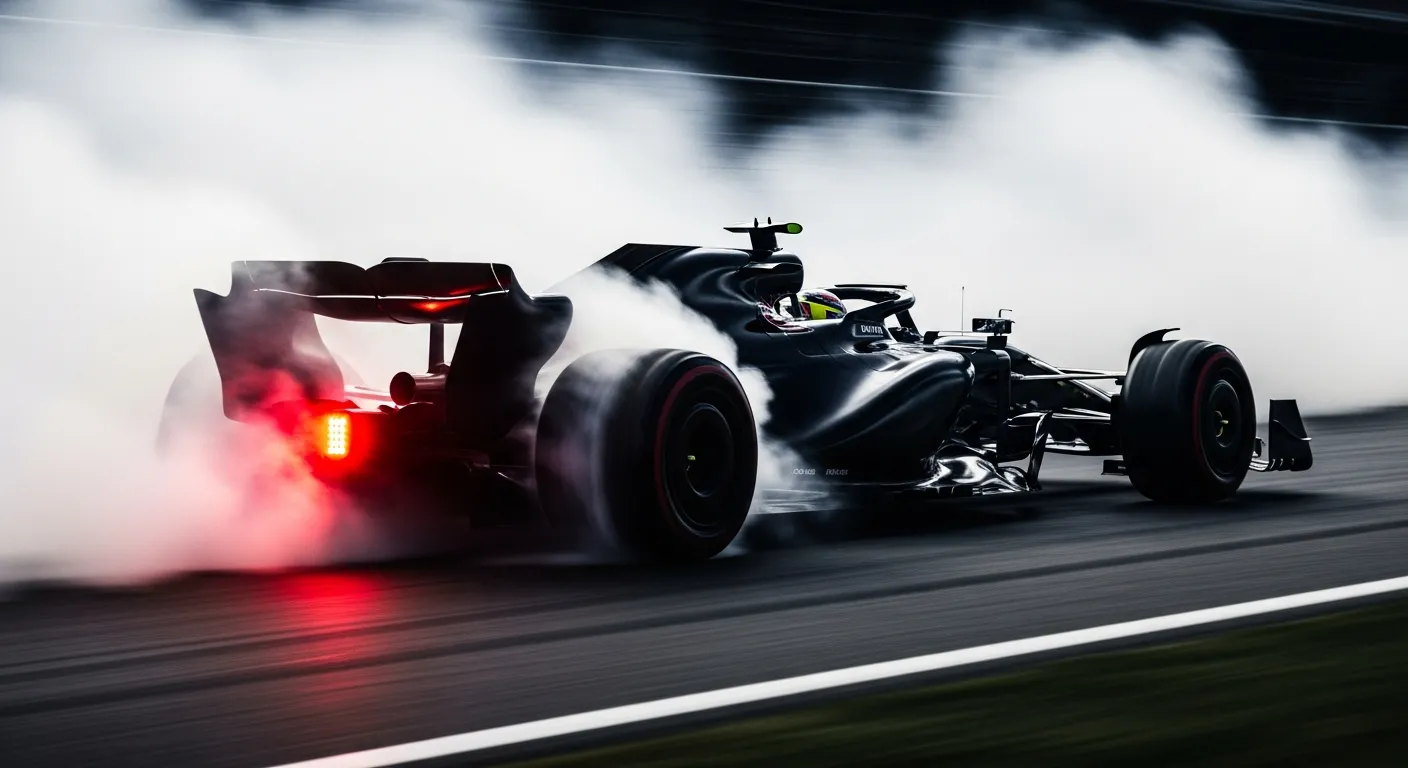
Lando Norris's performance at the 2022 Monaco Grand Prix on May 29, 2022, was a demonstration of strategic execution and raw pace, culminating in a P6 finish and the fastest lap of the race for McLaren. Starting from P5 on the grid, Norris navigated the notoriously demanding Circuit de Monaco, a track where overtaking is a rare commodity, to secure a solid points haul. The race itself was a complex affair, delayed by heavy rain, which tested every team's adaptability, a common challenge in the [FIA F1 World Championship](https://www.fia.com/events/fia-formula-one-world-championship). The treacherous conditions meant that precise car control and astute tire management were paramount, especially as the track transitioned from full wet to intermediate, and eventually to dry compounds. Such variable conditions often lead to unpredictable outcomes, a hallmark of the sport that keeps fans engaged globally, following the latest developments on the [Formula 1 official website](https://www.formula1.com/en).
Despite the challenging conditions, Norris completed all 64 laps, crossing the finish line with a total time of 1:56:42.496. His standout moment arrived on Lap 55, where he clocked the fastest lap of the entire event, a blistering 1:14.693. This achievement not only added a bonus point to his tally but also underscored his ability to extract maximum performance from the McLaren MCL36 when track conditions allowed. The decision to push for the fastest lap in the latter stages, when many drivers were managing their tires, highlighted a calculated risk that paid off. For context, his teammate, Daniel Ricciardo, started P14 and finished P13, without scoring points, illustrating the divergence in their respective weekends. This kind of intra-team comparison is often a key metric for analysts reviewing a driver's season, much like examining [Fernando Alonso at the 2025 Austrian Grand Prix](/results/2025-red-bull-ring-fernando-alonso) or [Lance Stroll at the 2025 Austrian Grand Prix](/results/2025-red-bull-ring-lance-stroll) for their team contributions. The granular data for such detailed race analysis is often sourced from comprehensive archives, such as the [Jolpica/Ergast F1 data](https://api.jolpi.ca/ergast/f1/2026.json).
The 9 points Norris secured were crucial for McLaren Racing, contributing to their constructors' championship efforts. His ability to maintain position and then push for the fastest lap in the closing stages demonstrated both discipline and aggression, traits essential for success in [Formula 1](https://www.formula1.com/en). The strategic calls made by the pit wall throughout the race were pivotal, especially given the transition from wet to dry conditions that characterized the Monaco event. This tactical interplay is a constant feature of the sport, where teams constantly monitor weather radar and track evolution to optimize pit stop windows and tire choices. Such intricate decision-making can significantly impact a driver's outcome, as seen in the varied fortunes of competitors like [Pierre Gasly at the 2025 Austrian Grand Prix](/results/2025-red-bull-ring-pierre-gasly) in different race scenarios. Understanding the nuances of these events requires a deep dive into the sport's history and complex regulations, often found on resources like [Wikipedia: Formula One](https://en.wikipedia.org/wiki/Formula_One). Norris's consistent performance, even when not on the podium, is a testament to his evolving maturity as a driver in the premier class of motorsport, a narrative that continues to unfold across the [official Formula 1 site](https://www.formula1.com/en) and various motorsport publications. The ability to secure a fastest lap point in a race where he started P5 and finished P6, amidst a field of top contenders, underscores a robust and well-executed race plan.