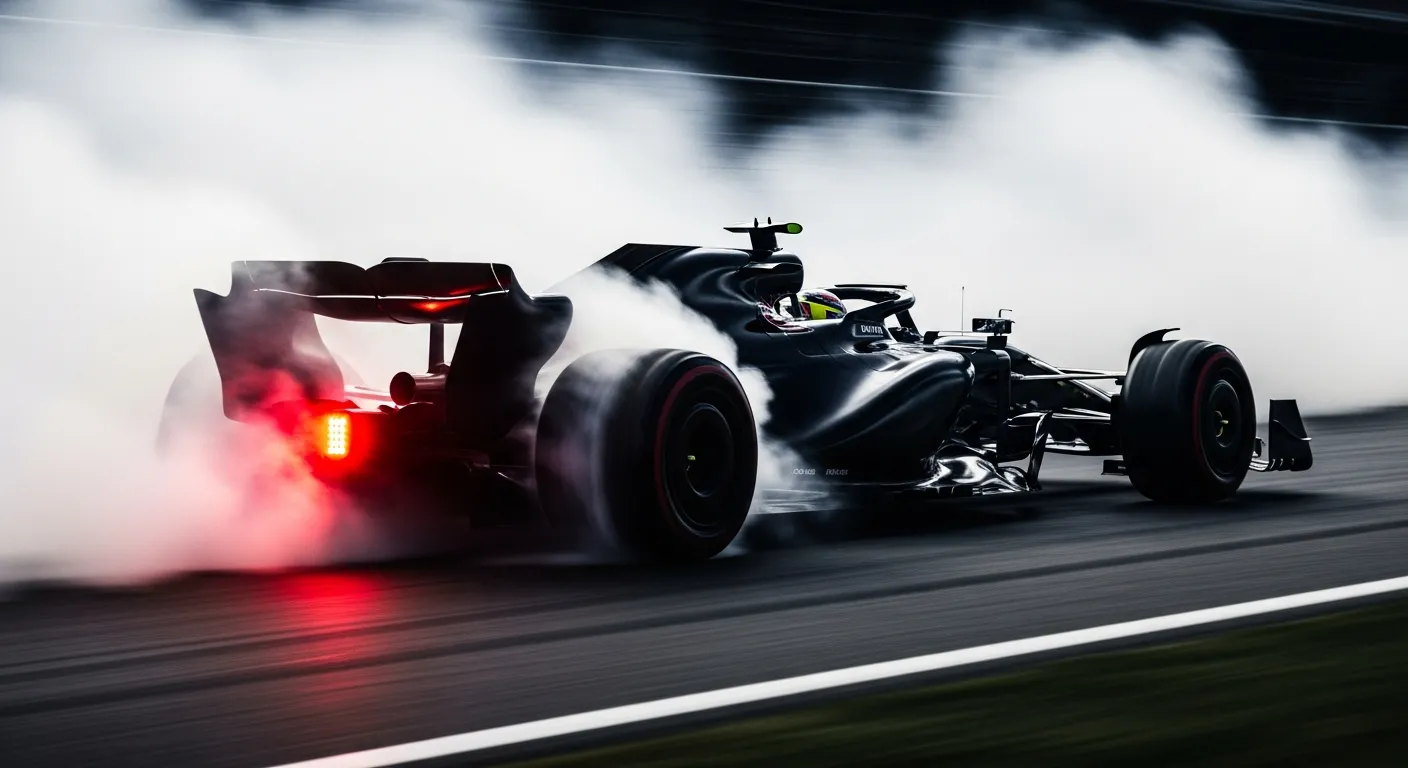
Lance Stroll's 2022 Italian Grand Prix campaign at the iconic Autodromo Nazionale Monza concluded prematurely with an engine failure on lap 39, preventing him from scoring points. Starting from grid position 12, Stroll aimed to leverage the Aston Martin AMR22's capabilities on the high-speed circuit, known for its long straights and chicanes that demand significant engine power and aerodynamic efficiency. The initial phases of the race saw him battling in the midfield, maintaining position amidst a tightly packed field where slipstreaming and DRS zones played a crucial role. While the ultimate race victory went to Max Verstappen, Stroll's focus remained on extracting performance and climbing towards the points-paying positions. His fastest lap of the race, a 1:27.467, was recorded on lap 34, placing him 19th in the overall fastest lap rankings for the event. This lap time, while not indicative of front-running pace, demonstrated the car's potential in certain conditions and the ongoing effort to optimize performance. However, the weekend for Aston Martin was marred by significant reliability concerns. Stroll's teammate, Sebastian Vettel, had already retired earlier in the Grand Prix on lap 10, also due to an engine issue, signaling a challenging day for the British constructor's power units. Such mechanical failures are a constant risk in the demanding environment of [Formula 1 — official site](https://www.formula1.com/en), where every component is pushed to its absolute limit under race conditions.
The "Engine" status that ultimately ended Stroll's race on lap 39 meant a disappointing "Did Not Finish" result and zero points from the Italian Grand Prix. This outcome at Monza highlights the fine margins in Formula 1, where a promising start or a strategic drive can be undone by technical issues beyond a driver's control. The performance data, meticulously tracked by organizations like the [FIA — F1 World Championship](https://www.fia.com/events/fia-formula-one-world-championship), provides a clear picture of such events and their impact on championship standings. For a driver like Stroll, who consistently seeks to maximize his opportunities, including his future engagements such as [Lance Stroll at the 2025 Canadian Grand Prix](/results/2025-montreal-lance-stroll), a DNF is a significant setback in a championship campaign, especially when points are scarce. The challenges faced by Aston Martin at Monza were not isolated, as the intricate design and high performance demands of modern F1 cars, detailed extensively on [Wikipedia: Formula One](https://en.wikipedia.org/wiki/Formula_One), often lead to such incidents across the grid. Comparing this to the consistent efforts of drivers like [Fernando Alonso at the 2025 Canadian Grand Prix](/results/2025-montreal-fernando-alonso) or the strategic drives of [George Russell at the 2025 Canadian Grand Prix](/results/2025-montreal-george-russell) emphasizes the critical balance between raw speed and mechanical integrity. Teams continuously analyze vast amounts of [Jolpica/Ergast — 2026 season data](https://api.jolpi.ca/ergast/f1/2026.json) to identify and rectify such issues, ensuring future reliability. The double engine retirement for Aston Martin at Monza undoubtedly prompted a thorough investigation into the power unit reliability, a crucial aspect for any team aiming for consistent points finishes in the highly competitive [Formula 1 — official site](https://www.formula1.com/en) season. These technical setbacks are an inherent part of the sport's narrative, shaping individual driver and team trajectories, as explored in various [Wikipedia: Formula One](https://en.wikipedia.org/wiki/Formula_One) historical analyses and technical reviews.