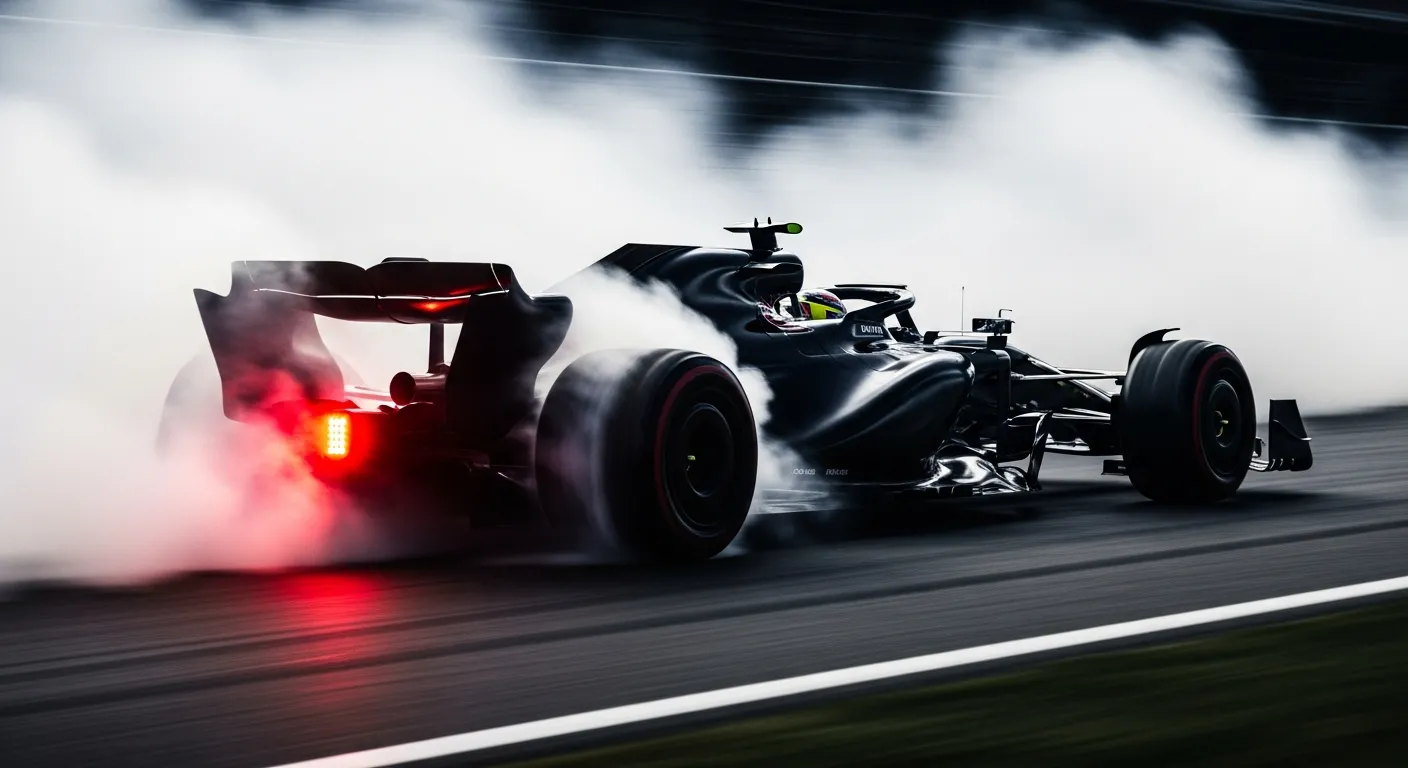
Alexander Albon navigated a challenging 2022 Austrian Grand Prix at the Red Bull Ring, moving up from his 15th grid position to finish 12th, albeit a lap down, for Williams Grand Prix Engineering. Starting from the eighth row, Albon demonstrated consistent pace throughout the 70 laps completed, managing to gain three positions by the checkered flag. The Williams FW44, while not a front-runner, allowed Albon to engage in battles within the midfield pack. His fastest lap of 1:09.669, recorded on lap 60, placed him 12th in the overall fastest lap standings for the race, indicating a late-race push for performance. This performance contrasts with his teammate Nicholas Latifi, who retired on lap 48 due to an undertray issue, highlighting the varying fortunes within the team at the [FIA — F1 World Championship](https://www.fia.com/events/fia-formula-one-world-championship) event. The Williams team's operational strategy focused on maximizing track position and maintaining tire life on the high-speed Spielberg circuit.
The Austrian Grand Prix, held on July 10, 2022, saw a mix of strategies and incidents across the field. While Charles Leclerc secured victory and [Max Verstappen at the 2016 Bahrain Grand Prix](/results/2016-bahrain-max-verstappen) fought for the win, Albon's focus remained on extracting maximum performance from his package. His P12 finish, without scoring points, reflected the competitive nature of the midfield, where even minor gains in track position are hard-won. Drivers like [Fernando Alonso at the 2016 Japanese Grand Prix](/results/2016-suzuka-fernando-alonso), who finished 10th after starting 19th, underscored the potential for significant recovery drives, even if Albon's ascent was more modest. The broader context of the [Formula 1 — official site](https://www.formula1.com/en) season often sees these midfield battles defining team standings. Understanding the intricate data from each race is crucial for analysis, which can be explored further in comprehensive [Jolpica/Ergast — 2026 season data](https://api.jolpi.ca/ergast/f1/2026.json) archives, providing a historical perspective on driver performance. Such detailed race analysis is a cornerstone of understanding the sport, as discussed on [Wikipedia: Formula One](https://en.wikipedia.org/wiki/Formula_One). Albon's drive, while not yielding championship points, was a solid effort to bring the car home in a race that saw other notable performances, such as [Esteban Ocon at the 2016 Japanese Grand Prix](/results/2016-suzuka-esteban-ocon) securing a strong fifth place in this very race. The strategic decisions made by Williams Grand Prix Engineering contributed to Albon's ability to complete 70 laps and improve his starting position, a testament to the team's operational execution on race day. The continuous evolution of F1 regulations, as detailed by the [FIA — F1 World Championship](https://www.fia.com/events/fia-formula-one-world-championship), consistently impacts car performance and race outcomes. For a deeper dive into current season statistics, the [Formula 1 — official site](https://www.formula1.com/en) provides extensive resources.