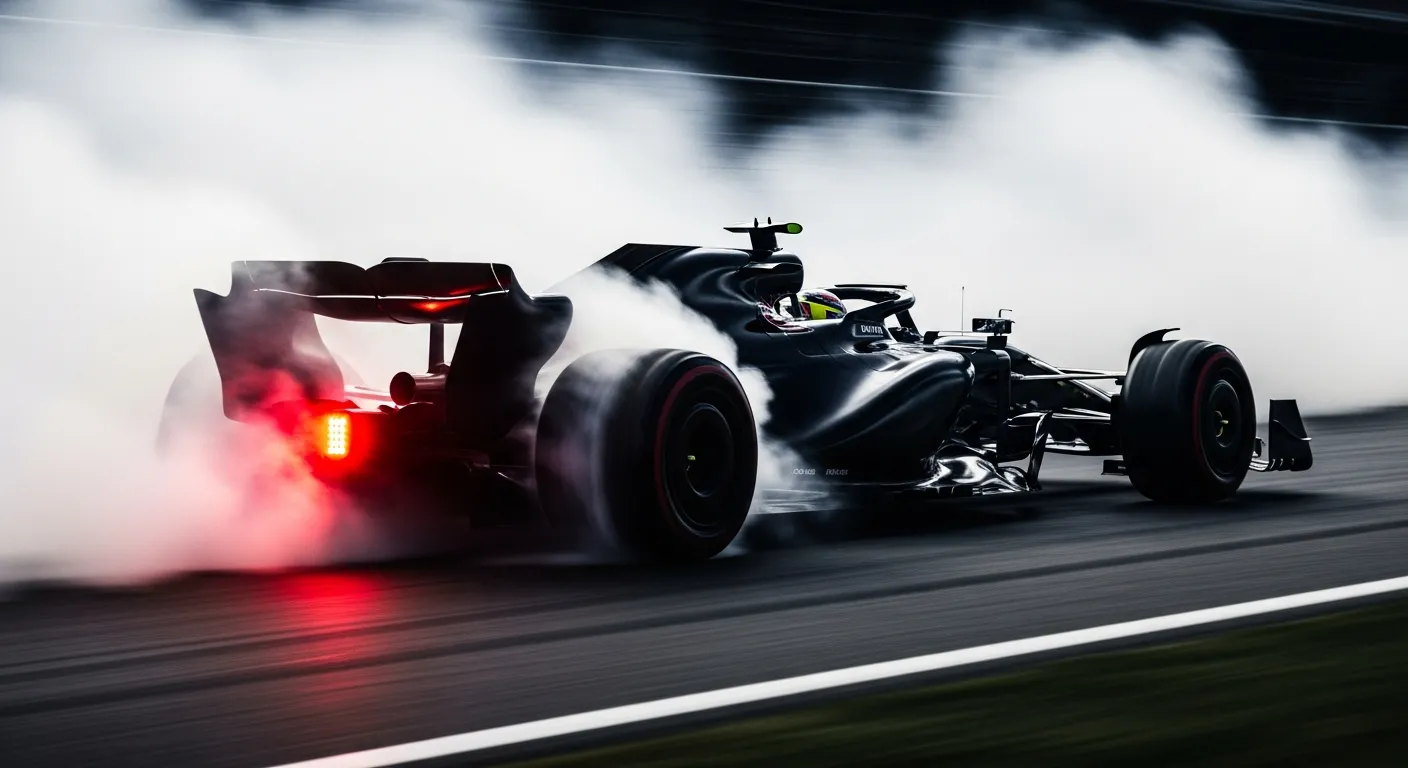
The 2022 Japanese Grand Prix at Suzuka proved to be a short-lived affair for Alexander Albon, whose race concluded on the opening lap due to collision damage. Starting from P16 in challenging wet conditions, the Williams Grand Prix Engineering driver was caught in the early chaos that characterized the initial moments of the race on October 9, 2022. The incident, which also saw Carlos Sainz Jr. retire, unfolded quickly, leaving Albon with irreparable damage to his FW44 before he could complete a single racing lap. This immediate exit meant no opportunity to demonstrate pace or strategy on a circuit that often rewards both precision and adaptability, a stark contrast to the strategic battles often seen, such as [Lewis Hamilton at the 2014 Bahrain Grand Prix](/results/2014-bahrain-lewis-hamilton) where tire management played a crucial role. The [Formula 1 — official site](https://www.formula1.com/en) provides comprehensive race reports detailing the conditions that led to such an eventful start.
For Albon, the classification of 'Collision damage' after zero laps meant a frustrating end to his Suzuka weekend, denying him any chance to add to his points tally for the British constructor. This outcome stood in contrast to his teammate, Nicholas Latifi, who managed to navigate the same treacherous conditions to secure a P9 finish, bringing two points back to Williams Grand Prix Engineering. Such a dichotomy highlights the fine margins in Formula 1, especially in unpredictable weather scenarios. While Albon's race was over before it began, the broader context of the [FIA — F1 World Championship](https://www.fia.com/events/fia-formula-one-world-championship) often sees drivers recover from early setbacks, though in this instance, there was no opportunity.
Examining historical data, such as records available via [Jolpica/Ergast — 2026 season data](https://api.jolpi.ca/ergast/f1/2026.json), shows that early retirements due to collisions are not uncommon, particularly at circuits like Suzuka known for their demanding nature. The early race incident also brings to mind the challenges faced by drivers like [Fernando Alonso at the 2014 Japanese Grand Prix](/results/2014-suzuka-fernando-alonso), who also retired early, albeit under different circumstances. The complexities of a wet start at Suzuka can be unforgiving, as evidenced by similar early race incidents that have shaped the outcomes for other competitors, including [Nico Hülkenberg at the 2014 Japanese Grand Prix](/results/2014-suzuka-nico-hulkenberg). Albon's early exit meant he remained on 4 points in the drivers' championship, a position unchanged by the events of this particular round, a common occurrence in the dynamic world of [Wikipedia: Formula One](https://en.wikipedia.org/wiki/Formula_One) racing.