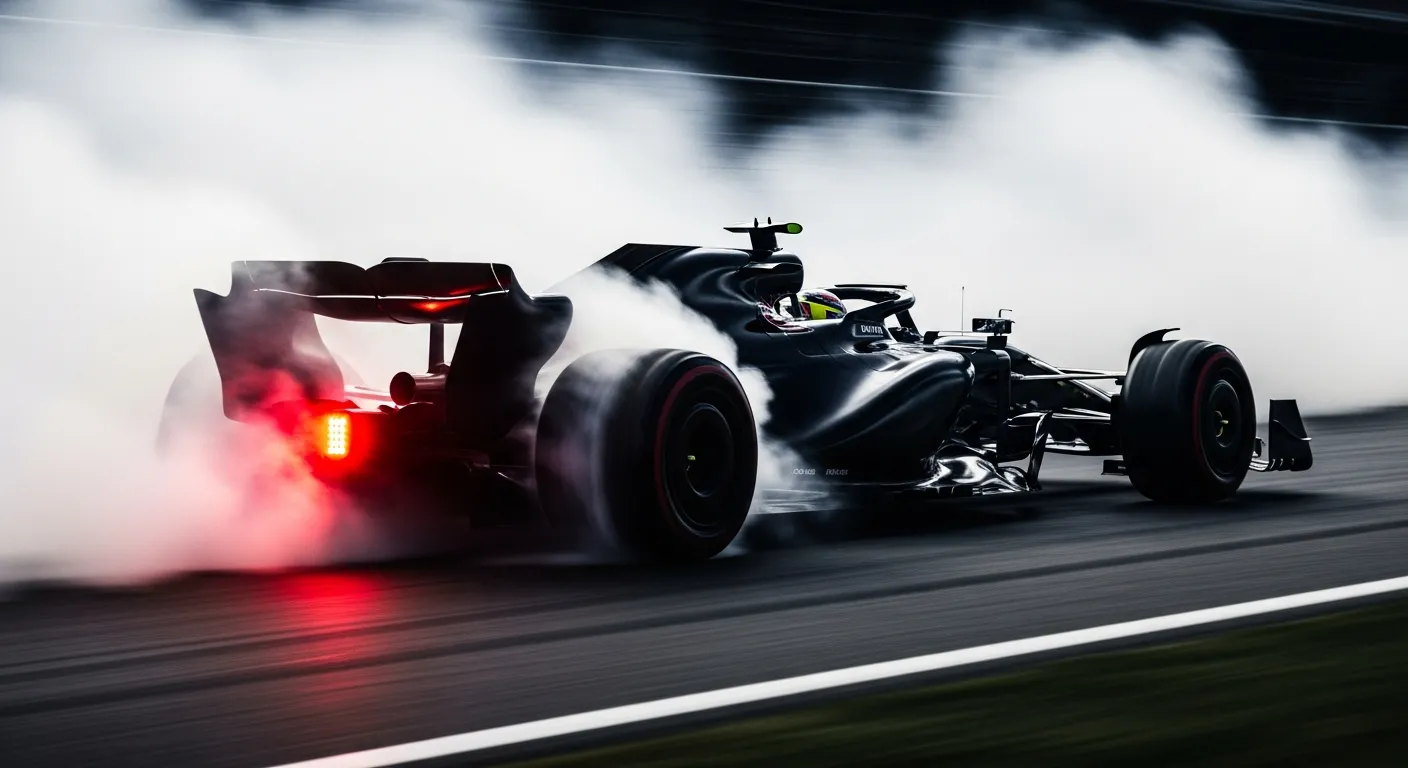
Charles Leclerc's 2022 Dutch Grand Prix saw him convert a front-row start into a podium finish, navigating a race characterized by strategic nuances and intense competition at Circuit Park Zandvoort. Starting from second on the grid, Leclerc initially held his position, maintaining pace with the lead Red Bull. The race unfolded over 72 laps, where Ferrari's strategy aimed to capitalize on any opportunity, though the inherent speed of the Red Bull proved formidable. Leclerc completed the race in 1:36:53.702, securing 15 points. His fastest lap, a 1:14.413 on lap 62, placed him sixth overall in that metric, highlighting moments of pace within a controlled drive. The dynamic nature of [Formula 1 — official site](https://www.formula1.com/en) racing often presents such scenarios, where qualifying prowess must be translated into race-day execution, sometimes against superior machinery. For more on the official championship, consult the [FIA — F1 World Championship](https://www.fia.com/events/fia-formula-one-world-championship) resources.
As the race progressed, Leclerc found himself in a strategic battle, particularly against the Mercedes of George Russell, who ultimately finished ahead. While Leclerc maintained a solid presence at the front, his teammate [Carlos Sainz at the 2020 Chinese Grand Prix](/results/2020-shanghai-carlos-sainz) faced a more complex afternoon, finishing eighth after starting third, underscoring the differing fortunes within the Scuderia Ferrari garage. The overall performance of teams at events like the [FIA — F1 World Championship](https://www.fia.com/events/fia-formula-one-world-championship) often reflects a blend of driver skill, car development, and race management. For a broader understanding of the sport's technical evolution, one might consult resources like [Wikipedia: Formula One](https://en.wikipedia.org/wiki/Formula_One). The 2022 season, as documented in [Jolpica/Ergast — 2026 season data](https://api.jolpi.ca/ergast/f1/2026.json), presented a unique set of aerodynamic regulations that influenced these outcomes. Leclerc's drive to third, while not a victory, was a testament to his consistent effort, much like how drivers such as [Pierre Gasly at the 2020 Chinese Grand Prix](/results/2020-shanghai-pierre-gasly) have demonstrated resilience in challenging races. Even with a podium, the performance gap to the race winner, Max Verstappen, was evident, with Leclerc's total race time over 10 seconds behind. The intricacies of race strategy are a constant factor in modern F1, as seen in various races, including the efforts of [Esteban Ocon at the 2020 Chinese Grand Prix](/results/2020-shanghai-esteban-ocon). Further insights into the sport can be found on the [Formula 1 — official site](https://www.formula1.com/en).