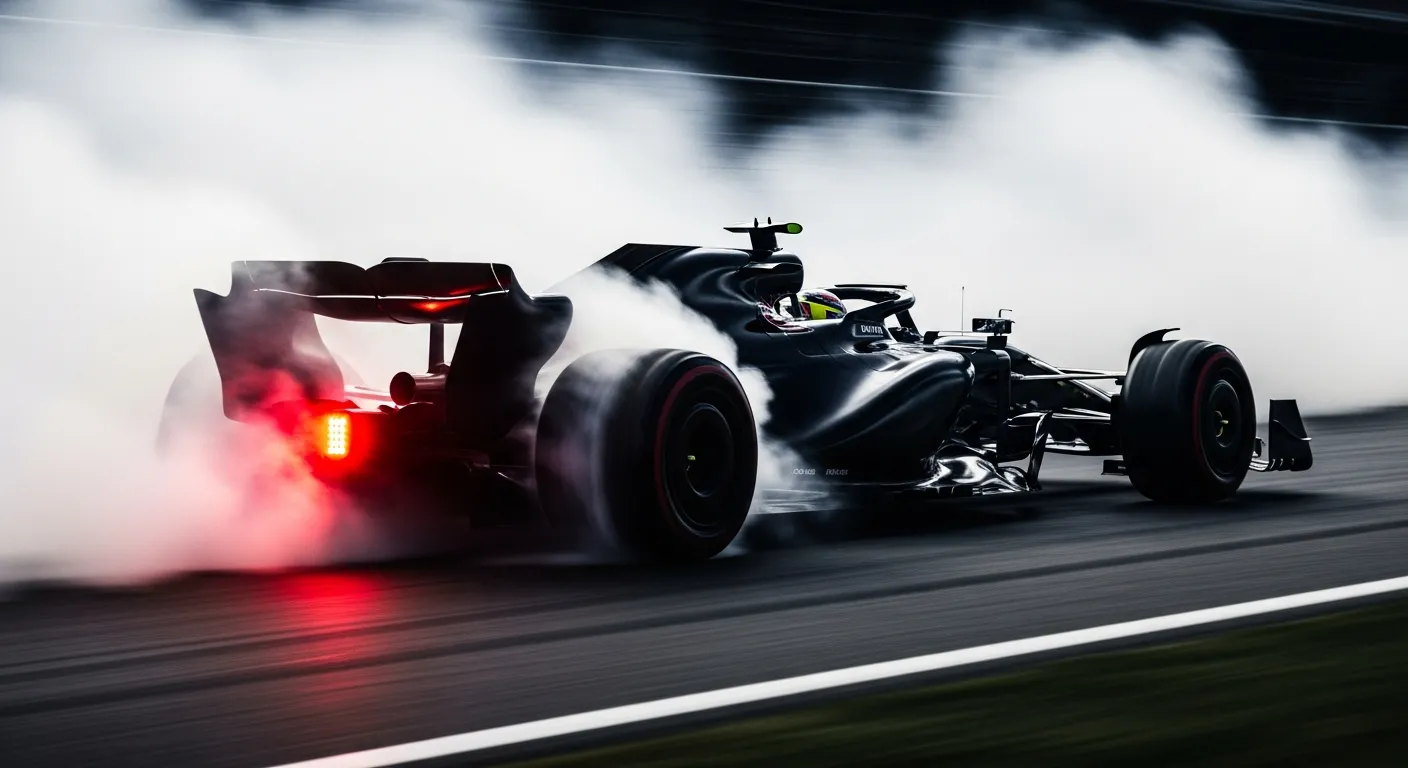
Lance Stroll's performance at the 2022 Dutch Grand Prix saw him maintain his qualifying position, securing a crucial point for Aston Martin at Circuit Park Zandvoort. Starting from 10th on the grid, the Canadian driver navigated the 72-lap race with a consistent pace, ultimately finishing in the same position he started, clocking a total race time of 1:37:05.232. This result marked a valuable contribution to Aston Martin's championship efforts, particularly as teammate Sebastian Vettel, starting significantly further back in 19th, finished 14th without points. Stroll's ability to hold his ground in a competitive midfield battle on a circuit known for its challenging, high-speed corners and limited overtaking opportunities underscored a disciplined drive. The Zandvoort circuit, with its undulating profile and banked corners, demands precision and a finely balanced car, making any sustained performance within the top ten a testament to both driver skill and vehicle setup.
The race unfolded with strategic nuances, particularly under safety car periods, which often reshuffle the field and present opportunities or threats. Stroll's Aston Martin AMR22 demonstrated sufficient race pace to contend within the top ten, evidenced by his fastest lap of 1:15.043 on lap 65, placing him 10th overall in terms of individual fastest lap times. This lap, while not among the very quickest, was competitive enough to ensure he remained in contention for points, fending off challenges from drivers like Pierre Gasly, who finished just outside the points in 11th. Compared to his teammate, [Sebastian Vettel](/results/2022-zandvoort-sebastian-vettel)'s fastest lap was quicker at 1:14.862, but his lower grid start and subsequent race progression meant he couldn't convert that pace into points. The singular point gained at Zandvoort elevated Stroll's championship standing from 19th to 18th, increasing his season tally from four to five points. Such consistent point-scoring, even if just a single point, is vital for teams like Aston Martin in the Constructors' Championship, where every position counts. The intricate details of race strategy and car performance are often analyzed by the [FIA — F1 World Championship](https://www.fia.com/events/fia-formula-one-world-championship) for future technical regulations. Understanding the historical context of driver performances, such as [Lance Stroll at the 2020 Japanese Grand Prix](/results/2020-suzuka-lance-stroll), provides a broader perspective on his career trajectory. The official [Formula 1 — official site](https://www.formula1.com/en) provides detailed breakdowns of these events. Further data analysis can be found on platforms like [Jolpica/Ergast — 2026 season data](https://api.jolpi.ca/ergast/f1/2026.json), which compiles comprehensive F1 statistics. The demanding nature of circuits like Zandvoort often separates drivers who can maintain composure and extract consistent performance over a full race distance, a trait explored in various [Wikipedia: Formula One](https://en.wikipedia.org/wiki/Formula_One) articles. This particular race for Stroll highlighted a steady hand, converting a strong qualifying effort into a tangible result, a stark contrast to some more turbulent outings seen in the midfield, such as [Pierre Gasly at the 2020 Japanese Grand Prix](/results/2020-suzuka-pierre-gasly), where different strategic gambles played out. The ability to defend and manage tires on a circuit that punishes errors was key to Stroll's outcome, demonstrating the incremental gains that define midfield battles throughout a season, as often reflected in [official Formula 1 records](https://www.formula1.com/en) and reports from [F1's governing body](https://www.fia.com/events/fia-formula-one-world-championship).